The Good Conscience is the novel I finished in the Delhi-London-Havana trip.
Author is Carlos Fuentes of Mexico.This is his third novel for me.
While the previous two were political, this one is about religion. It is the story of a boy Jaime Ceballos, who is brought up by his uncle and aunt with an excessive dose of religion, scriptures and moral lectures. Uncle Balcarcel prepares him for life with stern authority, controlling every aspect of the boy's growth. His aunt Dona Asuncion conspired successfully to separate the boy and his father from mother Adelina who was from a lower class. Rodolfo, his father is weak, confused and indecisive and is controlled totally by his sister Asuncion and her husband Balcarcel. The boy and his father are scolded and given moral lectures by Balcarcel from breakfast to dinner, day in and day out. The aunt, who cannot get a child from her impotent husband, clings on to Jaime and exercises a moral control over the boy using religious rituals and the church. But when Jaime announces his intention to become a priest,as the logical extension of his upbringing, there is consternation in the family. Balcarcel changes the direction of the boy and lets him go out and read books other than religious ones. But when Jaime goes around with his native Indian friend and reads revolutionary books, again Balcarcel intervenes harshly. Jaime discovers that his mother, after being thrown out of the family, becomes a sex worker. He is repelled by his weak father who let this happened. Indignation caused by the injustice and hypocrisy makes him resort to self flagellation. He thinks that his inflction of pain for himself would be atonement for the sins of others. But when this is also censured by the family and priests and when his father dies, he is driven to the wall. He goes to a bordello, where he encounters his uncle , who was preaching him all the time about the need to be chaste and pure. The next day his ashamed uncle stops bothering him and stops his moral exhortations. Left free to choose his direction of life, Jaime opts to a life of Good Conscience and keep up up family honour and tradition by becoming a lawyer and living like the other society people.
Carlos Fuentes has handled this religious theme as interestingly and delicately as he does with political ones. He brings out the value system of the Mexican family in the early twentieth century, when revolution was sweeping across the country. Church and religious rituals and beliefs were the refuge and anchor for the society in those turbulent days. Caught in this confusing period of transition, the children became the victims. Fuentes has vividly portrayed the range of emotions, fears and complexes of children growing up confused by the hypocrisy of adults. Father Obregon, who attends to the confessions of Jaime is sympathetic but he himself does not know any other solution other than what is prescribed in the Bible.
Fuentes is very subtle and circumspect in handling the sensitive religious issue. While he sprinkles scriptures and the doctrines of Catholic faith throughout the book, he has let the readers draw the conclusions. But in his polital novels, Fuentes relishes commenting and exposing the hypocrisy and degeneration of politicians, with satire and punch lines.
Pity.. Fuentes cut the novel short with just 148 pages. It would have been more interesting if he had stretched it to a longer one.
Wednesday, February 14, 2007


Wednesday, February 07, 2007
talk on Latin America to young diplomats 7 february
 I gave a "miniskirt" introduction to Latin America to the 2006 batch of Indian Foreign Service officers. I gave an overview of the people, history, politics, markets, regional integration,foreign policy and culture. How latin america is becoming politically stable, economically healthy and culturally vibrant. Political power has passed decisively to the masses who have now started driving the political and economic agenda. It is said Left has come to power in most countries. But I say that it is the new empowered masses who have decided to change the colour of their governments.
Through the collective strength acquired through integration, the new Latin America has become confident and assertive and an autonomous player in the global scene. They cannot be taken for granted anymore.
On Indo- Latin American relations i spoke about the four stages of relations. At present we are in the third stage- romantic. And we are building the next stage of partnership.
I quoted the Mexican bolero
No me preguntas mas
dejanos imaginar que no existe el pasado
que nacimos al mismo instante en que conocimos
means- dont ask me more
let us imagine that we were born at that moment when we met each other
In our relations with latin america we dont look at the past
we look to the future.
I injected the usual doses of jokes and some poems. But I noticed that that the young diplomats were a bit restrained in laughing. Were they caught unprepared for the Latino jokes? ...cultural shock? ...I had used some of the same spicy jokes in my talk in Portuguese language at the Catholic University in Sao Paulo in 1999. The audience of undergraduate students erupted in laughter and hit the ceiling . That is Brazilian spirit..free, uninhibited and spontaneous expression to feelings.
Colleagues ask me when am i flying to latin America on the trip (10-22 February) to cuba, Dominican Republic and jamaica. I tell them, " my heart has already flown. I am waiting till saturday morning to carry my body to follow the heart"
Wednesday, January 31, 2007
Brazilian football team in India
A team from Sao Paulo Football club is in India these days. They have already played two games in Assam and calcutta.
They will play in Delhi on 11 February at the Ambedkar stadium against East Bengal club.
what a pity.. I will be away on tour at this time.
Sao Paulo Club is one of the premier clubs of Brazil. They have been national and international champions in club tournaments. Of course, the team which has come to India does not have the star players. Still, they can teach the Indian teams a few lessons and the artistry of Brazilian football. Unsurprisingly they have won the two matches they played already.
Sao Paulo was my favourite team when I was in Brazil. I lived near the Morumbi stadium, the home turf of sao paulo team.
Their rival is Corinthians team. There is an amusing Brazilian movie called as " Romeo and Juliet" about the rivalry betwen the Sao paulinos and Corinthians. The story is about the family , supporter of sao paulo team, which refuse to accept the marriage of their daughter to a Corinthian fan.
They will play in Delhi on 11 February at the Ambedkar stadium against East Bengal club.
what a pity.. I will be away on tour at this time.
Sao Paulo Club is one of the premier clubs of Brazil. They have been national and international champions in club tournaments. Of course, the team which has come to India does not have the star players. Still, they can teach the Indian teams a few lessons and the artistry of Brazilian football. Unsurprisingly they have won the two matches they played already.
Sao Paulo was my favourite team when I was in Brazil. I lived near the Morumbi stadium, the home turf of sao paulo team.
Their rival is Corinthians team. There is an amusing Brazilian movie called as " Romeo and Juliet" about the rivalry betwen the Sao paulinos and Corinthians. The story is about the family , supporter of sao paulo team, which refuse to accept the marriage of their daughter to a Corinthian fan.
Tuesday, January 09, 2007
Visit of Andres Oppenheimer- Latin America columnist of Miami Herald
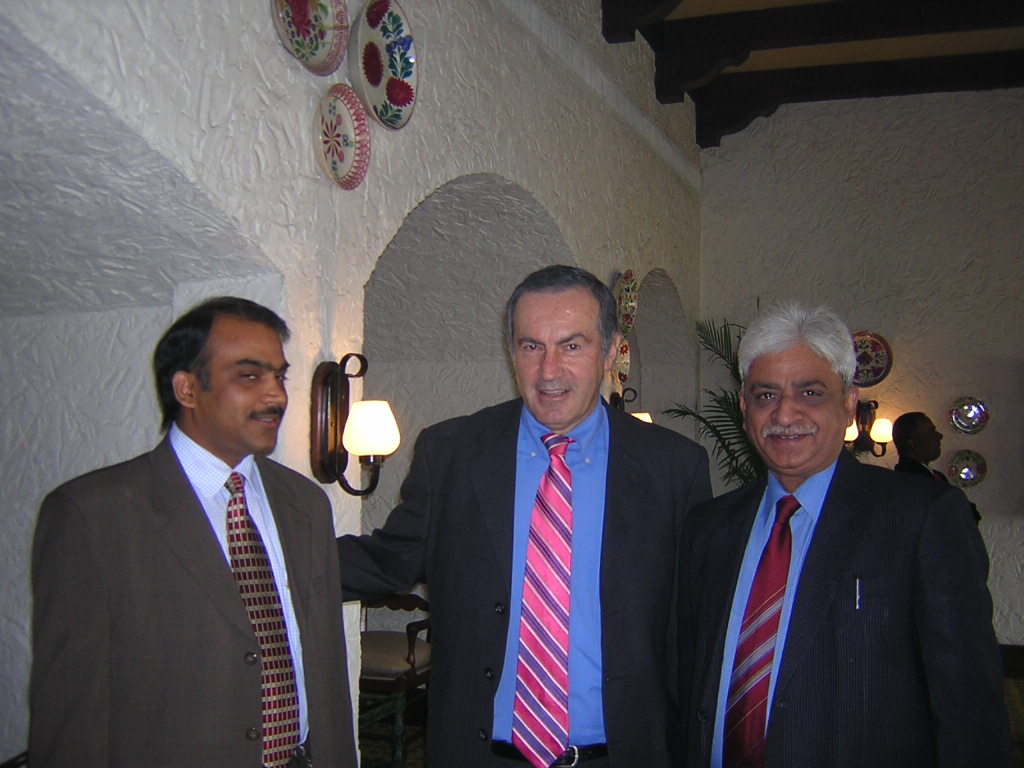

Andres Oppenheimer( in the middle of the foto on top) is the latest Latin American visitor to understand and study the India story for its relevance to Latin America. He is going to write about India's education system and scientific and technological developments and business with Latin America in his columns in Miami Herald and his syndicated columns which appear in newspapers of Latin America.
He has visited China and written a book called as " cuentos chinos"- tales of china). He now wants to compare India vis-a -vis China from the Latin American point of view.
His visit is from 5 to 13 January. He has interviewed Ministers and visited IIT Delhi and JNU. He will be in bangalore on 11-12 january to see for himself the IT development there.
I hosted a lunch for him at Taj Mansingh Hotel on 5 january and introduced him to media persons, academics, businessmen and Latin American ambassadors.
Andres is an Argentinian settled in USA for the last thirty years. He has lots of jokes on Argentinians and other Latinos ! He is the key person in the organisation of the annual Latin America conference by Miami Herald in September. He has a vantage position from Miami, the other capital of Latin America, to watch and interact with the Latin American business, political and thought leaders.
Monday, January 01, 2007
The campaign - novel by Carlos Fuentes
This is the story of Baltazar Bustos, an Argentinian from the pampas, the land of gauchos who goes to live in Buenos Aires and is inspired by the ideals of Rousseau and Voltaire. He gets sucked into the independence fever of Latin America, after the Spanish kingdom is overtaken by Napoleon, in the period 1810-20. He is given a miltary rank and sent to fight in Peru and later to Chile. He is caught in the conflicts between the local Creole leaders and the impracticality of his ideals of equality and justice. His political story takes on romantic wings when he falls in love with Ofelia Salamanca, a Chilean femme fatale, married to the governor of Buenos Aires. She changes husbands, lovers and countries and goes from Argentina to Peru, Chile, Venezuela and Mexico. And he is on her trail through all the countries and finally encounters her in Mexico.
Carlos Fuentes has given a fictionalised version of Latin American history of independence in this novel. He has brought in Latin American heroes such as San Martin of Argentina and Simon Bolivar of Venezuela. He has highlighted how the Latin Americans were unprepared for the sudden and unexpected independence and the confusion and conflicts between the local Creole leaders, the situation of native Indians and the African slaves. He has brought out the point that the instability of the continent was inbuilt in the foundation of the new republics who were not ready or equipped for nation building.
Carlos Fuentes, who had raised my expectations after his other novel" the eagle's throne" has captured me as a fan after this novel. He has helped me in understanding Latin America as he did with the other book about mexican politics. His Mexican character Father Quintana calls the Argentinians as the children of Latin America, contrasting with the old civilisation inherited by Mexico. Fuentes has brought out vividly the Latin American characters such as the merchants of the port city of Buenos Aires, the free-spirited gauchos of the pampas, the high society salons of Lima, the brothels of Maracaibo and the revolutionary priests of Mexico.
The love story in this novel is as enigmatic and profund as in the Eagle's Throne novel. In both, the heroines are free spirited Latinas, who make use of the men for fun and politics.
The novel reminded me of the film " The motor cyclist's diaries " which tells the story of Che Guevara, the other Argentinian who travelled to Chile, Peru and other countries of Latin America for fun to start with and later to spread leftist revolution.
I am looking forward to the three more books of Fuentes i have just bought.
Carlos Fuentes has given a fictionalised version of Latin American history of independence in this novel. He has brought in Latin American heroes such as San Martin of Argentina and Simon Bolivar of Venezuela. He has highlighted how the Latin Americans were unprepared for the sudden and unexpected independence and the confusion and conflicts between the local Creole leaders, the situation of native Indians and the African slaves. He has brought out the point that the instability of the continent was inbuilt in the foundation of the new republics who were not ready or equipped for nation building.
Carlos Fuentes, who had raised my expectations after his other novel" the eagle's throne" has captured me as a fan after this novel. He has helped me in understanding Latin America as he did with the other book about mexican politics. His Mexican character Father Quintana calls the Argentinians as the children of Latin America, contrasting with the old civilisation inherited by Mexico. Fuentes has brought out vividly the Latin American characters such as the merchants of the port city of Buenos Aires, the free-spirited gauchos of the pampas, the high society salons of Lima, the brothels of Maracaibo and the revolutionary priests of Mexico.
The love story in this novel is as enigmatic and profund as in the Eagle's Throne novel. In both, the heroines are free spirited Latinas, who make use of the men for fun and politics.
The novel reminded me of the film " The motor cyclist's diaries " which tells the story of Che Guevara, the other Argentinian who travelled to Chile, Peru and other countries of Latin America for fun to start with and later to spread leftist revolution.
I am looking forward to the three more books of Fuentes i have just bought.
Wednesday, December 13, 2006
The West on Trial - autobiography of Cheddi Jagan
I read most of this book during the long trip to Guyana last month and I have just completed it.
Cheddi Jagan was Guyana's most important freedom fighter. Born in a modest peasant family, Jagan went to study medicine in USA. During the stay there, he had done all kinds of odd jobs to sustain himself. After his return, he plunged into politics in Guyana. He started defending workers' rights and joined the trade union movement and then joined full time politics working for the independence from Britain.He won the elections in the pre-independance period. But the British conspired to keep him out of power. Firstly, they used their standard divide and rule policy by encouraging divisions and rivalries between the Afro-Guyanese and the Indo-Guyanese. Secondly they branded him as a communist threat to Guyana and the region. This way they got the support of the Americans to prevent communism taking hold in the region particularly after the experience of Cuba. The British and Americans imposed a proportional representation system on Guyana to prevent Jagan and his party from getting majority. Jagan asked them why did they not have the same system if it was good for Guyana.
Eventually Jagan managed to overcome all the internal and external challenges and become the President of Guyana in 1992 for five years till his death in 1997.
Jagan's struggle is similiar in many ways to the Indian struggle for independence from the same British. The only difference was that Guyana being a smaller and weaker country, suffered more.
It is true, Jagan was a fellow traveller. But anyone in his position had to be one, given the Guyanese situation. Most of the Guyanese were poor and exploited under the colonial rule. The population of Guyana consists of AfroGuyanese who were former slaves and the indians who were former bonded labourers. With this kind of electorate, it was logical to seek social justice through leftist path.On top of it, Guyana's natural and mineral resources and the sugar and mining industry were controlled by British, American and foreign companies for whom their profit was more important than Guyanese development.It was the job of the political leaders to demand a fair share of their earnings. Even today, Guyana remains as one of the poorest countries in the region, despite vast land, water, natural and mineral resources.
Janet Jagan, the American wife of Cheddi Jagan had also worked shoulder to shoulder at all levels of Guyanese politics. She shared the same ideology and commitment of her husband to the upliftment of the Guyanese.
Jagan has published other books covering regional and global issues.
But the title of this autobiography " The west on trial" does not seem to be appropriate. It was the west which put him on trial. But at the bottom of the cover page it is written " My fight for Guyana's freedom" . This should have been the title.
While Jagan has been understandably extra critical of his political opponents, his book gives a vivid account of the struggle of Guyana and the manipulation of the external forces.
Cheddi Jagan was Guyana's most important freedom fighter. Born in a modest peasant family, Jagan went to study medicine in USA. During the stay there, he had done all kinds of odd jobs to sustain himself. After his return, he plunged into politics in Guyana. He started defending workers' rights and joined the trade union movement and then joined full time politics working for the independence from Britain.He won the elections in the pre-independance period. But the British conspired to keep him out of power. Firstly, they used their standard divide and rule policy by encouraging divisions and rivalries between the Afro-Guyanese and the Indo-Guyanese. Secondly they branded him as a communist threat to Guyana and the region. This way they got the support of the Americans to prevent communism taking hold in the region particularly after the experience of Cuba. The British and Americans imposed a proportional representation system on Guyana to prevent Jagan and his party from getting majority. Jagan asked them why did they not have the same system if it was good for Guyana.
Eventually Jagan managed to overcome all the internal and external challenges and become the President of Guyana in 1992 for five years till his death in 1997.
Jagan's struggle is similiar in many ways to the Indian struggle for independence from the same British. The only difference was that Guyana being a smaller and weaker country, suffered more.
It is true, Jagan was a fellow traveller. But anyone in his position had to be one, given the Guyanese situation. Most of the Guyanese were poor and exploited under the colonial rule. The population of Guyana consists of AfroGuyanese who were former slaves and the indians who were former bonded labourers. With this kind of electorate, it was logical to seek social justice through leftist path.On top of it, Guyana's natural and mineral resources and the sugar and mining industry were controlled by British, American and foreign companies for whom their profit was more important than Guyanese development.It was the job of the political leaders to demand a fair share of their earnings. Even today, Guyana remains as one of the poorest countries in the region, despite vast land, water, natural and mineral resources.
Janet Jagan, the American wife of Cheddi Jagan had also worked shoulder to shoulder at all levels of Guyanese politics. She shared the same ideology and commitment of her husband to the upliftment of the Guyanese.
Jagan has published other books covering regional and global issues.
But the title of this autobiography " The west on trial" does not seem to be appropriate. It was the west which put him on trial. But at the bottom of the cover page it is written " My fight for Guyana's freedom" . This should have been the title.
While Jagan has been understandably extra critical of his political opponents, his book gives a vivid account of the struggle of Guyana and the manipulation of the external forces.
Sunday, December 10, 2006
Voces Inocentes - Film on El Salvador
Voces Inocentes means Innocent Voices.
This Mexican film in Spanish ( released in 2004 ) is about the cruel and bloody civil war in El Salvador and is based on a real life story.
Chava, the eleven year old boy is caught in the crossfires of bullets, killings and destruction. After his father escapes to USA, little Chava is designated by his mother as the Man of the House. He has to dodge bullets everyday in the streets, school and has to be back home before the curfew. His friends, when they reach the age of 12 are snatched away by the soldiers for conscription. No one is safe. The soldiers kidnap young girls from the streets and kick and kill parish priest. The little sweetheart of Chava, whom he describes as the only girlfriend is also killed by the soldiers. After having seen so much of death and inhumanity Chava, alongwith his friends join the guerillas. They get caught and all his friends are shot and killed, while he escapes miraculously. His mother and the rest of the family who are on the run from the soldiers and guerillas finds him back in the old house which has been set on fire and destroyed. Chava is sent to USA to escape the violence of El Salvador.
Carlos Padillo who has acted as Chava and Leonor Varela, the Chilean actress who acts as the mother of Chava have given their heart and soul to their characters.
Luis Mandoki, the Mexican director of the film has made the film as poignant and profundly moving. He has handled the brutal violence and loss of innocence of children delcately. It is a serious film, without any distraction. No comedy or sex scenes. The film is focussed solely on the theme and brings alive the sufferings of the people of El Salvador.
One of the best Latino films i have seen so far.
This Mexican film in Spanish ( released in 2004 ) is about the cruel and bloody civil war in El Salvador and is based on a real life story.
Chava, the eleven year old boy is caught in the crossfires of bullets, killings and destruction. After his father escapes to USA, little Chava is designated by his mother as the Man of the House. He has to dodge bullets everyday in the streets, school and has to be back home before the curfew. His friends, when they reach the age of 12 are snatched away by the soldiers for conscription. No one is safe. The soldiers kidnap young girls from the streets and kick and kill parish priest. The little sweetheart of Chava, whom he describes as the only girlfriend is also killed by the soldiers. After having seen so much of death and inhumanity Chava, alongwith his friends join the guerillas. They get caught and all his friends are shot and killed, while he escapes miraculously. His mother and the rest of the family who are on the run from the soldiers and guerillas finds him back in the old house which has been set on fire and destroyed. Chava is sent to USA to escape the violence of El Salvador.
Carlos Padillo who has acted as Chava and Leonor Varela, the Chilean actress who acts as the mother of Chava have given their heart and soul to their characters.
Luis Mandoki, the Mexican director of the film has made the film as poignant and profundly moving. He has handled the brutal violence and loss of innocence of children delcately. It is a serious film, without any distraction. No comedy or sex scenes. The film is focussed solely on the theme and brings alive the sufferings of the people of El Salvador.
One of the best Latino films i have seen so far.
Thursday, November 30, 2006
MBA students of Latin America coming to India
Nirmala Harrylal of Trinidad and Tobago had a dream. She wanted to get an experience of the education of IIM Ahmedabad. She has just got admission for a one month course in january 2007. Congrats Nirmala!
She is with the Arthur Lok Jack Graduate School of Business in Port of Spain. Her work includes design, development and execution of training and consultancy programmes for Public / Private Sector & Non-Governmental Organizations within Trinidad & Tobago & the Caribbean Region.
As a facilitator, Ms. Harrylal has planned and implemented training programmes in the areas of marketing, marketing research, advertising, consumer behaviour, human resource management, organizational behaviour, communication.
She has published many articles on a variety of management related topics such as logistics management, project management, performance management, change management, international marketing, international business issues. Her research articles are sought after by a leading network of business captains locally and internationally. She is particularly interested in researching geo-political and geo-economic emerging business issues.
I was impressed by her articles on India and China.
In May 2007 about 30 mexican management graduates are expected to join an IIM for a six months course.
She is with the Arthur Lok Jack Graduate School of Business in Port of Spain. Her work includes design, development and execution of training and consultancy programmes for Public / Private Sector & Non-Governmental Organizations within Trinidad & Tobago & the Caribbean Region.
As a facilitator, Ms. Harrylal has planned and implemented training programmes in the areas of marketing, marketing research, advertising, consumer behaviour, human resource management, organizational behaviour, communication.
She has published many articles on a variety of management related topics such as logistics management, project management, performance management, change management, international marketing, international business issues. Her research articles are sought after by a leading network of business captains locally and internationally. She is particularly interested in researching geo-political and geo-economic emerging business issues.
I was impressed by her articles on India and China.
In May 2007 about 30 mexican management graduates are expected to join an IIM for a six months course.
Wednesday, November 22, 2006
This can happen only in Brazil
Here is the Reuters news item....needs no explanation or commentary.
Brazilian town's free Viagra gives elderly a boost
BRASILIA, Brazil (Reuters) -- The mayor of a small Brazilian town has begun handing out free Viagra, spicing up the sex lives of dozens of elderly men and their partners.
"Since we started the free distribution of sexual stimulants, our elderly population changed. They're much happier," said Joao de Souza Luz, the mayor of Novo Santo Antonio, a small town in the central state of Mato Grosso.
Souza Luz said 68 men over the age of 60 already had signed up for the program, which was approved by the town's legislature and has been dubbed "Happy Penis," or "Pinto Alegre" in Portuguese.
But the program also has had the unforeseen consequence of encouraging some extramarital affairs, Souza Luz said.
"Some of the old men aren't seeking out their wives. They've got romances on the side," he said.
Addition: During Carnaval, the government of Brazil distributes millions of condoms free of cost at the parades !
Tuesday, November 21, 2006
Rojo Amanecer - Mexican movie
I have not got over the shocking impact of this film ( Rojo Amanaecer means red dawn) i watched on sunday night.
It is about the student uprising in Mexico in october 1968. A middle class family is caught in the tragedy of the brutal suppression of the student unrest. The family lives in Tlateloloco in Mexico city and witnesses the tragic clampdown on student protests in the Plaza de tres culturas. The two college going boys of the family are idealistic and passionate about the struggle for justice and jump into the student movement. The father, a civil servant and the housewife- mother try to calm them down, while the grandfather, a retired military officer takes care of the smaller children. The government anxious to prevent the unpleasantness of student protest on the eve of the olympics to be hosted by mexico, is determined to put an end to the student stir. The military and police get into brutal action shooting at the student crowd and killing and injuring many. They follow it up with breaking into houses and arresting and beating up students and teachers. They break into the house of this particular family and discover students hiding there. They kill the whole family and the hiding students ruthlessly.
The movie flows naturally without hype or drama, like a documentary but with a powerful impact. The movie is said to be accurate about what happened.
The film brings back vividly the memory of Tlatelolco Massacre of 2 October 1968, one of the saddest days in Mexican history. This is what actually happened. The Mexican students joined the worldwide protests and the political unrest in 1968. After nine weeks of protests, the students took out a march on 2 October, ten days before the Mexican Olympics. The security forces killed and wounded hundreds of students on that fateful day. In june 2006, Echeverria, who was president in 1968 was charged for genocide, but nothing came of it.
Of course, worse things happened in some other latin American countries under military dictatorship. Still it is a scar and a stain in recent mexican history. Octavio Paz , who was ambassador in in India at that time resigned in protest.
The director of the film Jorge Fans has shown courage besides artistic talents in making this film which was released in 1989. I also liked his other film " Midaq Alley", which also takes up a similiar bold theme.
One of the best Mexican films..
It is about the student uprising in Mexico in october 1968. A middle class family is caught in the tragedy of the brutal suppression of the student unrest. The family lives in Tlateloloco in Mexico city and witnesses the tragic clampdown on student protests in the Plaza de tres culturas. The two college going boys of the family are idealistic and passionate about the struggle for justice and jump into the student movement. The father, a civil servant and the housewife- mother try to calm them down, while the grandfather, a retired military officer takes care of the smaller children. The government anxious to prevent the unpleasantness of student protest on the eve of the olympics to be hosted by mexico, is determined to put an end to the student stir. The military and police get into brutal action shooting at the student crowd and killing and injuring many. They follow it up with breaking into houses and arresting and beating up students and teachers. They break into the house of this particular family and discover students hiding there. They kill the whole family and the hiding students ruthlessly.
The movie flows naturally without hype or drama, like a documentary but with a powerful impact. The movie is said to be accurate about what happened.
The film brings back vividly the memory of Tlatelolco Massacre of 2 October 1968, one of the saddest days in Mexican history. This is what actually happened. The Mexican students joined the worldwide protests and the political unrest in 1968. After nine weeks of protests, the students took out a march on 2 October, ten days before the Mexican Olympics. The security forces killed and wounded hundreds of students on that fateful day. In june 2006, Echeverria, who was president in 1968 was charged for genocide, but nothing came of it.
Of course, worse things happened in some other latin American countries under military dictatorship. Still it is a scar and a stain in recent mexican history. Octavio Paz , who was ambassador in in India at that time resigned in protest.
The director of the film Jorge Fans has shown courage besides artistic talents in making this film which was released in 1989. I also liked his other film " Midaq Alley", which also takes up a similiar bold theme.
One of the best Mexican films..
Saturday, November 11, 2006
Trip to Trinidad and Tobago
 temple in the sea
Port of Spain city
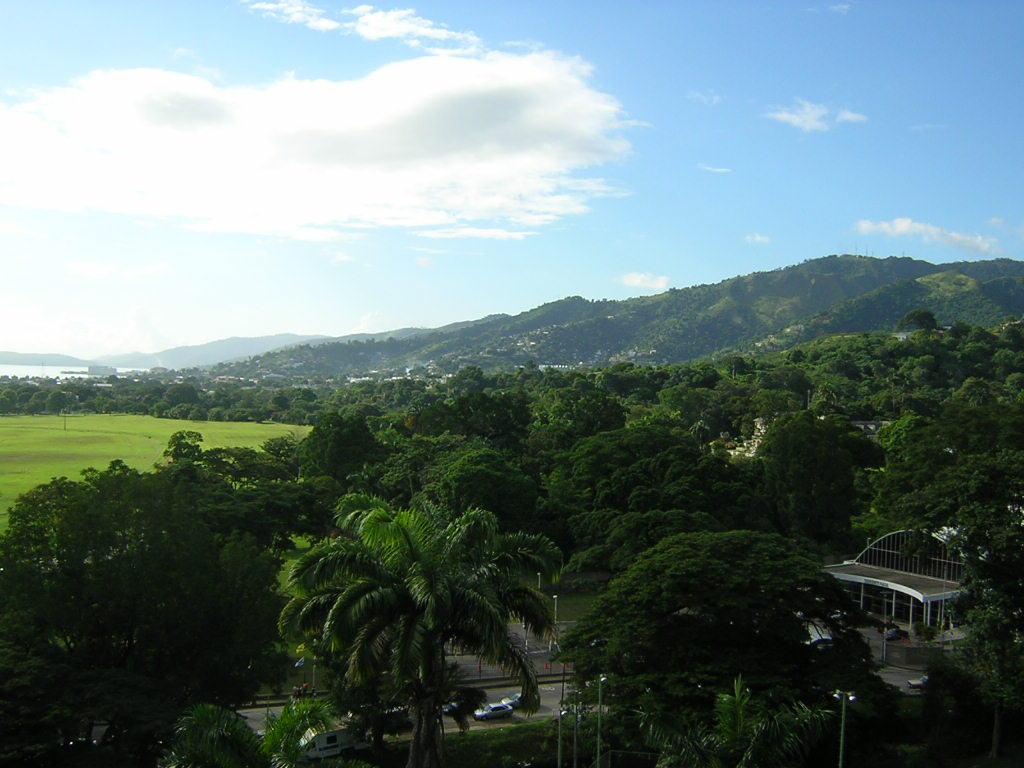
Reaching Trinidad and Tobago from Guyana, I was struck by the stark contrast. While Guyana is a poor country trying to set up a traffic light system for the first time, T and T is affluent all the way. The highways, skyscrapers, luxury hotels, elegant houses with manicured lawns, tarffic jam caused by the huge increase in number of cars, the stylish MaxiTaxis with red band and shops filled with goodies... speak for the prosperity. The 11000 US dollars of per capita income is the highest in the region. Even the villages are prosperous with modern houses, good roads and all the basic amenities.
Port of Spain, the capital has lot of greenery. The Queen's park in the heart of the city is green,very large and well maintained. The hills provide a great view of the city and the sea.
The music scene is vibrant with steel band, chutney music and calypso. The Trinians are proud of their Carnival, the much anticipated event in February-march.
The Indian community tries to preserve and follow the traditional culture and rituals. The Hindu houses fly colorful flags honouring different deities. Dalpuri is a staple diet as in the other diaspora countries.
Pictures of the trip http://picasaweb.google.com/viswanathanifs
Thursday, November 09, 2006
The Eagle's Throne- novel by Carlos Fuentes
The first book of Carlos Fuentes (from mexico) I read was " Death of Artemio Cruz" . I did not finish it. I found it like catch-22, going round and round. Even my familiarity with magical realism did not help in appreciating the book. Then i tried another book " crystal frontier" about mexican emigration to gringoland. It was so so.
With this experience i started reading The Eagle's Throne hesitantly. I was in for a surprise. I enjoyed the book thoroughly. It is a political novel about the six-year cycle of mexican politics, starting with the assumption of power by the new president who gets one single non-reelectable six year term. As soon as the President is elected the conspiracies start for getting into his shoes for the next term. King makers, cabinet ministers and officials start the game of promoting and spoiling the chances of potential candidates by resorting to any means including sex,money, defamation,flattery and blackmail. For anyone who wants to understand Mexican politics, this book is the ideal guide.
Carlos Fuentes has brought out the character of mexican politicians so vividly with biting sarcasm and striking punch lines. Fuentes has filled the novel with a complete cast of characters including congressmen and druglords, lovers and mistresses, noble minded statesmen and corrupt politicians and senators and lowly clerks. He has included historical details and characters.
Fuentes has told the whole story in the form of letters from one character to another.
It starts with the letter of Maria del Rosario Galvan, the queen of politics, who starts grooming the young Nicolas Valdivia as the next President and succeeds in achieving her goal. she uses sex, seduction and blackmail so matter of factly, dispassionately and is candid about this with her adversaries and admirers. She weaves a series of schemes including sending Valdivia to get lessons and secrets from an ex-president retired playing dominoes in vera cruz. Tacito de canal, the chief of staff of the president controls access to the President and implements his orders even before the boss issues them..anticipatory compliance.
It is an extraordinary novel with suspense and thrill added to spice up the real life mexican political story.
I am going to read more books by him now.
Fuentes has quoted a mexican bolero..which has become my favourite one
No me preguntas mas
dejame imaginar
que no existe el pasado
y que nacimos
el mismo instante
en que nos conocimos
dont ask me more
let me imagine that
there was no past
we were born
at the same same time
as we met
With this experience i started reading The Eagle's Throne hesitantly. I was in for a surprise. I enjoyed the book thoroughly. It is a political novel about the six-year cycle of mexican politics, starting with the assumption of power by the new president who gets one single non-reelectable six year term. As soon as the President is elected the conspiracies start for getting into his shoes for the next term. King makers, cabinet ministers and officials start the game of promoting and spoiling the chances of potential candidates by resorting to any means including sex,money, defamation,flattery and blackmail. For anyone who wants to understand Mexican politics, this book is the ideal guide.
Carlos Fuentes has brought out the character of mexican politicians so vividly with biting sarcasm and striking punch lines. Fuentes has filled the novel with a complete cast of characters including congressmen and druglords, lovers and mistresses, noble minded statesmen and corrupt politicians and senators and lowly clerks. He has included historical details and characters.
Fuentes has told the whole story in the form of letters from one character to another.
It starts with the letter of Maria del Rosario Galvan, the queen of politics, who starts grooming the young Nicolas Valdivia as the next President and succeeds in achieving her goal. she uses sex, seduction and blackmail so matter of factly, dispassionately and is candid about this with her adversaries and admirers. She weaves a series of schemes including sending Valdivia to get lessons and secrets from an ex-president retired playing dominoes in vera cruz. Tacito de canal, the chief of staff of the president controls access to the President and implements his orders even before the boss issues them..anticipatory compliance.
It is an extraordinary novel with suspense and thrill added to spice up the real life mexican political story.
I am going to read more books by him now.
Fuentes has quoted a mexican bolero..which has become my favourite one
No me preguntas mas
dejame imaginar
que no existe el pasado
y que nacimos
el mismo instante
en que nos conocimos
dont ask me more
let me imagine that
there was no past
we were born
at the same same time
as we met
Thursday, November 02, 2006
Speech at IIM Kolkata on 2 November
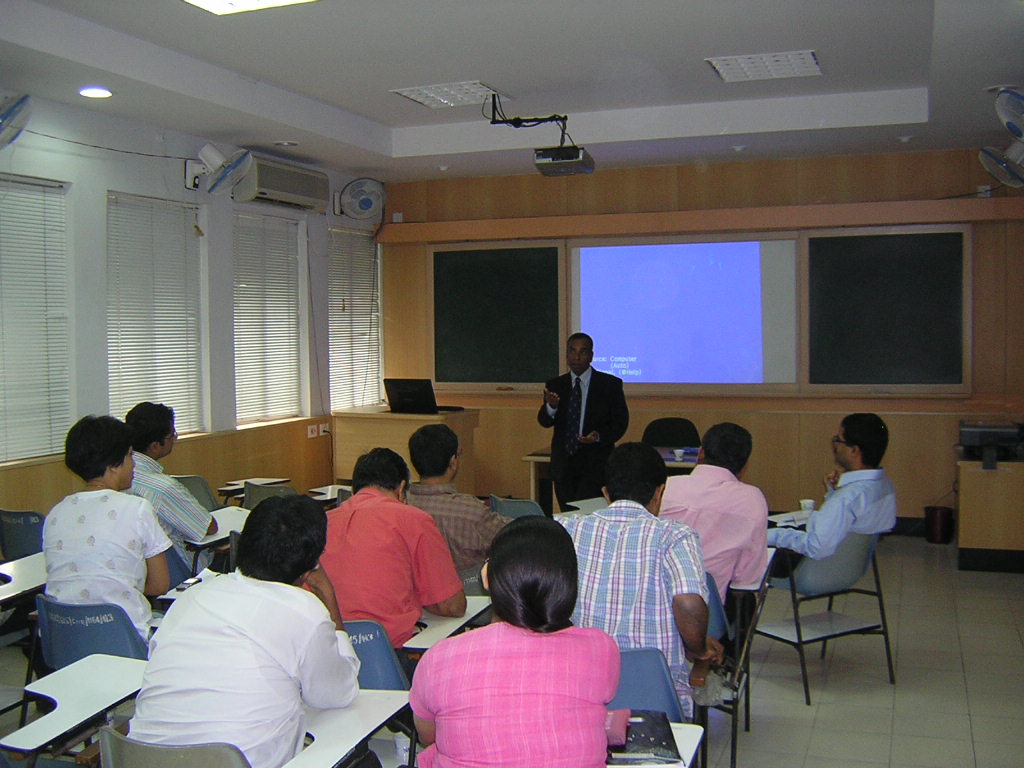
 The topic of my talk was "Business and management culture of Latin America". I traced the evolution of this to the history of the conquest and colonisation by Spanish. While in north america the business precept was " consumer is king" , in latin America it was the other way," "King was the consumer". The king asked the colonisers to get him the gold and silver and let them do what they wanted. While the common law in north america laid the foundation for sound business culture, the civil law of Latamerica gave rise to Sociedad Anonymo companies which depended on trustnot on the legal sanctity of contract. The rule of men( as against rule of law) and the Latam approach of " justice to friends and law to enemies" did not help in providing a solid base for business culture of the region. Later the uncertainties of hyperinflation, debt and currency fluctuations also gave rise to the culture of making fast bucks. But now the business culture has undergone a fundamental transformation with the paradigm shift of the region politically, economically and culturally.
I talked about the "manana" culture and magical realism of Latamerica which have also influenced the management culture. There are, of course ,variations of bz and management culture depending upon the country, region ( Rio and sao paulo- so different) altitude( hill people different from the costenos), and ethnic groups ( lebanese, japanese, germans, italians...)
In my meetings with the Director, Dean and Prof Abraham( who has come back from trip to Latamerica),they showed interest in student exchanges, faculty and research cooperation and organising India programmes in Latin America and vice versa. These exchanges would add a business management dimension to the growing relations between India and Latin america. They remembered an alumni , Rakesh vaidyanathan,who is in Brazil in the business of promoting business between India and latin America.
Sunday, October 29, 2006
la fiesta del chivo - movie on Dominican Republic
La fiesta del chivo- the feast of the goat is the movie based on the novel by the same name written by Mario vargas Llosa, the Peruvian writer.
It is about the dictatorship of Trujillo in Dominican Republic( DR). The story starts with Urania who returns after 30 yrs in newyork to visit her father Cabral,who was the senate leader during the dictatorship. The meeting with her father brings back the memories of the atrocities of Trujillo, who ran the country like his personal ranch and ruthlessly suppressed any opposition by indiscriminate assasinations. He humilitates Cabral, when he gives his opinion, which is not to the liking of Trujillo. The desperate senator sends his teenage daughter to Trujillo's fiesta. She discovers on arrival at Trujillo's ranch that she is the only guest invited for the party with him. Trujillo humiliates the daughter too. The movie ends with the assasination of Trujillo and the bloodbath which follows it.
The movie refers to the killing of the famous three Mirabel sisters by Trujillo. Julia Alvarez has written a novel on this,called as" In the time of butterflies".
what a coincidence ! I met the daughter of one of the three sisters( maria Teresa) in the party hosted by the Ambassador of Dom Republic yesterday. There was also the fourth sister, Dede, who was lucky to survive the killings. It was an emotional meeting with them. They have promised to convey my Saludos to Julia Alvarez... and extend my invitation to her to visit India.
The film, released in 2005, was shot in DR and partly in Spain.
The director Luis Llosa from Peru is a cousin of the writer Mario vargas Llosa.
Isabella Rosselini who has acted as Urania is an Italian and a Lancome model.
It is about the dictatorship of Trujillo in Dominican Republic( DR). The story starts with Urania who returns after 30 yrs in newyork to visit her father Cabral,who was the senate leader during the dictatorship. The meeting with her father brings back the memories of the atrocities of Trujillo, who ran the country like his personal ranch and ruthlessly suppressed any opposition by indiscriminate assasinations. He humilitates Cabral, when he gives his opinion, which is not to the liking of Trujillo. The desperate senator sends his teenage daughter to Trujillo's fiesta. She discovers on arrival at Trujillo's ranch that she is the only guest invited for the party with him. Trujillo humiliates the daughter too. The movie ends with the assasination of Trujillo and the bloodbath which follows it.
The movie refers to the killing of the famous three Mirabel sisters by Trujillo. Julia Alvarez has written a novel on this,called as" In the time of butterflies".
what a coincidence ! I met the daughter of one of the three sisters( maria Teresa) in the party hosted by the Ambassador of Dom Republic yesterday. There was also the fourth sister, Dede, who was lucky to survive the killings. It was an emotional meeting with them. They have promised to convey my Saludos to Julia Alvarez... and extend my invitation to her to visit India.
The film, released in 2005, was shot in DR and partly in Spain.
The director Luis Llosa from Peru is a cousin of the writer Mario vargas Llosa.
Isabella Rosselini who has acted as Urania is an Italian and a Lancome model.
Friday, October 27, 2006
Brazilian interest in Mahatma Gandhi
The interest is not for fashion nor induced by Munnabhai film
Palas Athena, a NGO from Sao Paulo has been disseminating Gandhiji's ideals in Brazil seriously and sincerely. They have been organising week-long celebrations of Gandhi Jayanthi for the last 25 yrs. Not just by way of garlanding the statue or formal speeches.They go to street children, teachers, schools, NGOs and police besides intellectuals with community activities. They inculcate in young minds the spirit of non-violence and peace.
here is the report I have got from Lia Diskin, the director of Palas Athena about this year's 2 oct activity.
"We are still intoxicated by the 25th Gandhi Week. The name is Week but in truth it takes up the month of October as a whole. This year we managed to include some of the 150 activities in 11 of the FEBEM ( juvenile prisons) units of São Paulo. These are places where young law-breakers are kept until they come of age. Our volunteers show a film on Gandhi and then discuss it with the inmates. These experiences have been very good and light up our hopes".
The force behind these Gandhian interest and activities is Lia Diskin, director of Associação Palas Athena. I have the greatest admiration and respect for her selfless public work. She is a true Gandhian in belief and practice both in private and public life.
Palas Athena had organised a Gandhi project with the 80000 police force of sao paulo state in 1998 to calm down the police mind and instill compassion in them.
The auditorium of Palas Athena is named after Mahatma Gandhi. Palas Athena runs a orphanage called as House of Pandavas. They have translated and published the autobiography of Gandhi in Portuguese.
Information on the Gandhian activities of Palas Athena are in www.palasathena.org
Palas Athena, a NGO from Sao Paulo has been disseminating Gandhiji's ideals in Brazil seriously and sincerely. They have been organising week-long celebrations of Gandhi Jayanthi for the last 25 yrs. Not just by way of garlanding the statue or formal speeches.They go to street children, teachers, schools, NGOs and police besides intellectuals with community activities. They inculcate in young minds the spirit of non-violence and peace.
here is the report I have got from Lia Diskin, the director of Palas Athena about this year's 2 oct activity.
"We are still intoxicated by the 25th Gandhi Week. The name is Week but in truth it takes up the month of October as a whole. This year we managed to include some of the 150 activities in 11 of the FEBEM ( juvenile prisons) units of São Paulo. These are places where young law-breakers are kept until they come of age. Our volunteers show a film on Gandhi and then discuss it with the inmates. These experiences have been very good and light up our hopes".
The force behind these Gandhian interest and activities is Lia Diskin, director of Associação Palas Athena. I have the greatest admiration and respect for her selfless public work. She is a true Gandhian in belief and practice both in private and public life.
Palas Athena had organised a Gandhi project with the 80000 police force of sao paulo state in 1998 to calm down the police mind and instill compassion in them.
The auditorium of Palas Athena is named after Mahatma Gandhi. Palas Athena runs a orphanage called as House of Pandavas. They have translated and published the autobiography of Gandhi in Portuguese.
Information on the Gandhian activities of Palas Athena are in www.palasathena.org
Sunday, October 22, 2006
Two Brazilian films on football and sex
The film on football is " casamento de Romeu e julietta" - marriage of Romeo and Juliet.
It is about the foot ball obsession of the Brazilians. Julietta's family is a fanatic supporter of Palmeiras team of Sao Paulo and her father is a director of the palmeiras club. She falls in love with Romeu, who is a fan of Corinthians. Julieta advises him to pretend as a Palmirense to get acceptance of her family. But this is rejected by the grand mother of Romeu as a disgrace. Finally Romeu gets the courage to tell his would be father-in-law that he is a Corinthian. This provokes an outrage and Romeu is chased out. But the daughter decides to leave the house and marry Romeu, creating a revolution and a comedy of the outburst of her family.
The film brings out the football fanaticism of Brazilians and the extent to which their life gets overtaken by the game.
The film , released in 2005, has been directed by Bruno Barreto, who has directed several other brazilian movies. His other foot ball film" Bossanova" is also a hilarious comedy.
Sexo, Amor e Traison"- Sex, love and Betrayal is a film about sex. Caution... sex is not an obsession of Brazilians. It is just natural. They do not twist and turn because of sex. Nor does the society has any artificial and hypocritical suppressions. Their approach is humane. They celebrate sex as an essential and enjoyable part of life.
The theme of the movie is universal. Love and sex lose their importance in the course of day to day life of marriage. The story is about two couples in Rio.The wives nag the poor husbands complaining of inadequate attention. The husbands whose primary goal is success in career are unable to cope with this internal attack. At this time of marital crisis, the previous boyfriends and girlfriends appear, adding to the complication. Both couples take to adventurous diversions. Finally they reunite with happy ending. These give an idea of what happens in real life in Brazil. There is sex beyond love and love beyond sex !
Jorge Fernando, director of this film ( release- 2004), has directed many Brazilian soap operas.
It is about the foot ball obsession of the Brazilians. Julietta's family is a fanatic supporter of Palmeiras team of Sao Paulo and her father is a director of the palmeiras club. She falls in love with Romeu, who is a fan of Corinthians. Julieta advises him to pretend as a Palmirense to get acceptance of her family. But this is rejected by the grand mother of Romeu as a disgrace. Finally Romeu gets the courage to tell his would be father-in-law that he is a Corinthian. This provokes an outrage and Romeu is chased out. But the daughter decides to leave the house and marry Romeu, creating a revolution and a comedy of the outburst of her family.
The film brings out the football fanaticism of Brazilians and the extent to which their life gets overtaken by the game.
The film , released in 2005, has been directed by Bruno Barreto, who has directed several other brazilian movies. His other foot ball film" Bossanova" is also a hilarious comedy.
Sexo, Amor e Traison"- Sex, love and Betrayal is a film about sex. Caution... sex is not an obsession of Brazilians. It is just natural. They do not twist and turn because of sex. Nor does the society has any artificial and hypocritical suppressions. Their approach is humane. They celebrate sex as an essential and enjoyable part of life.
The theme of the movie is universal. Love and sex lose their importance in the course of day to day life of marriage. The story is about two couples in Rio.The wives nag the poor husbands complaining of inadequate attention. The husbands whose primary goal is success in career are unable to cope with this internal attack. At this time of marital crisis, the previous boyfriends and girlfriends appear, adding to the complication. Both couples take to adventurous diversions. Finally they reunite with happy ending. These give an idea of what happens in real life in Brazil. There is sex beyond love and love beyond sex !
Jorge Fernando, director of this film ( release- 2004), has directed many Brazilian soap operas.
Thursday, October 19, 2006
Pantaleon y las visitadoras - Peruvian film
This is one of the best Latino films I have seen so far. A delighful and enjoyable comedy with a typical latino flavour.
The Peruvian army captain Pantaleon Pantoja, a very serious and efficient officer, is chosen by his superiors to set up a special service of 'visitors' to satisfy the sexual needs of the soldiers posted on remote jungle outposts in Amazon area. The young married captain, faithful to his wife and disciplined militarily and morally, does not like the work but agrees to carry out his duty. He puts his organisational talents to work and establishes a system of visitors in a typical military disciplined way. He tells his wife that he is doing a secret work.
But his resistance collapses in front of the seductive girl called as " la colombiana" who conquers him finally. Marriage breaks and eventually La Colombiana herself is killed in an accident. Pantoja organises a public mass to mourn the martyrdom of the special visitadora. This becomes a scandal and the army chief puts an end to the visitadora system.
This movie is based on a book by my most favourite Peruvian writer Mario Vargas Llosa.
The Colombian actress Angie Cepeda who acts as "the colombiana" is very striking and charming. She has superbly portrayed her seducing role.
The director of the movie is Francisco Lombardi from Peru. The film was released in 2000.
The Peruvian army captain Pantaleon Pantoja, a very serious and efficient officer, is chosen by his superiors to set up a special service of 'visitors' to satisfy the sexual needs of the soldiers posted on remote jungle outposts in Amazon area. The young married captain, faithful to his wife and disciplined militarily and morally, does not like the work but agrees to carry out his duty. He puts his organisational talents to work and establishes a system of visitors in a typical military disciplined way. He tells his wife that he is doing a secret work.
But his resistance collapses in front of the seductive girl called as " la colombiana" who conquers him finally. Marriage breaks and eventually La Colombiana herself is killed in an accident. Pantoja organises a public mass to mourn the martyrdom of the special visitadora. This becomes a scandal and the army chief puts an end to the visitadora system.
This movie is based on a book by my most favourite Peruvian writer Mario Vargas Llosa.
The Colombian actress Angie Cepeda who acts as "the colombiana" is very striking and charming. She has superbly portrayed her seducing role.
The director of the movie is Francisco Lombardi from Peru. The film was released in 2000.
Tuesday, October 17, 2006
Machuca - Chilean movie
This is the second Chilean film I have come to like after " Mi Mejor inimigo"
The theme is Chilean and Latin American.
It is about the turbulent years of the leftist Allende government which had polarised the society violently.
Machuca is a slum kid , given a scholarship by a "red priest" to join the exclusive private English medium school for the rich class. The naive experiment of the American priest does not work. Machuca influences Gonzalo a boy from a rich family and opens his eyes to the poor who survive on the margins of the society and support the leftist revolution of Allende. Gonazalo is torn at home by his fractured family, in the clashes between the rich kids and poor ones at the school and the confrontation between the revolutionaries and reactionaries in the streets. After the overthrow of Allende, the military takes over even the school and throws out the poor kids.
Most of the things depicted in the film actually took place in real life in Chile and in other countries of military dictatorships such as Argentina. For the Chileans it was a nightmare and an aberration in their history. For the non -Chilean audience it gives a glimpse of the turmoil in the society and how it affected even the children.
The film is entertaining too, with its rich and colorful vocabulary of abusive words used by the kids. I was more used to mexican vocabulary. The Chileans are not far behind. The innocence of the kids, their kissing scenes and the selling of flags to rival processionists have been brought out vividly with an emotional and sensitive touch. The kids are charming and endearing with their acting.
Released in 2004, the film was directed by Andres Wood of Chile.
The theme is Chilean and Latin American.
It is about the turbulent years of the leftist Allende government which had polarised the society violently.
Machuca is a slum kid , given a scholarship by a "red priest" to join the exclusive private English medium school for the rich class. The naive experiment of the American priest does not work. Machuca influences Gonzalo a boy from a rich family and opens his eyes to the poor who survive on the margins of the society and support the leftist revolution of Allende. Gonazalo is torn at home by his fractured family, in the clashes between the rich kids and poor ones at the school and the confrontation between the revolutionaries and reactionaries in the streets. After the overthrow of Allende, the military takes over even the school and throws out the poor kids.
Most of the things depicted in the film actually took place in real life in Chile and in other countries of military dictatorships such as Argentina. For the Chileans it was a nightmare and an aberration in their history. For the non -Chilean audience it gives a glimpse of the turmoil in the society and how it affected even the children.
The film is entertaining too, with its rich and colorful vocabulary of abusive words used by the kids. I was more used to mexican vocabulary. The Chileans are not far behind. The innocence of the kids, their kissing scenes and the selling of flags to rival processionists have been brought out vividly with an emotional and sensitive touch. The kids are charming and endearing with their acting.
Released in 2004, the film was directed by Andres Wood of Chile.
Sunday, October 15, 2006
Miss Magical Realism
appears from nowhere
disappears into the air
appears and disappears
surprising and disappointing
calls me on fone
takes not my calls
sends me email
smile is her response
tempts me with promises
teases me with airkisses
embraces me publicly
eludes me discretely
suave and sweet
swaying bossanova
singing Gabriela
aroma of canela
magic is her spell
mystic her appeal
is she the angel?
Is it for real?
oops..I got it now..
miss magical realism
disappears into the air
appears and disappears
surprising and disappointing
calls me on fone
takes not my calls
sends me email
smile is her response
tempts me with promises
teases me with airkisses
embraces me publicly
eludes me discretely
suave and sweet
swaying bossanova
singing Gabriela
aroma of canela
magic is her spell
mystic her appeal
is she the angel?
Is it for real?
oops..I got it now..
miss magical realism
Movie- la mujer de mi hermano
La mujer de mi hermano- The wife of my brother - is the movie I watched yesterday.
It is a Mexican film shot in Chile by a Peruvian director Ricardo de Montreuil. Barbara Mori, the lead actress was born in Montevideo and has now become a mexican. Christian meier, who acts as the husband is a Peruvian while Manolo Cardona, acting as the the younger brother is Colombian.
After almost 10 years of marriage, the sensual and attractive Zoe( Barbara Mori) discovers that her marriage lacks passion and surprise. She falls for the bohemian painter brother of the husband. It starts innocently but leads to adventurous sex and games. She confides this to her male friend who is gay. Ultimately, she discovers that her husband himself is a closet gay. But he loves her even after knowing her infidelity.
Usual soap opera stuff. But what has made it interesting is the acting by Barbara Mori, who has portrayed the typical Latina character... seeking constantly new experience...adding new dimensions always... sensual, charming, sweet ... adventurous and audacious ...
It is a Mexican film shot in Chile by a Peruvian director Ricardo de Montreuil. Barbara Mori, the lead actress was born in Montevideo and has now become a mexican. Christian meier, who acts as the husband is a Peruvian while Manolo Cardona, acting as the the younger brother is Colombian.
After almost 10 years of marriage, the sensual and attractive Zoe( Barbara Mori) discovers that her marriage lacks passion and surprise. She falls for the bohemian painter brother of the husband. It starts innocently but leads to adventurous sex and games. She confides this to her male friend who is gay. Ultimately, she discovers that her husband himself is a closet gay. But he loves her even after knowing her infidelity.
Usual soap opera stuff. But what has made it interesting is the acting by Barbara Mori, who has portrayed the typical Latina character... seeking constantly new experience...adding new dimensions always... sensual, charming, sweet ... adventurous and audacious ...
Subscribe to:
Posts (Atom)


