Sunday, May 10, 2020

The US navy’s role behind the “Operation Gideon”

  
The recent “Operation Gideon” attempt by US mercenaries to land in Venezuela to over throw Maduro is not an isolated adventure. The US Southern Command (SouthCom) has been preparing to facilitate and follow up on the plan to catch Maduro. This is evident from the following events and public statements. Obviously, this is only the tip of the iceberg. Lot more should have gone on  secretly.


In the middle of the struggle against covid19 crisis, Defense Secretary Mark Esper announced at a White House briefing on 1 April that the US would double its naval deployment under SouthCom’s capacity to conduct anti-drug operations in the Caribbean. The additional naval assets include destroyers, littoral combat ships, Coast Guard cutters, patrol, AWACS and JSTARS aircrafts, helicopters, surveillance drones and Security Forces Assistance Brigade Company for advise and assist. This is an overkill since the drug interdiction clearly does not need such expensive and massive destructive assets. Moreover, major part ( 80 percent) of sea- based drug trafficking goes on the Pacific side, according to the American authorities themselves. So why the deployment in the Caribbean and not in the Pacific?
The media reported that the deployment announced is one of the largest U.S. military operations in the region since the 1989 invasion of Panama to remove Gen. Manuel Noriega from power and bring him to the U.S. to face drug charges. The reference to Noriega was made intentionally by the Administration to inspire those who wanted to go after Maduro. 

In January this year, a littoral combat ship had conducted a “freedom-of-navigation” operation close to Venezuela’s coastline to test the preparedness of Venezuelan navy. The Venezuelans made some noise but they could not do anything about it.

In Aug 2019, Adm. Craig Faller, the head of SouthCom said,”military officials are focusing on preparing for “the day after” once “isolated” Venezuelan President Nicolás Maduro leaves power”. In an interview on 21 April, he said that the recent decision to double anti-narcotics assets in Latin America was months in the making and not directly tied to Maduro’s indictment in New York on charges of leading a narcoterrorist conspiracy. 
On 30 March 2020,  a mysterious cruise ship RCGS Resolute was involved in an incident off the Venezuelan coast which led to the sinking of the Venezuelan Coast Guard patrol boat Naiguata following a collision. The cruise ship did not have any passengers but had a hull strong enough to hit and sink the Venezuelan patrol boat, without any damage to itself. The Venezuelans accused the vessel of committing an act of "aggression and piracy" by intentionally ramming and sinking their patrol boat. The cruise vessel went away to Curacao, leaving the job of rescue of the 44 crew of the patrol boat to the Venezuelans. Admiral Faller’s comment on this incident,  “It was a bad day for Venezuelans. Their lack of seamanship and lack of integrity is indicative of how it all played out.”
Secretary of State Pompeo responded to a question from the media saying that ‘ the US government had “no direct” involvement in this operation’. When the Operation Gideon was bungled, the US Administration had no option but to distance themselves.
Money for the operation
In answering another question, he said, “ As for who bankrolled it we are not prepared to share any more information about what we know took place. We will unpack that at an appropriate time”. It is possible that the financing could have come from the Venezuelan government funds and assets, estimated at 11 billion dollars, which have been frozen by US authorities in the name of sanctions. Recently the Trump administration moved 342 million dollars belonging to the Venezuelan Central Bank from a frozen Citibank account to another account at the New York Federal Reserve. On 15 April, the National Assembly lead by Guaido approved in a virtual session, access to some funds that had recently been released by the US government. This money is being used, among other things, to pay for the diplomats appointed by Guaido in countries which recognize him. 
Reasons for failure
There are two main reasons for the failure of the invasion attempt. First, the Cuban intelligence, which is advising the Venezuelan regime, is always one step ahead of their American counterparts. The Cubans have an impeccable record of preventing and stopping the numerous American attempts to assassinate Fidel Castro and invade their country. It is an expertise gained over a long period of sixty years, day in and day out. The Cuban intelligence is embedded not only with their Venezuelan counterparts but also in the Venezuelan military to guard against conspirators and coupsters. President Chavez started this system after the coup against him in 2002. 
Second, the Americans do not have in-person contacts within Venezuela to understand the real situation within Venezuela, recruit allies, provide support and prepare the ground from within. There is no US embassy in Caracas. This is a major handicap. Before 2002, the US military attache had his office within the Venezuelan army headquarters. Chavez kicked them out after the coup.  Hmm.. this reminds one of the statement attributed to the former president of Chile, Michelle Bachelet, “ the reason why there are no coups in US is because there is no American embassy in Washington DC.
Man behind the ops
The US policy of regime change by hook or crook is not going to stop after this abject failure of Operation Gideon. The US will continue to bet on clandestine military and paramilitary attempts to overthrow rather than through genuine negotiations or democratic means. This is clear from the appointment of Elliot Abrams as the US special representative for Venezuela since January 2019. He has so much of Latin American blood in his hands with his notorious track record for using US military and covert assistance in the eighties to cause hundreds of thousands of deaths and civil wars in Central America.  As  Assistant Secretary of State in the Reagan administration, he had arranged supply of arms and other support to the Guatemalan Rios Mont dictatorship which massacred several thousand indigenous people, the rightwing death squads in El Salvador which killed leftists in thousands and the Contras who committed atrocities against the Sandinista government. He was indicted for his involvement in the Iran-Contra scandal but got out with a presidential pardon. Abrams was said to have had a hand in the coup against Chavez in 2002.  Now Abrams does not need to resort to any illegal operation to get funds as he did in the Iran-Contra scheme. He has an open access to millions of dollars of Venezuelan money frozen in US. So long as Abrams is the point man for Venezuela, one should expect more Operation Gideon type of attempts.

The Week magazine published the article with an edited version on 11 May
https://thewire.in/world/operation-gideon-a-flop-but-its-producers-in-washington-will-keep-targeting-venezuela

Thursday, April 30, 2020

Tyrant Memory – a political novel about El Salvador


From the title of the book, I expected something like Gabriel Garcia Marquez’s “The General in his Labyrinth” in which Bolívar's life is brought out through the narrative of his memories. No.. the memory in Moya’s novel is that of Haydée Aragon, a simple and innocent housewife who has no political, literary or intellectual interests. She is just another victim of  the tyrannical rule of a military dictator of El Salvador. She starts recording her memory as a diary just to pass time and make use of the 'beautiful notebook' she had impulsively bought during a shopping in Brussels. 


Haydée spends her time mostly in Fiesta, Canasta and Siesta, typical of her upper class. She goes for coffee, cakes and gossip with other matrons like Doña Teresita, Doña Angelita and Doña Rosita. She laughs and cries with the dialogues of characters in the radio soap operas. She is a pious soul who would not miss a single mass at the local church. She is a valuable client at the neighbourhood beauty salon. She goes for extra make ups before visiting her husband in jail in order to make him feel good. Since she has live-in maid and cook, there is virtually no work at home, except trying out some exotic recipes. The family chauffeur drives her around. Wherever she goes, she is recognized and respected because of the prestige of her family. 

The quiet and predictable routine of Haydée goes for a toss when her husband Pericles Aragaon is detained by the country’s tyrant for subversive writings. Her visits to him in the jail awaken her to the political realities. She gets to meet the families of other political detainees some of whom are tortured and executed. Her husband has been spared since he had earlier served as secretary of the tyrant and later as his ambassador to Belgium. But when the dictator starts becoming more intolerable, Pericles resigns his post and returns to the country to become a left wing journalist writing against the dictatorship.

Haydee’s elder son Clemen is a broadcast journalist in a radio station. He is in the forefront cheerleading a coup against the dictator. But when the coup fails, his name enters the execution list and he is on the run. Her second son in high school is also drawn into student agitations against the government. Her daughter is in Costa Rica married to a communist leader.

Haydee’s father is a coffee baron. He and his oligarchic friends get fed up with the oppression of the dictator and his greedy tax increases and turn against him. Her father-in-law is a colonel and governor of a province and is loyal to the president. 

Her daughter-in-law takes to alcohol and a colonel as lover when her husband is in hiding. The colonel is in charge of tracking down the antigovernment activists.

Many of Haydee’s relatives and friends become victims of the dictatorship. Some are in jail, some in hiding and others are executed.  On the other hand, there are a few who support the dictator and even become informers. The society is polarized and people lose trust in each other. The antigovernment relatives do not attend social events which have the presence of pro-government guests.

Surrounded by these happenings around her, Haydee is naturally and inevitably driven to politics. She joins the protest movements and distributes copies of political manifesto which she hides inside her bra and stockings. She helps with the distribution of money to those on strikes protesting against the tyranny.
  
The general who is the dictator of the country is called as Warlock (El Brujo) because of his eccentric beliefs in occult, reincarnation, vegetarianism and theosophy. According to him "it is a greater crime to kill an ant than a man, for when a man dies he becomes reincarnated, while an ant dies forever." The character is based on the real life story of Maximiliano Hernández Martínez who was the dictator of El Salvador in the period 1935-44. 

Horacio Castellanos Moya, the author of the novel, was born in Honduras but brought up in El Salvador. His mother was Honduran and father Salvadorean. He has written several short stories and novels besides journalistic articles covering the civil wars of Central America. Some of his writings became controversial and he had to flee El Salvador. He has been living in exile in US after having lived in Mexico for many years. His exile experience in Mexico is brought out in his other novel  “The dream to return”. I enjoyed reading this one too. 


Moya, the author


The tyranny portrayed in “ Tyrant Memory” is mild and much less tragic in comparison to the shock I felt in another Salvadorean writer Mario Bencastro’s novel “A shot in the Cathedral”. 

In “Tyrant Memory”, the dictator leaves the presidency when the protests and strikes paralyse the country. He goes into exile as in reality in 1944 when President Martinez fled. The lack of US support was a decisive factor in the despot’s exit.

But the dictatorship portrayed in “A shot in the Cathedral” is vicious and brutal. The reason for this is simple. President Reagan supported the Salvadorean dictatorship in the eighties with arms and aid in the name of his anticommunist war. The US redoubled its support to the Salvadorian dictatorship to prevent "another Nicaragua" after the victory of Sandinista revolution in 1979 in Nicaragua. 

The decade of 1980s is known as the Lost Decade in Latin America because of the loss of economic growth caused by the neoliberalistic policies imposed on the region by the Washington DC-Wall Street combine. But the Central American countries lost much more than GDP growth. They lost hundreds of thousands of people in the proxy wars imposed on them from Washington DC.

The small Central American and Caribbean countries get hit by seasonal hurricanes from time to time. But the wind blowing from Washington DC could be more devastating and deadly for them. 

Saturday, April 18, 2020

India’s exports to Latin America increased to 13.2 billion dollars in 2019


India’s exports to Latin America increased to 13.2 billion dollars in 2019 (January-December) from 13 bn in 2018, according to the just-released trade figures of ITC Geneva. 

Brazil came back to retain its rank as the largest market for India’s exports in Latin America after having ceded that position to Mexico for three years from 2016 to 2018.

The top destination of India’s exports were as follows:
Brazil  4.06 billion dollars,  Mexico 3.68 bn, Colombia 1.03 bn, Chile 869 m, Peru 739 m, Argentina 613 m and Central America(6 countries) 991 m.

Major exports were: vehicles 3.2 bn, chemicals 2 bn, equipments and machinery 1.3 bn, pharmaceuticals 991 m, textiles 865 m and diesel 793 m

Pharmaceutical exports reached a record of 991 million dollars in 2019 from 880 m in 2018. India is the fifth largest global supplier to the region. Main destination of pharma exports were: Brazil 282 m, Chile 99 m, Peru 81 m, Mexico 65 m, Colombia 59 m, Venezuela 46 m, Guatemala 46 m and Dominican Republic 43 m.

Imports had declined to 22 bn dollars in 2019 from 26 bn in 2018. The fall in prices of oil and minerals was the main reason for the decline in imports.

Principal sources of imports were: Venezuela 5.58 bn, Mexico 5.56 bn, Brazil 2.96 bn, Argentina 2.07 bn, Peru 1.88 bn, Chile 1.15 bn, Bolivia 885 million, Colombia 734 m, Dominican Republic 483 m and Ecuador 311 m.

Main item of imports: crude oil 11.35 billion dollars, gold 4.2 bn, vegetable oil 1.9 bn, copper 1.08, equipments and machinery  869 million dollars, wood 343 m and chemicals 294 m

In 2019 most of the oil supply of 11.35 billion came from just two countries: Venezuela 5.6 bn and Mexico 4.4 bn.

The major sources of gold were: Peru 1.75 bn, Bolivia 881 m, Dominican Republic 460 m, Brazil 419 m and Colombia 405 m.

As usual, Argentina was the most dominant supplier of vegetable oil and Chile was the source of copper.

Imports of raw sugar declined steeply to 274 million in 2019 from 1 billion dollars in 2017. Raw sugar is imported from Brazil, refined and reexported to other countries.

India was the 
seventh largest destination for Latin America's global exports. 
#1 market for vegetable oil exports
#3 for crude oil 
#4 for gold

Latin America's imports were 1.07 trillion dollars and exports 1.06 tn in 2019. 
Mexico was the top trader with imports of 467 bn and exports of 472 bn. 
Brazil's imports were 177 bn and exports 223 bn. 
Surprisingly Chile is the third largest trader with imports of 65 bn and exports of 64 bn. Argentina's imports were 65 bn and exports 49 bn
Peru imports 42 bn and exports 45 bn
Colombia imports 40 bn and exports 42 bn


Note: Latin America consists of 18 Spanish-speaking countries  9 in South America, 6 in Central America, 2 in Caribbean (Cuba and Dominican Republic) and Mexico plus the Portuguese-speaking Brazil.


Thursday, April 16, 2020

Coffee and Communism in the volcanic land of El Salvador


Coffee and Communism had formed an explosive mix in the tragic history of El Salvador, according to Augustin Sedgewick in his book "Coffeeland: A history" 
Coffee created wealth for the rich and found the largest export market in US.
But coffee became a curse for the poor indigenous people who were deprived of their traditional land source for food and were forced to work as plantation workers in miserable conditions.
Communism gave hope to the poor but that brought in US intervention which caused even more death and destruction. 


Sedgewick makes an interesting connection of the Salvadorian coffee to Global communism and Manchester capitalism.

Friedrich Engels, from a wealthy German family  goes to Manchester in 1842 to oversee the textile mill set up by his father. Manchester was the global capital of Industrial Revolution at that time when British factories took in one third of world’s raw materials and produced forty percent of world’s manufactured exports. Engels is impressed by the capitalist achievement but is shocked by the poor conditions of the workers. He puts these in his book “ The condition of the working class in England”. Later in 1948, he coauthors with Karl Marx the Communist Manifesto which changes the history of the world including El Salvador. 

Born in a poor working class family of Manchester, James Hill leaves the city in 1899  at the age of eighteen to become a salesman of Manchester textiles in the far off El Salvador. There he ventures into coffee cultivation in Santa Anna, near the Izalco volcano which used to erupt daily, reminding him the tall factory chimneys of Manchester. The volcanic soil of the surrounding hills is good for coffee which accounted for ninety percent of the country’s exports at the time of his arrival. The coffee plantations run by the people of European origin use the native Indian labour with low wages and hard work. The coffee barons take away the community lands and forests of the Indians, with governmental facilitation (in the name of privatization of land), depriving the Indians their source of maize, fruits, fuel and medicine. Some of the coffee planters take extraordinary steps to prevent the poor workers from free fruits and eatables which are  available freely in the coffee plantations. They cut down the fruit trees and remove beans and other food crops which are grown inside the plantations and plant useless and even poisonous plants. Unable to feed themselves from the land, the Indians have no other alternative but to join as workers in the coffee plantations. 

Hill succeeds as a Coffee King and joins the list of fourteen oligarchic families which control the economy and politics of El Salvador. Farabundo Marti, the communist leader, fights against the exploitation and oppression of the agricultural workers. Born in a landlord’s family, Marti espouses the cause of the poor even as a college student. After being thrown out of the Law School and sent into exile, he joins Sandino and becomes his trusted lieutenant in the fight in Nicaragua against the dictatorship. Thereafter, he comes back to lead an armed uprising of the workers. But the poorly armed workers are massacred by the National Guards with their latest machine guns imported from US. Several thousands of the are massacred in what is known as “La Matanza” (The Slaughter) in 1932. Marti and his fellow leaders are executed by firing squads.  

Later, the followers of Marti form a Farabundo Marti National Liberation Front (FMLN),  which takes up arms against the military dictatorship in 1979. They are inspired by the success of Sandinistas who overthrew the Somoza dictatorship Nicaragua. But the military dictatorship massacres thousands of people with the active support of the Reaganadministration in the name of anti-communism. The civil war of the country comes to an end with the peace deal in 1992. Later, Mauricio Funes of FMLN becomes president in 2009. He is succeeded by Sanchez Ceren, a former guerilla fighter, who gets elected as president in 2014. 

The Izalco volcano in the heart of the coffee plantations in Santa Ana area used to erupt many times daily from 1770 to 1966. It was known as the El Faro del Pacifique ( Light of the Pacific). It has stopped eruption since 1966. The Salvadoreans hoped that the 1992 Peace Agreement had put an end to the eruption of clash between communism and coffee.


But the coffee vs communism war has now been replaced by the gang war between Mara Salvatrucha and Barrio18 gangs. 

The civil war of the eighties drove some youth to flee to US. But these poor and illiterate youth fell in the trap of the drug gangs in LA and become gangsters themselves. The US deported these gangsters back to El Salvador where these have formed two large notorious gangs Mara Salvatrucha (MS13) and Barrio18. These hold the country to ransom by their brutal crime and violence making El Salvador as one of the top murder capitals of the world. The rivalry between these two became so violent at one stage in 2012, the government of El Salvador intervened and brokered a ceasefire between them. In order to bring the two sides to the negotiating table, the government relaxed conditions in the prisons in which the members of the two gangs were held. Following this peace deal, the murder rate had dropped immediately. But this truce broke down in 2014 and crime has gone up again.Now the Salvadoreans flee to escape the gang violence and try for asylum in US. 

These days, the American media warn Latin Americans about the Debt Trap, when they take credit from China for infrastructure and other projects. Let us see how the American Debt Trap worked out for El Salvador, which had borrowed six million dollars in 1922 from Chatham Phoenix National Bank and Trust of New York with guarantee from the State Department.
El Salvador had to accept three conditions.
1st Condition- An American Customs Inspector was appointed in El Salvador to collect part of the export tax on coffee.
2nd An American chief of Agriculture was posted in Salavodrean Ministry. He made the Salvadoreans plant commercial crops for exports so that these exports could be taxed and US would get a share of the tax. This meant the land under production of corn and beans had to be diverted for commercial crops. The result was that production of staples had gone down and the country had to import food. The price of corn and beans had doubled and tripled. The poor farmers had to give up their land to the big planters and go to work in the coffee and commercial crop plantations for daily wages to be able to buy food. 
3rd- An American chief of National Guard (armed police) was posted in El Salvador. He increased the number of Guards and got them paid on priority basis from the export revenue and the external loans. Some of the guards were sent to US for training and brainwashed about the evils of communism and were taught the dirty tricks to kill and torture communists.

But the American method of debt trap in El Salvador is benign in comparison to their occupation of Dominican Republic where they sent the Marines to enforce debt repayment. 

The book starts with the 1979 kidnapping of Jaime Hill, grandson of the founder, by a revolutionary group which collects a ransom of 4 million dollars and uses it for their insurgent activities. This is insignificant in comparison to the 6 billion dollars aid given by US to El Salvador which was used for death and destruction in the country. The book ends with Jaime Hill taking up charity work to help the poor Salvadoreans.

Alexandra Hill, the daughter of Jaime Hill is the foreign minister of the country in the Nayib Bukele administration since June 2019. She has worked with UN and regional organisations dealing with rehabilitation of drug victims. Bukele had started his political career with FMLN. After his expulsion from the party, he joined a new centre-right party and won in their ticket beating the candidate of FMLN in the presidential elections of 2019. s.

Sedgewick, who has done extensive research on the global history of work, food and capitalism has filled the book with lot of stories and theories throughout the book. Here is one such story:

A small Denver necktie maker called Los Wigwam Weavers lost its best young male loom operators to the war effort in the early 1940s.The owner, Phil Greinetz, hired older men to replace them, but they lacked the dexterity needed to weave the intricate patterns in Wigwam’s ties. Next he hired middle-aged women, and while they could produce ties to his standards, they lacked the stamina to work a full shift. When Greinetz called a company-wide meeting to discuss the problem, his employees had a suggestion: Give us a 15-minute break twice a day, with coffee. Greinetz instituted the coffee breaks and immediately noticed a change in his workers. The women began doing as much work in six and a half hours as the older men had done in eight. Greinetz made the coffee breaks compulsory, but he decided he didn’t need to pay his workers for the half hour they were on break. This led to a suit from the Department of Labor and, eventually, to a 1956 decision by a federal appeals court that enshrined the coffee break in American life. The court ruled that because the coffee breaks “promote more efficiency and result in a greater output,” they benefited the company as much as the workers and should therefore be counted as work time. As for the phrase coffee break, it entered the vernacular through a 1952 advertising campaign by the Pan-American Coffee Bureau, a trade group organized by Central American growers. Their slogan: “Give yourself a coffee-break … and get what coffee gives to you.”

Sedgewick has put the coffee story of El Salvador in the context of the commodity's global history. Coffee, which was native to Ethiopia came to be commercially cultivated in Yemen. The Ottomans started the mysterious custom of coffee drinking and set up coffee houses in the cities conquered by them to demonstrate the ‘civility of their rule’. The Europeans copied from the Ottomans and the coffee houses generated a new social class which discussed literature, philosophy, politics and revolution. The Americans took to coffee to increase productivity. In Latin America, Brazil became the king of coffee, Colombia became the queen and Central America became as pawns.

The book, published on 7 April this year, is available for Indian readers in kindle although the hard copy has to wait out for end of the Corona closure of the world.

Friday, April 10, 2020

Chinese credit, investment and trade with Latin America in 2019

 In 2019, the Chinese credit to Latin America and Caribbean (LAC) countries was 1.1 billion dollars, down from 2.1 bn in 2018, 
Greenfield FDI announcement was 12 bn, up from 1.7 bn in 2018, 
Mergers and Acquisitions was 4.3 bn, down from 9.2 bn in 2018 
Trade was 315 bn dollars, up from 306 bn in 2018- both exports and imports have gone up


Credit

The 1.1 bn sovereign credit in 2019, focussed on hard infrastructure and energy sector development including:
- 600 million dollars lent to the Dominican Republic for improvements to the country’s electricity distribution system, 
-236 million to Argentina for purchase of rail cars, 
-200 million to Suriname to upgrade its International Airport 
-104 million to Trinidad and Tobago to develop the Phoenix Park Industrial Estate in which Chines companies will put up manufacturing/assembly work.

The cumulative total of Chinese credit to the region since 2005 is estimated at 137 billion dollars of which 119.4 bn was given in the decade 2010-19.

The sovereign credit given by China Development Bank (CDB) and China Eximbank to LAC governments and state-run companies fell to 1.1 billion in 2019 from its peak of 36.6 billion dollars in 2010 and mid peak of 21.5 billion in 2015. 

The reasons for the steep decline: 
-Venezuela, the biggest debtor has reached its saturation point with 62 billion dollars while its repaying capacity has been severely degraded by domestic crisis and US sanctions. 
- Instead of big ticket items in a few countries, the Chinese have now started giving small amounts to more countries
- financing is given in many cases directly to Chinese companies instead of giving direct to LAC governments

Besides CDB and Eximbank, the Chinese are giving credit through other regional funds such as the China-LAC Industrial Cooperation Investment Fund (CLAI Fund), China-LAC Cooperation Fund (CLAC Fund) and Special Loan Program for China-Latin America Infrastructure.

In addition to co-financing projects and regional funds, China’s four major commercial banks Industrial and Commercial Bank of China (ICBC), Bank of China, Agricultural Bank of China, and China Construction Bank are increasingly active in Latin America 


Investment

The annual greenfield FDI announcement had climbed from 3.1 bn in 2010 to 10.1 bn in 2014 and had gone down again to 1.7 bn in 2018 before the dramatic jump to 12 bn in 2019.
Among the largest deals announced in 2019 were: 
- Cosco Shipping investment of 3 billion in Peru’s Chancay port project
- TBEA Group’s  2.3 bn JV with Bolivian state company for Lithium production. This is subject to the ongoing political changes in the country
- Huawei’s project to build a second electronics factory in the Sao Paolo state of Brazil with an investment of $800 million
- Hutchison Port Holdings announced a new $450 million cargo port in Veracruz, Mexico, using blockchain technology to allow for more transparent monitoring of the flow of cargo.
- China Three Gorges Corp’s 438 million dollar San Gabán III hydroelectric project

Mergers and Acquisitions

In 2019, Chinese companies spent 4.3 billion on M&A deals in LAC, the lowest sum since 2016 when it was a record 17.5 bn dollars after which it went down to 9.2 bn in 2018.
The major deals were:
- A consortium of three Chinese companies (Hubei Energy Group Co., CNIC Corp., and China Three Gorges Corp.) purchased the Chaglla hydroelectric dam in Peru from Brazilian Odebrecht, for 1.39 billion
- Joyvio Agriculture Development Co Ltd, a private Chinese agricultural processing company, bought a nearly-complete stake (99.8%) in the Chilean Australis Seafoods SA for $985.8 million
- China General Nuclear Power Corp bought the Brazilian Gamma project, which consists of two solar parks and a wind farm, from Italian firm Enel for 779 million. 

Trade

China’s trade with LAC region increased to 315 billion dollars in 2019 from 306 bn in 2018. China’s exports increased to 151 bn from 148 bn while its imports went up to 164 bn from 158 bn.

Mexico has overtaken Brazil as the largest destination of Chinese exports to the region. In 2019, China exported 46 bn to Mexico as against 35 bn to Brazil. But Brazil remains as the largest exporter to China with 79 bn while Mexican exports were just 14 bn.

China’s imports of soybeans, corn and other agrocommodities are likely to be affected by the recent Chinese agreement to buy more ( 200 bn) of these from the US in the next two years.

Global Economic diplomacy projects

More countries from LAC region have signed on to the Belt and Road Initiative (BRI) and the  total is now 19. BRI signatories include Bolivia, Chile, Ecuador, Guyana, Peru, Suriname, Uruguay, Venezuela, Jamaica, Antigua and Barbuda, Barbados, Cuba, Dominica, the Dominican Republic, Grenada,  Trinidad and Tobago, Costa Rica, El Salvador and Panama.

Ecuador has become the first Latin American signatory to Asian Infrastructure Investment Bank (AIIB)

Sources

More information and analysis available in the following:

Scaling back: Chinese Development Bank Finance in LAC,  2019 by Margaret Myers and Kevin Gallagher

China -Latin American economic Bulletin 2020 Edition by Rebecca ray and pedro henrique Batista Barbosa 

Trade map of ITC, Geneva


Sunday, April 05, 2020

Mexican Arjuna - Francisco Madero


Francisco Madero, who was President of Mexico in the period 1911-13, was a spiritualist since his younger days seeking wisdom from many sources including Bhagwat Gita. He wrote articles with a pseudonym Arjuna. In his “Commentaries on the Bhagavad Gita, Madero wrote that the paradox of action-inaction was solved by the key word: duty. “‘Renouncing the fruit of our actions’ should be understood to mean that we should not perform any meritorious action in view of the reward we expect from it but because we consider it to be our duty”. He was inspired by Krishna’s advice, “Hear my words, O prince! in truth I tell you that whoever acts according to dharma [the proper order of the world, the duties of one’s station in life], without desire for the fruit of his action, renounces his action at the same time as he performs it”.


Madero presented himself as a heroic Arjuna in the struggle for democracy, being guided and given courage by the wisdom of Gita. Some of his readers such as Jose Vasconcelos (famous philosopher politician), referred to him as “ Arjuna of Mexico”.

What was Madero's Arjuna dilemma? He was a liberal and progressive fighting against injustice and dictatorship. But the conservatives on the other side who were supporting dictatorship and maintaining their wealth and position were from the same oligarchic families to which he belonged. After becoming President he had dilemmas between punishing and pardoning the conservative conspirators. His choice of pardoning of General Huerta was a fatal mistake. The General turned against him, overthrew him and got him killed.

Madero's commentary on Gita written in 1910 was published in the Mexican Spiritual magazine Helios in 1912, while he was serving as President. It was later reprinted in the Mexican philosopher Jose Vasconcelo’s book “Estudios Indostanicos”.

In a letter to his wife, Madero said that he had come to identify even more with Arjuna, his pseudonym, and went on: I have the feeling that my life is not in danger. But if something happens, I will go to my grave satisfied that I have done my duty. I send you my Bhagavad Gita. Guard it carefully along with the notes I drew from it. 

In 1911, Madero changed his pseudonynm to “Bhima” and wrote a Spiritualist Manual in which he discussed politics purely as a product of morality: “There can be no doubt that if all good men were to cast off their egoism and get involved in public affairs, the people would be governed wisely and the most worthy and virtuous men would be those occupying the highest posts”.


In 1913, President Madero was overthrown in a military coup in which the American ambassador Henry Lane Wilson had a crucial role. While being taken to jail, he was assassinated. An unconfirmed legend says that when he left the Presidential Palace, Madero was carrying his “Commentaries on the Bhagavad Gita.” 

Madero is known in Mexican history as “ the apostle of democracy” who put an end to the long dictatorship of President Porfirio Dias from 1877 to 1911.  When Madero stood in the 1910 elections against Diaz, he was arrested and put in jail. Madero escaped from the prison to US and lead a succcessful uprising against the fraudulent election of Diaz who was forced to resign in May 2011.  Madero won the October 2011 election and became the youngest president, at the age of 38. 

Madero was an unusual politician. Born in one of the five wealthiest families, he got education from US and France. He had studied courses in agriculture and in business management. He was a benign and enlightened landlord, businessman and philonthrophist. He was the first Mexican President to legalize labour unions and the right to strikes. He took to spiritualism and heard the voices including those of his dead brother. He was a vegetarian and teetotaler. He practised homeopathy.

This Mexican connection to Mahabharat is brought out in the book “ Mexico: Biography of power” written by the Mexican scholar Enrique Krauze. 


Monday, March 30, 2020

Searching for Modern Mexico - book

The title of the book is "Searching for Modern Mexico: Dispatches from the front lines of the new global economy", written by Nathaniel Parish Flannery

Flannery gives a first hand account of three Mexican states Chiapas, Oaxaca and Michoacan which are marginalized in the globalized economy of the country. He has stayed in these states and observed the economies of coffee in Chiapas, mezcal in Oaxaca and avocados in Michoacan. 


The indigenous people, who account for over one fifth of the total population Mexico, continue to suffer from poverty, backwardness and inequality. This is the main problem in Chiapas and Oaxaca, which have the second and third largest indigenous population. 

One should, of course, give credit to the government’s conditional cash transfer programme “prospera” which provides real relief to many poor families. Mexico was, in fact, a pioneer in Latin America, with the conditional cash transfer program started in 1997, much before the famous Bolsa Familia scheme started by President Lula in 2003.

Tancitaro in Michoacan, is the avocado capital of the world, exporting a million dollars of avocado to US every day. Obviously, the cartels want a share of this revenue and attack the growers and the business owners. The Federal, state and municipal police have not been able to provide safety to the avocado growers or the citizens. So, the avocado growers have  organized their own militias who have managed to beat the cartels and keep them away. 

To protect themselves from the cartels, the Tancitaro militias have acquired arms which are as powerful as the military grade weapons of the cartels. The author has omitted to mention that these arms have been smuggled into Mexico from US where the gun shops in the border states do a roaring business of arms sales. The US, which publicizes the Mexican drug trafficking, does nothing to stop the trafficking of guns which kill more Mexicans than the drugs kill Americans.

Flannery has highlighted the following challenges for modernization: monopolies existing in different sectors (examples:Telecom, banking, beer, bread, and TV) keep prices high while at the same time preventing competition from new entrants into the business; the teachers union which is fighting a fierce battle to keep up its corrupt system of ghost teachers and poor teaching practices and evaluation; the cartels which hold the whole country to ransom by its brutal criminal violence.

The book is one more useful source to understand Mexico which is in the process of modernization, struggling against the traditional and new challenges. Instead of a macro approach, the author has chosen to tell the stories of people at the bottom selling tacos and beer and growing coffee and avocados. Flannery, an expert on Mexico and Latin America, has written many articles and books. 


Saturday, March 28, 2020

Macondo to MacOndo


Macondo stands for Magical Realism genre of the Boom writers such as Garcia Marquez, Julio Cortazar and Carlos Fuentes. These titans dominated the Latin American literary world in the last century. But in the post-Boom period, there is a new crop of writers who have embraced a neorealistic style of portrayal of the Latin American culture. These writers are said to be part of the MacOndo movement in the new era of MacDonalds globalisation.

Rio Fugitivo is the name of the fictional Bolivian town in Soldano's stories just as Macondo was in Marquez's novels.
In his blog, also titled as Rio Fugitivo, Soldano introduces himself saying, " I was born in the same country and year (1967) in which Che Guevara died". 


Edmundo Paz Soldan, the Bolivian writer, is a prominent name in the MacOndo genre. After having read “Turing’s Delirium”, I have just finished reading another one “ The Matter of Desire”. I found this one even more interesting and delightful than the first one.

The Matter of Desire is the story of Pedro from Bolivia, whose father, a revolutionary dies while fighting against the dictatorship. Pedro follows in his father’s footsteps to study in Berkeley and tries to decipher the coded messages in his father’s book titled Berkeley. After graduating in political science, Pedro teaches in a university in New York where he falls in love with Ashley an American student.
Soldan has produced a thrilling story, combining the political reality of Bolivia and the academic culture in the university campus of US in an insightful way.
Soldan studied in Berkeley and is teaching Latin American Literature at Cornell University since 1997
I am going to look for more books of Soldan, for sure…

Wednesday, March 25, 2020

Turing’s Delirium – Bolivian novel

Turing’s Delirium by Edmundo Paz Soldan, a Bolivian author, is the story of a cryptographer Miguel Saenz, nicknamed Turing. The inspiration is Alan Turing, the famous British crypto analyst and mathematician. Miguel works for the Bolivian government secret service. He has taken to cryptography inspired by his girl friend Ruth who was a child prodigy in mathematics and codes. After marriage, she gets a job for Miguel in the intelligence department of the Interior Ministry which intercepts communications of opposition political parties and dissident groups. She teaches crypto analysis in the university. The couple live and breathe cryptography seeing secrets behind words, numbers and patterns even in the simple and mundane things of daily life. Everything is a symbol, a metaphor, enigma or a code, inviting to be deciphered. Eventually they become enigmas to themselves overtaken by a delirium of their obsession. Miguel is totally lost in the labyrinth of codes that he does not realize the consequences of his work which is used and misused by the intelligence agency to eliminate dissident intellectuals and student rebels. The couple’s rebellious teenage daughter Flavia is into hacking and follows the hackers’s world in online chat rooms and games played with various avatars.


The story is absorbing with lots of twists and turns with some unforgettable characters. There are elaborate descriptions of the techniques, events and history of communication codes especially during the world wars. 

Soldan gives a vivid portrayal of Bolivia which is one of the most politically volatile countries in Latin America with numerous military coups and dictatorship. The corrupt oligarchic governments had privatised utility services and let foreign multinational companies to make huge profit margins, as part of the neoliberalistic policies. The indigenous poor and the urban middle class rose against the political oppression and economic misery. The farmers protested against eradication of coca leaf farms. The millennials of the digital age joined the protests by hacking and attacking the sites of the governments and corporations. In Soldano’s words,” In Bolivia one faces problems that are premodern, modern and postmodern”.

The theme of the novel is a familiar one. It is yet another Latin American story of dictatorship, oppression and revolt. But for me, this is the first Bolivian novel and this is my introduction to Soldan, the Bolivian author. Soldan teaches Latin American literature in Cornell University, US. He belongs to the new generation of post-Boom Macondo writers who are part of the MacOndo movement. He has written more than a dozen novels and short story collections. Rio Fugitivo is the fictional Bolivian town in his novels, like Macondo in the novels of Garcia Marquez.

In the story, Miguel’s old boss Alberto turns out to be originally a German cryptologist, captured and used by CIA before being sent to Bolivia. His new boss Ramirez-Graham had worked in the NSA in US. The reality of today’s Bolivia trumps this fiction. Erick Foronda, who had worked as consultant to the US embassy in Bolivia for 25 years as a CIA agent, is now the private secretary to the interim President of Bolivia Jeanine Áñez. He was in Washington DC during the first two years of Trumps' presidency. It is alleged that he was part of the internal and external conspiracy which has overthrown the leftist President Evo Morales and has brought back to power a right wing pro-US oligarchic regime. Morales made history by becoming the first native Indian to be elected as president in South America in 2006. Till then, the native Indians who form sixty percent of the population, were kept marginalized and poor in the last five hundred years by the oligarchic regimes of European origin. The American ambassador had campaigned against Morales in Bolivian presidential elections in 2005. President Morales expelled the US ambassador and DEA in 2008 accusing them of conspiring to destabilize his government. He also recalled the Bolivian ambassador to US. There were no ambassadors for eleven years. It is only in 2020 that the two countries have appointed ambassadors. And it is back to business as usual, as in the bad old days. 

In the Latin American world of Magical Realism, the line between fiction and reality becomes blurred. Bolivia is back to the bad old days of Turing’s Delirium.

Monday, March 23, 2020

Diplomats, Presidents and Revolutionaries of Latin American literature

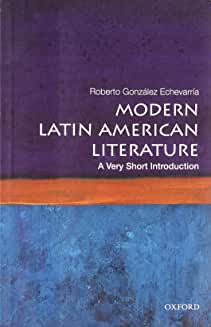
I have just finished reading the book “ Modern Latin American Literature – A very short introduction” by Roberto Gonzalez Echevarria, a formidable scholar with encyclopaedic knowledge of the writers of the region


What fascinates me is the link of Latin American literature with diplomacy and politics. Some of the poets and writers were honoured with postings as diplomats by the Latin American governments. A few got elected as Presidents while many suffered death, imprisonment, torture and exile. Not surprisingly, dictators, caudillos, disappearances, violence, exile, and suffering were the dominant themes in the poems and novels.

Diplomats

Pablo Neruda was Chilean Consul in Rangoon, Barcelona and Madrid, Consul General in Mexico City and Ambassador in Paris. Gabriela Mistral, another Chilean poet, was appointed as Consul in Naples, Madrid and Lisbon. 

Octavio Paz was a junior diplomat in Paris and Delhi and later posted as ambassador in India. Carlos Fuentes, son of a Mexican diplomat, was ambassador to France. 

Miguel Angel Asturias, the Guatemalan writer, who was the first Latin American novelist to win the Nobel prize in 1967, was ambassador in Paris. 

Ruben Dario, the Nicaraguan poet and hailed as the Father of Modernismo in Latin American literature, was ambassador in Paris. Interestingly he was a kind of honorary consul of Colombia in Buenos Aires for some time.

Vinicius de Moraes, the Brazilian poet famous for the international hit song " The girl from Ipanema" was a career diplomat of Brazil. His postings include Los Angeles, Paris and Rome. 


Jorge Carrera Andrade, the Ecuadorian poet, was a diplomat. He served as Ecuadorian Consul in Peru, France, Japan and US. Later he became Ambassador to Venezuela, UK, Nicaragua, France, Belgium and Netherlands. 

Besides these, there have been some other lesser known poets and writers who got diplomatic postings.

Presidents
Romulo Gallegos (1884-1969), the Venezuelan author of the famous novel “Dona Barbara”, was forced into exile in US and Mexico by the dictatorship of Juan Vicente Gomez. Later he came back and got elected as the President of Venezuela in 1948. But he was deposed within a year by a military coup which forced him into exile again.

Domingo Faustino Sarmiento and Bartolome Mitre, the Argentine writers were elected as Presidents in the second half of the nineteenth century. Both had suffered exile and had to live in the neighbouring countries for some years. 

Daniel Ortega, the poet who wrote the famous poem “I Never Saw Managua When Miniskirts Were in Fashion”, when he was a political prisoner at the young age of 23 is the current President of Nicaragua.  While in jail, he received visits from Rosario Murillo, a poet. The prisoner and visitor fell in love; Murillo became Ortega's wife. She has published several books of poems. One of them is called as ¨Amar es combatir ¨- to love is to combat. Many members of the Sandinista government were poets and writers. Ernesto Cardinal, the poet priest who was a Sandinista revolutionary wrote, “the triumph of the revolution is the triumph of poetry”. But the Ortega power couple are now strangulating freedom of expression with their family dictatorship.
  
Mario Vargas Llosa ran in the Peruvian Presidential elections but got defeated by Fujimori.  Huidobro ran for presidency of Chile but did not make it.

Revolutionaries 

The Latin American literature has been shaped by the politics of the individual countries, the region and the world. The major political events which influenced the writers were: Independence of Latin American countries in the 1820s, The Soviet revolution in 1917, Spanish civil war (1936-39), Cuban revolution (1959), Sandinista revolution (1979) and the right wing military dictatorships of the sixties and seventies. Many writers were Leftists and Communists while a few became critics of Communism and Castro and Ortega authoritarianism. It is a pity that Luis Borges of Argentina, one of the greatest writers, missed the Nobel prize because of his right wing sympathies.
  
Because of exile, many writers  worked from outside their home countries in places like Paris, Madrid, Barcelona, Buenos Aires and Mexico City. Havana was the hub of Latin American literature after the Cuban revolution. Casa de las Americas of Havana brought together Latin American writers, held symposia and gave literary prizes. But later when the Castro regime became a dictatorship allied with Soviet Union, Havana lost its appeal. Many Cuban writers fled into exile.

Many Latin American writers along with those from Europe and North America took part  in the Spanish civil war supporting the republicans against the fascist dictator Franco. 
Pablo Neruda, the leading poet of twentieth century Latin America, organized a congress of antifascist intellectuals in Spain in 1937 and wrote a book of political poems “Espana en el Corazon”. This was read even in the in the battlefronts of Republicans during the war. It was called as a poet's war, since there were so many poets from Spain and other countries participating in the war. In 1939, as consul in Paris Neruda helped repatriation of thousands of Spanish refugees by ship to Chile. In 1944, he was elected as Senator and the next year joined the Communist Party. He was a roving cultural ambassador for the communist party.  He wrote Cancion de Gesta in praise of the Cuban revolution. But later he had conflicts with the Castro regime.

The Cuban poet Nicolas Guillen (1902-89) wrote political poetry and participated in the Spanish Civil war and was a communist. He joined the Castro government and served as president of the Writers Union.

Paz had Marxist leanings and joined the Spanish civil war. But later he broke with the Mexican Left after the Nazi-Soviet pact of 1939. He remained as a critic of Communism for the rest of his life. He resigned his ambassadorship in India to protest against the Mexican government’s killing of student agitators in 1968.
  
Jose Marti (1853-95), the Cuban poet, lead the war of independence of Cuba. From New York, he mobilised Cuban exiles and lead an armed liberation group into eastern Cuba in 1895. He died as a martyr felled by the bullets of Spanish at the age of 42 . Marti has since then become the icon for Cuban and Latin American revolutionaries.

Miguel Angel Asturias, the Guatemalan author wrote about the dictatorship of Estrada Cabrera in his novel “ El senor President”. He was stripped of Guatemalan citizenship and forced into exile during rightwing dictatorships. Roa Bastos’s novel "Yo el supremo” (I, the supreme) was about Alfredo Stroessner dictatorship of Paragauay. Bastos spent his years of exile in Buenos Aires and Paris. 

Isabel Allende and Julia Alvarez have written several poignant novels on the dictatorship of Pinochet and Trujillo.

Twenty first century

The region has become free from military dictatorships in the new century and there have been no major revolutions and wars. After the collapse of Berlin Wall and the mutation of Cuban and Sandinista revolutions into authoritarianism, Communism has lost its appeal. 

The region has not yet produced any literary titans in this century, after having captivated the world with its unique Magical Realism in the sixties with celebrity writers of the “Boom” such as Luis Borges, Garcia Marquez, Julio Cortazar, Vargas Llosa, Carlos Fuentes, Pablo Neruda and Octavio Paz. 

Some new writers of this century have rebelled against the Macondo old guards with their own  counter movement of MacOndo, in the era of MacDonald culture of globalization of the region. Other groups such as Nueva Onda (new wave) and Crack reject the exoticism of Garcia Marquez. These young writers are less concerned with a cultural identity and are more preoccupied with individual identity. 

More...

Shimone Jaini, a young Indian researcher has written a thesis La Encrucijada: Where Literature and Politics meet in Latin America. A short version of this is in this link

https://www.indiawrites.org/latin-america/latin-america-where-literature-intersects-politics/

Abhay Kumar, an Indian diplomat-poet's article on poet diplomats
https://www.rediff.com/news/column/how-diplomacy-and-poetry-are-linked/20121030.htm

Abhay Kumar has written a book " The alphabet of Latin America- a carnival of poems". The book, to be launched in the second half of 2020, contains poems on Latin American cities, culture, writers and history.