Salsa is becoming popular in India and salsa schools have come up in the metros of India.
The most well organised school is Salsa-India run by Kaytee Namgyal. he organised a successful all-India competition last year. Info on his school at
http://www.salsa-india.com/
There are a number of other professionals who run private classes in the big cities.
The other day Rajan Mayor, CEO of Mayor company, which manufactures and exports called me for contact to organise a salsa party for his Rotary club.
Here is the flier I have received about new salsa classes by Pedro, the amigo from Venezuela who organised salsa parties for the launching of my book in Feb 2005 and website in August 2005.
AMIGOSS AAA BAILAR !!!!!!!
“LATINO SALSA DANCE SCHOOL” INVITES ALL “SALSA BAILADORES” AT ITS NEW PROGRAM of SALSA CLASSES
COURSES
SALSA BEGINNERS & BASIC COURSE - STARTING ON JUN 29
SAT / SUN FROM 5 TO 6.30 PM (12 hrs of class per month)
Course duration 24 hrs / Fees rs .3000
This is suggested to all those who would like to get to the floor in a short time (Absolute Beginner) or have already gone through some basic course at our school or other schools in Delhi but would like to freshen up their knowledge
VENUE:
Power House Building , 30 Haus Khas Village , New Delhi 16
SALSA INTERMEDIATE COURSE - STARTING ON JULY 1
MON / WED / FRI FROM 8.30 TO 9.30 PM (12 hrs of class per month)
Course duration 24 hrs / Fees rs. 3000
This is suggested to Salsa students who have already gone through the basics at our school or any other school in Delhi
VENUE:
Fitnessolutions, E-193, Greater Kailash Part 2, New Delhi
SALSA BASIC COURSE - STARTING JULY 1TUE / THUR / SUN FROM 6.00 TO 7.30 PM (12 hrs of class per month)
Course duration 24 hrs / Fees rs .3000
This is suggested to all those who would like to get to the floor in a short time or have already gone through some basic course at our school or other schools in Delhi but would like to freshen up their knowledge
VENUE:
Sangeet Shyamala, opp. A 11/6, Vasant Vihar, New Delhi
SALSA BASIC & INTERMEDIATE - STARTING REGISTRATION
This is suggested to Salsa students who wish to start learning dance and are particularly interested in Latin Dance and music, as well as for those who or have already gone through some courses at our school or other schools in Delhi and wish to refresh/expand their skills. These classes will be scheduled as the groups complete.
Course duration 24 hrs / Fees rs .3000
VENUE:
Gold'sGym Noida India E-16/B, Kirtimaan Plaza, 1st floor, Sector 30, NOIDA
Note :
all the courses programs will include some basic training in merengue and bachata
For detailed information about classes, parties and shows please contact:
DELHI
Katya 98 10667647
Pedro 9891109163
NOIDA
Ms Seema Seth 0120-4247162/63
or e mail us at :
salsaparty@rediffmail.com
Thursday, July 05, 2007


Monday, July 02, 2007
Salma Hayek in Hindi films ?
According to a news report Salma Hayek, the mexican actress is going to act in five hindi films ( to be shot in english too simultaneously) with the Bollywood hero Akshay Kumar. This is said to be part of a deal between Carving Dreams Entertainment, a Bollywood company and Hollywood Studios International.
Salma looks like an Indian and should go down well with the Indian audience.
Sushil Choudhry and Lathika of Mann India Tech told me once that Salma was in India on a private visit and nobody noticed her thinking that she was an Indian.
I have seen many of her movies. My favourites are Frida and El callejon de los milagros( miracle alley)
This is yet another India- Latin America connection through films.
In 2006 DhoomII, the Bollywood film was shot in Rio.
Christina of Brazil is planning a Indo-Brazilian film " tamarind".
Miss Canela, Amb Hans and Minister Eddy Martinez of Dominican Republic are trying hard to take Bollywood to shoot in their beautiful country.
Salma looks like an Indian and should go down well with the Indian audience.
Sushil Choudhry and Lathika of Mann India Tech told me once that Salma was in India on a private visit and nobody noticed her thinking that she was an Indian.
I have seen many of her movies. My favourites are Frida and El callejon de los milagros( miracle alley)
This is yet another India- Latin America connection through films.
In 2006 DhoomII, the Bollywood film was shot in Rio.
Christina of Brazil is planning a Indo-Brazilian film " tamarind".
Miss Canela, Amb Hans and Minister Eddy Martinez of Dominican Republic are trying hard to take Bollywood to shoot in their beautiful country.
Friday, June 29, 2007
Muancita's dissertation on latino left
The prize for the best dissertation by the 2005 batch of Indian Foreign Service probationers went to " The reemergence of left in latin america and its implications for India". The author is Muancita... correct name Muanpuii Saiawi.
The medal was given to her by Shri Lalu Prasad, railway minister ( who gave an impressive speech ) in a function organised by Foreign Service Institute, yesterday.
I named her as Muancita because she shares my passion for Latin America. She speaks spanish and has visited a number of latin american countries. She likes the latino music, dance ..tudo
here is her favourite latino song " sola en el muelle de San Blas" , sung by a Grammy award winner Mexican band Mana from Gudalajara.
in you tube
http://www.youtube.com/watch?v=kFiMvUZCsKk
Ella despidió a su amor
el partió en un barco en
el muelle de San Blas
El juró que volvería
y empapada en llanto
ella juró que esperaría
miles de lunas de lunas pasaron
y siempre ella estaba en el muelle,
Esperando Muchas tardes
se anidaronse anidaron en su pelo y en sus labios
Llevaba el mismo vestido y por si el volviera no se fuera a equivocarlos cangrejos le mordíansus ropajes,
su tristeza y su ilusióny el tiempo se escurrióy sus ojos se le llenaron de amaneceresy del mar se enamoróy su cuerpo se enraizó en el muelle
Sola, sola, en el olvido
sola, sola con su espíritusola,
sola con su amor el mar
sola, en el muelle de San Blas
here is her own translation
She said good bye to her love,He parted on a boat from St. Blas' wharfHe vowed to return, and she drenched in tears.She vowed to wait for him.Thousands of thousands of moons passed,And she always was on the wharf,WaitingMany afternoons moved in, moved into her hair and lips.She wore the same dress,in case he returned,he wouldn't mistake her,the crabs bit her clothes, sadness and dreams,and time slid byand her eyes filled with dawnsand with the sea she fell in loveand her body enrooted itself in the wharf.
Alone, alone, in oblivion
Alone, alone, with her soul,
Alone, alone with her love, the sea
Alone, on San Blas' wharf
Felicitaciones ( congratulations) Muancita !
The medal was given to her by Shri Lalu Prasad, railway minister ( who gave an impressive speech ) in a function organised by Foreign Service Institute, yesterday.
I named her as Muancita because she shares my passion for Latin America. She speaks spanish and has visited a number of latin american countries. She likes the latino music, dance ..tudo
here is her favourite latino song " sola en el muelle de San Blas" , sung by a Grammy award winner Mexican band Mana from Gudalajara.
in you tube
http://www.youtube.com/watch?v=kFiMvUZCsKk
Ella despidió a su amor
el partió en un barco en
el muelle de San Blas
El juró que volvería
y empapada en llanto
ella juró que esperaría
miles de lunas de lunas pasaron
y siempre ella estaba en el muelle,
Esperando Muchas tardes
se anidaronse anidaron en su pelo y en sus labios
Llevaba el mismo vestido y por si el volviera no se fuera a equivocarlos cangrejos le mordíansus ropajes,
su tristeza y su ilusióny el tiempo se escurrióy sus ojos se le llenaron de amaneceresy del mar se enamoróy su cuerpo se enraizó en el muelle
Sola, sola, en el olvido
sola, sola con su espíritusola,
sola con su amor el mar
sola, en el muelle de San Blas
here is her own translation
She said good bye to her love,He parted on a boat from St. Blas' wharfHe vowed to return, and she drenched in tears.She vowed to wait for him.Thousands of thousands of moons passed,And she always was on the wharf,WaitingMany afternoons moved in, moved into her hair and lips.She wore the same dress,in case he returned,he wouldn't mistake her,the crabs bit her clothes, sadness and dreams,and time slid byand her eyes filled with dawnsand with the sea she fell in loveand her body enrooted itself in the wharf.
Alone, alone, in oblivion
Alone, alone, with her soul,
Alone, alone with her love, the sea
Alone, on San Blas' wharf
Felicitaciones ( congratulations) Muancita !
Visit to Quito 19-21 june
 the leftist US-educated, young and popular president Rafael Correa and the charming foreign minister Maria Fernanda Espinosa
 the Ecuator monument called as " mitade del mundo" ( middle of the world)
 Ecuadorian senorita in her typical dress at the Mitade del Mundo
This was my first visit to ecuador. I was impressed by the historical part of Quito city and its . elegant buildings, historic churches, plazas and palaces. In the night it was even more impressive to see the buildings and churches illuminated with aesthetic taste.
The flowers of ecuador are bright, brilliant and colourful. Because of the ideal combination of climate, altitude, rains and soil the flowers have a special colour and charm.
The youthful President Correa and the charming foreign minister Maria Fernanda made the professional part of the visit interesting.
Friday, June 22, 2007
felicitaciones to Angel Cabrera
Last sunday I was more nervous than Angel Cabrera , cheering for his victory at the American Airlines lounge at Miami.
I am thrilled he won the US Open.. beating Tiger Woods.
This is a great moment for Argentinian and Latin American golf.
I had watched Cabrera's game in Brazil Open at the Sao Paulo golf club in 1999. He had birdie-birdie-eagle in the first three holes.
The last time a Latin American won a major was in 1967 when Roberto Vincenzo, another Argentinian, won the Britsh Open. He lost the 1968 Masters due to a technical mistake in writing his score.
I had played with Roberto Vincenzo in 2001 in the golf course named after him in Buenos Aires. We played nine holes. Although he was old, he reatined the touch and impressed me with his sense of humour.
I am sure cabrera's victory would inspire more champions from the region.
I am thrilled he won the US Open.. beating Tiger Woods.
This is a great moment for Argentinian and Latin American golf.
I had watched Cabrera's game in Brazil Open at the Sao Paulo golf club in 1999. He had birdie-birdie-eagle in the first three holes.
The last time a Latin American won a major was in 1967 when Roberto Vincenzo, another Argentinian, won the Britsh Open. He lost the 1968 Masters due to a technical mistake in writing his score.
I had played with Roberto Vincenzo in 2001 in the golf course named after him in Buenos Aires. We played nine holes. Although he was old, he reatined the touch and impressed me with his sense of humour.
I am sure cabrera's victory would inspire more champions from the region.
Thursday, June 21, 2007
revisiting Bogota
This is my third visit to Bogota. The city is chique, elegant and charming. The climate is pleasant. The colonial part of the city is impressive. During the visit to the Colombian foreign office they showed us the room in which Simon Bolivar stayed and the window through which he escaped, while his lover Manuelita was holding off the assasins at the front door. I recalled the film " La libertadora del libertador" which brings out the character of Manuelita, who was the only one to put fear in the heart of the great warrior Bolivar.
I also remembered my favourite Colombian authors, Gabriel Garcia Marquez, Laura Restrepo and Alvaro Mutis. These have taken me in their journeys of magical realism though the river Magdalena and the little mythical town Maconde.
Bogota is the second best destination for golf in Latin America. There are about 20 courses in and around the city. The courses are undulating with great views of the mountains. The ball goes ten yards more due to the 6000 ft altitude. In my first visit I had played the 36 holes of the Country Club, Lagartos and the Army Golf course.
The transmillenium bus project has transformed public transporation of the city. This brings ministers and officals from India who want to learn from this project.
Hmm.. outsiders are scared of kidnappings, terrorism and drug trafficking. Yes it is there. But the Bogotanos take it in their stride and enjoy life. My young colleague Ankan Banerji in the embassy says he drives out around 100 kms outside Bogota in weekends with his friends.
I am leaving today afternoon to Quito, listening to the song " Adios me pido " of the colombian singer Juanes.
I also remembered my favourite Colombian authors, Gabriel Garcia Marquez, Laura Restrepo and Alvaro Mutis. These have taken me in their journeys of magical realism though the river Magdalena and the little mythical town Maconde.
Bogota is the second best destination for golf in Latin America. There are about 20 courses in and around the city. The courses are undulating with great views of the mountains. The ball goes ten yards more due to the 6000 ft altitude. In my first visit I had played the 36 holes of the Country Club, Lagartos and the Army Golf course.
The transmillenium bus project has transformed public transporation of the city. This brings ministers and officals from India who want to learn from this project.
Hmm.. outsiders are scared of kidnappings, terrorism and drug trafficking. Yes it is there. But the Bogotanos take it in their stride and enjoy life. My young colleague Ankan Banerji in the embassy says he drives out around 100 kms outside Bogota in weekends with his friends.
I am leaving today afternoon to Quito, listening to the song " Adios me pido " of the colombian singer Juanes.
Wednesday, June 20, 2007
visit to Guatemala 17-19 June 2007
This was my first ever visit. I fell in love with Guatemalan city at the first sight( friends say ..i am prone to such accidents!). It is clean, green, modern and stylish. Great cafes, restaurants, good hotels.
I sat in a cafe ( no piernas here ! ) next to the Hotel Camino Real where I stayed. Inspiring ambience! It was cafe con books. but not like barnes and nobles and starbucks combine. The cafe was like a garden with lot of greenery and flowers. The cafe was strong and delicious. The locals say cafe should be hot, strong and stimulating...like love.
Guatemala is one of the largest coffee exporters and is the top supplier to Starbucks. The best cafe brand is Antigua.
The cafe reminded me of the Guatemalan writer Miguel Angel Asturias, the nobel prize winner. I liked his book " Mr President'. I have not yet completed his other novel The Mulata. Asturias brings alive the misery of military dictatorship and the racial divide.
Guatemala has also produced another nobel prize winner, Rigoberta Menchu the leader of native Indians. She is standing for Presidential elections in Nov 2007 but her chances do not seem to be bright.
The Guatemalans are known as Guatemaltecos or Chappins. friendly and warm souls. The only problem is that they are punctual and take work seriously ! .. insufficently latino ! But the Chappins are spicy...thanks to the variety of spices they grow. They are the world's largest exporter of cardamom.
Guatemala has recovered from the trauma of the civil war of forty years which claimed hundreds of thousands of lives. While the ex-guerillas have joined politics, the Indians, who form more than half the pop
ulation still live in marginal conditions.
Unfortunately I did not have time to visit the Mayan ruins in Tikal or the colonial city Antigua.
There are quite a few from India and I met some of them. Mr Guha has been there for the last 40 years. he is married to a guatemalteca. Surprise was Senthil Kumar from chennai who is there for the last one year exporting pharma from India. he speaks Spanish fluently and has become almost a latino!
I sat in a cafe ( no piernas here ! ) next to the Hotel Camino Real where I stayed. Inspiring ambience! It was cafe con books. but not like barnes and nobles and starbucks combine. The cafe was like a garden with lot of greenery and flowers. The cafe was strong and delicious. The locals say cafe should be hot, strong and stimulating...like love.
Guatemala is one of the largest coffee exporters and is the top supplier to Starbucks. The best cafe brand is Antigua.
The cafe reminded me of the Guatemalan writer Miguel Angel Asturias, the nobel prize winner. I liked his book " Mr President'. I have not yet completed his other novel The Mulata. Asturias brings alive the misery of military dictatorship and the racial divide.
Guatemala has also produced another nobel prize winner, Rigoberta Menchu the leader of native Indians. She is standing for Presidential elections in Nov 2007 but her chances do not seem to be bright.
The Guatemalans are known as Guatemaltecos or Chappins. friendly and warm souls. The only problem is that they are punctual and take work seriously ! .. insufficently latino ! But the Chappins are spicy...thanks to the variety of spices they grow. They are the world's largest exporter of cardamom.
Guatemala has recovered from the trauma of the civil war of forty years which claimed hundreds of thousands of lives. While the ex-guerillas have joined politics, the Indians, who form more than half the pop
ulation still live in marginal conditions.
Unfortunately I did not have time to visit the Mayan ruins in Tikal or the colonial city Antigua.
There are quite a few from India and I met some of them. Mr Guha has been there for the last 40 years. he is married to a guatemalteca. Surprise was Senthil Kumar from chennai who is there for the last one year exporting pharma from India. he speaks Spanish fluently and has become almost a latino!
Thursday, June 14, 2007
The old gringo - novel by Carlos Fuentes
In this novel written in 1985, Fuentes has added the Gringo element to the Mexican complexity. The American school teacher Harriet Winslow goes to Mexico to teach in the estate of a Mexican landord. She gets swept in the Mexican revolution and the turmoil. She is also caught between General Tomas Arroyo and the old Gringo. Arroyo is from the indigenous side, his family having worked as labourers in the estate. After he joins the revolutionary forces of Pancho Villa as a General, he burns down the estate of his former masters. The old Gringo joined the revolutionary war wanting to get killed. The three form a triangle, exploring questions of love, respect, and sensuality in ways that highlight the differences between Mexican and American ways of thinking. All three of the principal characters in this novel have mixed feelings of both love and hatred toward their fathers.
The story is based on an American journalist and author Ambrose Bierce, who went to experience the revolutionary war of Mexico and disappeared. The novel became famous after it was made into a Hollywood movie in 1989 with Jane Fonda and Gregory Peck.
But this did not appeal to me so much as the other novels of Fuentes i read.
The story is based on an American journalist and author Ambrose Bierce, who went to experience the revolutionary war of Mexico and disappeared. The novel became famous after it was made into a Hollywood movie in 1989 with Jane Fonda and Gregory Peck.
But this did not appeal to me so much as the other novels of Fuentes i read.
Sunday, June 03, 2007
Brazilian music and food in Delhi
A bit of Brazilian spirit is taking over Delhi this week, thanks to the visit of President Lula's visit 3-5 June. He will receive the Jawaharlal Nehru Award for International Understanding on 4 June.
Teresa Cristina, the popular Brazilian singer will perform at the amphitheatre of Habitat on 4 and 5 June at 8.30 pm. She will sing the traditional Samba songs. She is from Rio.
A Brazilian water colour painting show is on at Habitat from 4 to 12 june.
A Brazilian Food Festival is on at Taj Mahal Hotel from 3 to 12 June. The food is from Espirito Santo state, near Rio. Try the muqueqa, a sea food speciality from that region.
A 100 plus business delegation is staying in the same hotel. Business seminar is held on 4 june.
Teresa Cristina, the popular Brazilian singer will perform at the amphitheatre of Habitat on 4 and 5 June at 8.30 pm. She will sing the traditional Samba songs. She is from Rio.
A Brazilian water colour painting show is on at Habitat from 4 to 12 june.
A Brazilian Food Festival is on at Taj Mahal Hotel from 3 to 12 June. The food is from Espirito Santo state, near Rio. Try the muqueqa, a sea food speciality from that region.
A 100 plus business delegation is staying in the same hotel. Business seminar is held on 4 june.
Friday, June 01, 2007
Amar te duele - Mexican film
This is a Romeo- Juliet type of predictable and simple love story. Ulises, a poor boy with painting talents, falls in love with a rich girl Renata who also reciprocates. But Renata's friends and family are against this improper love. More than money, they from the white class, look down upon the browny native_indian looking boy. Renata's love, of course, is as they say, blind to colour or poverty of her boyfriend. She enjoys going to his house and his poor neighbourhood. When her family decides to send her to Canada, she elopes with Ulises. But they are stopped and Renata's ex-boyfriend shoots her by mistake to death. Like all love stories the end is tragedy.
Although the story is not new, it is a pleasant film with romance and innocent love. The racial taunts and the funky boys and girls are realistic and give an idea of the divisions in the Mexican society. Which society does not have divisions?
Martha Higereda is sweet in acting as Renata and Luis fernando Pena has done well in the character of Ulises. Fernando Sarina has done well as Director of the movie. The movie was released in 2002.
Although the story is not new, it is a pleasant film with romance and innocent love. The racial taunts and the funky boys and girls are realistic and give an idea of the divisions in the Mexican society. Which society does not have divisions?
Martha Higereda is sweet in acting as Renata and Luis fernando Pena has done well in the character of Ulises. Fernando Sarina has done well as Director of the movie. The movie was released in 2002.
Sunday, May 27, 2007
El Rey ( the King ) - Colombian film
This movie is a fictionalised account of how the drug trafficking started in Colombia, based on the life of the first drug lord Jaime Caicedo from Cali. The ordinarly life of Pedro Rey, a bar owner changes dramatically when he meets an American Peace Corps volunteer, who introduces him to the drug trafficking business. Rey realises the vast market of USA offering billions of dollars of quick profit, or what we are told as the "market-driven" trade. He goes on to make money, elevates his status and corrupts the police and society. Eventually he succumbs to the bullets of the same policeman who was in his payroll.
The movie, made in 2004, was directed by Antonio Dorado, who had said in an interview, " This movie is an answer to all the movies made by North America about the Colombian drug issue.
Fernando Solorzano has acted as the drug lord and Cristina Umana as his wife Blanca. Colombian family life, music and society are portrayed vividly and authentically in the film. Although the film is about drugs and violence it does not leave a horrifying feeling. The way the story evolves and the acting by the talented stars makes the watching of the film as a pleasant experience.
When the film roll was sent from Colombia for inclusion in a Paris film festival in Madrid, the film reels were searched thoroughly to ensure that drugs were not hidden in them !
The movie, made in 2004, was directed by Antonio Dorado, who had said in an interview, " This movie is an answer to all the movies made by North America about the Colombian drug issue.
Fernando Solorzano has acted as the drug lord and Cristina Umana as his wife Blanca. Colombian family life, music and society are portrayed vividly and authentically in the film. Although the film is about drugs and violence it does not leave a horrifying feeling. The way the story evolves and the acting by the talented stars makes the watching of the film as a pleasant experience.
When the film roll was sent from Colombia for inclusion in a Paris film festival in Madrid, the film reels were searched thoroughly to ensure that drugs were not hidden in them !
Sunday, May 20, 2007
Where the air is clear - novel by Carlos Fuentes
This is the first-ever novel of Fuentes, written in 1958.
In this book, the main character is the Mexico city itself. Fuentes takes the readers through the streets of Mexico and pages of history. He does his typical incisive analysis of the inhabitants of the city. He has chosen a banker ( Federico Robles ), a society lady (Norma), a rich family impoverished after the revolution (Ovando family ), Rodrigo Pola, a writer whose father was executed during the revolution and Ixca Cienfuegos an observer and critic of the system.
Fuentes takes the readers through the labyrinth of the Mexican solitude and identity. In no other latin american country, there is this obsessive search for identity, going back and forth in history and caught between the mother continent and the adopted one. Almost every character makes a reference to Mexican history, revolution and politics. Fuentes asks, "does such a thing as original blood exist?" and answers "no; every pure element grows and is consumed in its own purity,does not develop; the original is the impure, the mixed, the mulatto and the mestizo, as i am, as all Mexico is. Which is to say originality supposes a mixing, a creation, not a purity previous to our experience. Rather than born original , we come to be original; origin is creation. mexico must find her origin by looking ahead, not behind". This passage reminded me of Octavio Paz's analysis in his " labyrinth of solitude"
I liked these pearls of wisdom:
- It is all a question of wings, my love. With wings, a butterfly. Without wings, a caterpillar.
- All depends on the state of the soul and that depends upon external impulses. It is enough to control the external impulses to arrive at the state of the soul and personality which are desired.
I was moved and absorbed by the powerful and memorable characters in this book and the profound intellectual deabte about identity. Carlos Fuentes continues to stay as my number one favourite at this time. I have just purchased two more books of Fuentes and am looking forward to reading them.
Carlos Fuentes was from a diplomatic family and had lived in many countries. Later, he also became a diplomat and served in various capitals.
In this book, the main character is the Mexico city itself. Fuentes takes the readers through the streets of Mexico and pages of history. He does his typical incisive analysis of the inhabitants of the city. He has chosen a banker ( Federico Robles ), a society lady (Norma), a rich family impoverished after the revolution (Ovando family ), Rodrigo Pola, a writer whose father was executed during the revolution and Ixca Cienfuegos an observer and critic of the system.
Fuentes takes the readers through the labyrinth of the Mexican solitude and identity. In no other latin american country, there is this obsessive search for identity, going back and forth in history and caught between the mother continent and the adopted one. Almost every character makes a reference to Mexican history, revolution and politics. Fuentes asks, "does such a thing as original blood exist?" and answers "no; every pure element grows and is consumed in its own purity,does not develop; the original is the impure, the mixed, the mulatto and the mestizo, as i am, as all Mexico is. Which is to say originality supposes a mixing, a creation, not a purity previous to our experience. Rather than born original , we come to be original; origin is creation. mexico must find her origin by looking ahead, not behind". This passage reminded me of Octavio Paz's analysis in his " labyrinth of solitude"
I liked these pearls of wisdom:
- It is all a question of wings, my love. With wings, a butterfly. Without wings, a caterpillar.
- All depends on the state of the soul and that depends upon external impulses. It is enough to control the external impulses to arrive at the state of the soul and personality which are desired.
I was moved and absorbed by the powerful and memorable characters in this book and the profound intellectual deabte about identity. Carlos Fuentes continues to stay as my number one favourite at this time. I have just purchased two more books of Fuentes and am looking forward to reading them.
Carlos Fuentes was from a diplomatic family and had lived in many countries. Later, he also became a diplomat and served in various capitals.
Wednesday, May 02, 2007
The political economy of emerging markets- book by Javier Santiso
The full title of the book is "The political economy of emerging markets- actors, instituitions and financial crises in Latin America"
This is the second book of Santiso I have read. I liked this book as well as the previous one on the political economy of the possible. my blog on the previous book on 3 september 2006 http://latinamericanaffairs.blogspot.com/search?q=javier+santiso
Perhaps another reason I like his analysis and conclusions is that they coincide with mine. While my conclusions are amateurish, based on my limited knowledge and intuition, Santiso's are those of a solid professional economist based on theories as well as practical experience.
His main conclusion in this book is that the latin american markets alongwith other emerging markets is a "confidence game" played by fund managers and Wall Street. He has described how the fund managers encouraged everyone to invest in Argentina despite the obvious and risky flaws of the argentinian ecnomic and financial structure before 2001. The main motive of the managers was to get fat bonus in the transactions. Ironically some of the same banks which mislead the investors became consultants to the Argentinian government when they wanted to restructure the debt after the crisis. So the bankers made their commission both ways, in the building up of the crisis and in the resolution. The losers are the thousands of bondholders and the Argentinian government and people. I had come to the same conclusion in my article published in Financial Express of 31 December 2005 http://www.financialexpress.com/fe_archive_full_story.php?content_id=113086#
Other interesting observations and conclusions of Santiso, based on his research and interviews with the players of the Latin America game:
- Latin American countries have been among the most dependent on international bond markets. In mid 2001 bonds represented 70 percent of Argentinian public debt.
- Crisis in latin America had occurred coinciding with the aftermath of the end of the year bonus time of the fund managers. Also the crises coincided with the election times. The governments dont want to spoil their chances by devaluation or some such unpopular measure before elections but do so after the elections.
-Argentina is the only case of a developed country which has gone down into the developing category because of man-made disasters.
-Some of the American academics who advised the Latin American governments were also making money through their interests in funds which played the investment game in those countries.
-many latin american finance and trade ministers and even presidents had studied economics and got even PhDs in American universities and were obviously influenced by the different schools of thought.
- Financial Times is more popularly read than Wall Street Journal by latinamerica fund managers
- Boston has more action than New York in investment in Latin America
- Latin American crises had been triggered or caused by capital flows. Asian countries such as China and India have not faced such crisis since they are integrated globally only through current account trade and services and have controls over capital movements. It would be worthwhile for the the Indian policy makers to keep this in mind and learn from latin america while opening the capital market in india.
Besides analysing the latin american crises, he has gone deep into the evolution of emerging market funds, fund management and the psychology of the fund managers.
Javier Santiso is a politcal economist and is currently working with OECD.
I find him as objective, neutral and balanced in his views.
This is the second book of Santiso I have read. I liked this book as well as the previous one on the political economy of the possible. my blog on the previous book on 3 september 2006 http://latinamericanaffairs.blogspot.com/search?q=javier+santiso
Perhaps another reason I like his analysis and conclusions is that they coincide with mine. While my conclusions are amateurish, based on my limited knowledge and intuition, Santiso's are those of a solid professional economist based on theories as well as practical experience.
His main conclusion in this book is that the latin american markets alongwith other emerging markets is a "confidence game" played by fund managers and Wall Street. He has described how the fund managers encouraged everyone to invest in Argentina despite the obvious and risky flaws of the argentinian ecnomic and financial structure before 2001. The main motive of the managers was to get fat bonus in the transactions. Ironically some of the same banks which mislead the investors became consultants to the Argentinian government when they wanted to restructure the debt after the crisis. So the bankers made their commission both ways, in the building up of the crisis and in the resolution. The losers are the thousands of bondholders and the Argentinian government and people. I had come to the same conclusion in my article published in Financial Express of 31 December 2005 http://www.financialexpress.com/fe_archive_full_story.php?content_id=113086#
Other interesting observations and conclusions of Santiso, based on his research and interviews with the players of the Latin America game:
- Latin American countries have been among the most dependent on international bond markets. In mid 2001 bonds represented 70 percent of Argentinian public debt.
- Crisis in latin America had occurred coinciding with the aftermath of the end of the year bonus time of the fund managers. Also the crises coincided with the election times. The governments dont want to spoil their chances by devaluation or some such unpopular measure before elections but do so after the elections.
-Argentina is the only case of a developed country which has gone down into the developing category because of man-made disasters.
-Some of the American academics who advised the Latin American governments were also making money through their interests in funds which played the investment game in those countries.
-many latin american finance and trade ministers and even presidents had studied economics and got even PhDs in American universities and were obviously influenced by the different schools of thought.
- Financial Times is more popularly read than Wall Street Journal by latinamerica fund managers
- Boston has more action than New York in investment in Latin America
- Latin American crises had been triggered or caused by capital flows. Asian countries such as China and India have not faced such crisis since they are integrated globally only through current account trade and services and have controls over capital movements. It would be worthwhile for the the Indian policy makers to keep this in mind and learn from latin america while opening the capital market in india.
Besides analysing the latin american crises, he has gone deep into the evolution of emerging market funds, fund management and the psychology of the fund managers.
Javier Santiso is a politcal economist and is currently working with OECD.
I find him as objective, neutral and balanced in his views.
Tuesday, May 01, 2007
book on the third wave of democratisation in Latin America
The title of the book is " The third wave of democratization in Latin America- advances and challenges"
edited by Frances Hagopian and Scott Mainwaring
It starts with the third wave of democratisation since 1978 and analyses the transition upto 2005, when the book was published. It has concluded that the Latin American democracies have become stable,durable and sustainable. It has pointed out the challenges to some of the democracies by some demogogic leaders, who use the tools and framework of democracy to impose their authoritarianism. But these setbacks are temporary, since even these leaders have to go back to the electorate which has the ultimate power to change their rulers.
The authors have identified three kinds of democratic trends and made individual analysis of sample countries. These are: (1) democratic giants with authoritarian past - Brazil, Mexico and Argentina, (2) unexpected democracies in unlikely countries -Guatemala, El salvador and Bolivia and (3) Democratic erosion in the third wave in Venezuela, Peru and Colombia.
The point which comes across clearly is that in most cases, democracies were disrupted in the past by the oligarchs, whenever their interests were challenged or affected by the rules of the democratic game. The generals and colonels were just the instruments of the elite. The second point is the loss of credibility of the traditional political parties and the entry of outsiders like Fujimori and others. But this did not happen in Argentina despite the call " se vayan los todos" ( out with everyone- meaning all political leaders ) by the people of Argentina at the height of the political and economic crisis which touched a historical low point in 2001. The civil war in El Salvador and Guatemala had devastated the societies but they have made a remarkable transition to democracy after the peace accords.
The authors have brought out the complications of the ethnic factor in countries such as Bolivia and Guatemala. But the Bolivian anamoly has been corrected with the election of native Indian Evo morales for the first time in the history of Bolivia. There could be a similiar historical change if Rigoberta Menchu also become President of Guatemala.
The approach of the authors in the book becomes very academic and theoretical sometimes. But overall they have given a sense of the political transition and process of the selected countries and the trends in the region.
But the classification and some theories need review after the elctions in 2006, which have brought to power more outsiders and leftist Presidents.
edited by Frances Hagopian and Scott Mainwaring
It starts with the third wave of democratisation since 1978 and analyses the transition upto 2005, when the book was published. It has concluded that the Latin American democracies have become stable,durable and sustainable. It has pointed out the challenges to some of the democracies by some demogogic leaders, who use the tools and framework of democracy to impose their authoritarianism. But these setbacks are temporary, since even these leaders have to go back to the electorate which has the ultimate power to change their rulers.
The authors have identified three kinds of democratic trends and made individual analysis of sample countries. These are: (1) democratic giants with authoritarian past - Brazil, Mexico and Argentina, (2) unexpected democracies in unlikely countries -Guatemala, El salvador and Bolivia and (3) Democratic erosion in the third wave in Venezuela, Peru and Colombia.
The point which comes across clearly is that in most cases, democracies were disrupted in the past by the oligarchs, whenever their interests were challenged or affected by the rules of the democratic game. The generals and colonels were just the instruments of the elite. The second point is the loss of credibility of the traditional political parties and the entry of outsiders like Fujimori and others. But this did not happen in Argentina despite the call " se vayan los todos" ( out with everyone- meaning all political leaders ) by the people of Argentina at the height of the political and economic crisis which touched a historical low point in 2001. The civil war in El Salvador and Guatemala had devastated the societies but they have made a remarkable transition to democracy after the peace accords.
The authors have brought out the complications of the ethnic factor in countries such as Bolivia and Guatemala. But the Bolivian anamoly has been corrected with the election of native Indian Evo morales for the first time in the history of Bolivia. There could be a similiar historical change if Rigoberta Menchu also become President of Guatemala.
The approach of the authors in the book becomes very academic and theoretical sometimes. But overall they have given a sense of the political transition and process of the selected countries and the trends in the region.
But the classification and some theories need review after the elctions in 2006, which have brought to power more outsiders and leftist Presidents.
Friday, April 27, 2007
Malinche - novel by Laura Esquivel
The book was a gift from the Mexican Ambassador Rogelio.
This is the first book of the Mexican author Laura Esquivel, I have read.
I found that she is the same author of the story" Like water for chocolate" which I have seen as a movie and liked it.
Malinche is a historical novel about the Malinalli, the mistress and interpreter of Hernan Cortez, the Spanish conqueror of Mexico. Born to the native Mexican tribe, she ends up as a slave to Cortez the conquistador. She takes him for the reincarnation of her god Quetzalcoatl and serves him loyally.But she realises that Cortez is just a human, greedy for gold and conquest. Moctezuma, the Aztec emperor also mistakes Cortez for reincarnation of his god and hands over the throne to him. Cortez marries off Malinalli to his loyal deputy Jaramillo alter. She gets one a son from Cortez, said to be the first mestizio of Mexico.
Laura has done deep research on Indian history and religion and has given an authentic Indian flavour to the book. She gives a vivid, objective and respectful account of the beliefs, customs and thought process of the native Indians. The book is full of Indian names of gods, people and cities such as Quetzalcoatl, Axayacatl, Tenochtitlan, Huitzilopochtli, Tetlepanquetzal,Tlazolteotl, Cuitlahuac,Cuauhtemoc and other such tongue twisters.
Malinalli who is brought up to believe in life and worship live forces such as wind, water and butterflies is at a loss to understand the opposite approach of christianity symbolised by cross and death. Malinalli talks to water, wind and butterlfies and through these Laura has brought out out the harmony of life of the natives with nature.When Cortez conquers, kills and destroys the Indian idols, the natives lose faith in their own gods who were powerless to protect them
The native Indians consider Malinalli as a traitor. But this has to be seen in perspective. While she helped the conquest of Cortes, she was simply a poor girl sold twice as slave as a child and later to Cortez.
Malinche was originally the name given to Cortez by the natives in their language Nahuatl. Today Malinche is a pejorative term to describe someone who denies his heritage, valuing other cultures above his own. Malinchismo means betrayal.
This is the first book of the Mexican author Laura Esquivel, I have read.
I found that she is the same author of the story" Like water for chocolate" which I have seen as a movie and liked it.
Malinche is a historical novel about the Malinalli, the mistress and interpreter of Hernan Cortez, the Spanish conqueror of Mexico. Born to the native Mexican tribe, she ends up as a slave to Cortez the conquistador. She takes him for the reincarnation of her god Quetzalcoatl and serves him loyally.But she realises that Cortez is just a human, greedy for gold and conquest. Moctezuma, the Aztec emperor also mistakes Cortez for reincarnation of his god and hands over the throne to him. Cortez marries off Malinalli to his loyal deputy Jaramillo alter. She gets one a son from Cortez, said to be the first mestizio of Mexico.
Laura has done deep research on Indian history and religion and has given an authentic Indian flavour to the book. She gives a vivid, objective and respectful account of the beliefs, customs and thought process of the native Indians. The book is full of Indian names of gods, people and cities such as Quetzalcoatl, Axayacatl, Tenochtitlan, Huitzilopochtli, Tetlepanquetzal,Tlazolteotl, Cuitlahuac,Cuauhtemoc and other such tongue twisters.
Malinalli who is brought up to believe in life and worship live forces such as wind, water and butterflies is at a loss to understand the opposite approach of christianity symbolised by cross and death. Malinalli talks to water, wind and butterlfies and through these Laura has brought out out the harmony of life of the natives with nature.When Cortez conquers, kills and destroys the Indian idols, the natives lose faith in their own gods who were powerless to protect them
The native Indians consider Malinalli as a traitor. But this has to be seen in perspective. While she helped the conquest of Cortes, she was simply a poor girl sold twice as slave as a child and later to Cortez.
Malinche was originally the name given to Cortez by the natives in their language Nahuatl. Today Malinche is a pejorative term to describe someone who denies his heritage, valuing other cultures above his own. Malinchismo means betrayal.
El Huerfanito - Peruvian film
This is the first film about native Indians of Andean region I have seen.
It narrates the life of poor native Indians in the Andean region. It is about two kids, Juanito and Luchito, who face harsh realities when they come out of their village and interact with the world outside. And love blooms in the village and the hero elopes with the girl on a horseback. The lover boys turns into a drunken husband and the family is ruined.
simple story.. uncomplicated flow and not very sophisticated in direction or filmshots
It is explained by the provincial nature of its origin
What is important is ..it is true to the native Indians, showing them as they are.
This film is in Quechua language and Spanish.
Directed by Flaviano Quispe Chaiña
with the cast of Vladimir Estofanera, Kenji Hilsaca, Laureano Mamani, Asunción Uscamayta, Elizabeth Borda, Julian Miranda and Percy Paco..
It narrates the life of poor native Indians in the Andean region. It is about two kids, Juanito and Luchito, who face harsh realities when they come out of their village and interact with the world outside. And love blooms in the village and the hero elopes with the girl on a horseback. The lover boys turns into a drunken husband and the family is ruined.
simple story.. uncomplicated flow and not very sophisticated in direction or filmshots
It is explained by the provincial nature of its origin
What is important is ..it is true to the native Indians, showing them as they are.
This film is in Quechua language and Spanish.
Directed by Flaviano Quispe Chaiña
with the cast of Vladimir Estofanera, Kenji Hilsaca, Laureano Mamani, Asunción Uscamayta, Elizabeth Borda, Julian Miranda and Percy Paco..
Wednesday, April 25, 2007
Ten reasons why Latinas like older men
Hold on...this is not my cooking up. I found it in a blog written by a Chilean woman.
Let me mention something.. old men are called as having reached " metallic age" in latin america. why? they have silver in the hair, gold in the teeth and lead ...u know where.
here is the write up
"The reasons range from the physical to the emotional and end up in the intellectual realm. There are positive traits of course, like a Latin man’s warmth of character and their very physical nature, which involves public demonstrations of affection (and private ones as well). Nothing makes a woman feel better than to know she is wanted and that her mate is not afraid to show it. Latin men are usually tender, romantic, and very sweet.But sadly, these traits don’t seem that amazing when we begin to think about all the other things that turn us off.First of all, the “kangaroo syndrome” thrives in Latin America (men and women who live with their parents well into their early thirties). This is mainly due to the fact that in Latin America, colleges and universities are located inside the cities, so very few people have to move out when they’re 18. So much for maturing away from home. Secondly, it is very difficult to work and study at the same time. Salaries in Latin America are low and the working hours long. So actually holding an 8-to-7 job and on top of that studying nights becomes quite a feat. And the possibility of a part-time job is scarce. I live in Chile, the country with the best economy in all of South America, and over here, very few people can handle working and studying. And the salaries in this “country on the road to development” are, well, you guessed it, low. Just imagine what the rest of Latin America is like. So the above entails getting your first job at 24 and until that time, living off your parents. There goes maturity gained through hard work and financial independence.
So, topping the list at number one :
1. We like older men because they are more mature, their lives having been shaped by their previous experience of living on their own and holding a steady job.
2. We like the wrinkles around their eyes and the gray hair at the temples. It gives them character.
3. We love the fact that they can actually invite us out because now they can afford to.
4. We like their cultural baggage, that they have more knowledge gained through a longer life span (more books read, more movies watched, etc).
5. We like how they protect us, instead of us mothering them.
6. We like their anecdotes. When you’re 40+ years old you must have a lot of anecdotes.7. We dig their car. And are thankful they actually own a car.
8. We like the fact that they are gentle, and usually know how to properly treat a woman.
9. We like that they are quieter, less of the party animals they used to be when younger.
10. We like that they have lived long enough to realize that appreciating women for who they really are is of the utmost importance.
Of course, finding an eligible older man who isn’t married or divorced is a whole other story. But we can always dream. And keep our fingers crossed."
Let me mention something.. old men are called as having reached " metallic age" in latin america. why? they have silver in the hair, gold in the teeth and lead ...u know where.
here is the write up
"The reasons range from the physical to the emotional and end up in the intellectual realm. There are positive traits of course, like a Latin man’s warmth of character and their very physical nature, which involves public demonstrations of affection (and private ones as well). Nothing makes a woman feel better than to know she is wanted and that her mate is not afraid to show it. Latin men are usually tender, romantic, and very sweet.But sadly, these traits don’t seem that amazing when we begin to think about all the other things that turn us off.First of all, the “kangaroo syndrome” thrives in Latin America (men and women who live with their parents well into their early thirties). This is mainly due to the fact that in Latin America, colleges and universities are located inside the cities, so very few people have to move out when they’re 18. So much for maturing away from home. Secondly, it is very difficult to work and study at the same time. Salaries in Latin America are low and the working hours long. So actually holding an 8-to-7 job and on top of that studying nights becomes quite a feat. And the possibility of a part-time job is scarce. I live in Chile, the country with the best economy in all of South America, and over here, very few people can handle working and studying. And the salaries in this “country on the road to development” are, well, you guessed it, low. Just imagine what the rest of Latin America is like. So the above entails getting your first job at 24 and until that time, living off your parents. There goes maturity gained through hard work and financial independence.
So, topping the list at number one :
1. We like older men because they are more mature, their lives having been shaped by their previous experience of living on their own and holding a steady job.
2. We like the wrinkles around their eyes and the gray hair at the temples. It gives them character.
3. We love the fact that they can actually invite us out because now they can afford to.
4. We like their cultural baggage, that they have more knowledge gained through a longer life span (more books read, more movies watched, etc).
5. We like how they protect us, instead of us mothering them.
6. We like their anecdotes. When you’re 40+ years old you must have a lot of anecdotes.7. We dig their car. And are thankful they actually own a car.
8. We like the fact that they are gentle, and usually know how to properly treat a woman.
9. We like that they are quieter, less of the party animals they used to be when younger.
10. We like that they have lived long enough to realize that appreciating women for who they really are is of the utmost importance.
Of course, finding an eligible older man who isn’t married or divorced is a whole other story. But we can always dream. And keep our fingers crossed."
Tuesday, April 24, 2007
The years with Laura Diaz - novel by Carlos Fuentes
"The best novelists in the world are our grandmothers, and it is to them I owe the first memory, on which this novel is based". This is how Carlos Fuentes, the Mexican author, describes his inspiration to write this novel.
It is a story of six generations, starting with the grandmother of Laura Diaz, the heroine and ending with her greagrandson. The six generations are affected by the political turbulence of Mexico, the civil war in Spain,the Nazi Germany, dilemma of Marxists in Europe, McCarthyism and the story of Diego Rivera and Frida Kahlo. Fuentes has used every opportunity to comment and analyse the political developments and let his characters speak on the issues. One gets a overall perspective of the evolution of the Mexican society, through the political changes internally and externally.
It starts with Cosima Kelsen, the grandmother who is robbed at gunpoint by a bandit while travelling in a stagecoach. The bandit asks for the wedding ring but the young Cosima tells him" you have to cut my finger to take the ring". Without a hesitation, the bandit chops the finger and takes away the ring.
Cosima's family of German immigrants settle down in preindependent Mexico with a coffee plantation. Laura's brother,Santiago, a revolutionary is executed by the regime when he is in his twenties. Laura marries Juan Francisco, a trade union leader who compromises with the governments in power to safeguard the interests of the workers. But he loses the respect of the wife when he turns over a nun to the regime who executes her for rebel ideology. Laura walks out of the house and become a freelancer. She has an affair with someone and then goes to work as asssistant to Frida and Diego Rivera. Later she falls in love with Jorge Maura, a Spanish republican in exile in Mexico. When Maura leaves her she comes back home and confesses to the husband and two teenage sons.The elder son Santiago becomes an artist and dies a premature death. After the death of her husband Laura goes to live with an American in Mexico, exiled by McCarthyism who also dies. Then she takes up photography and become a professional and gets a new career and life. Her younger son joins the rich and powerful of the Mexican elite but his son Santiago rebels and comes back to grandmother. He paticipates in the 1968 student agitation against the government and is shot to death along with hundreds of other students. His daughter gives birth to the fourth Santiago. Laura ends her life by going back to her grandmother's house and disappearing in the surrounding forest.
This is one of the best books of Carlos Fuentes I have read so far. I am impressed by the depth and range of Fuentes' s perspectives on politics and society. I am looking forward to reading his other books.
It is a story of six generations, starting with the grandmother of Laura Diaz, the heroine and ending with her greagrandson. The six generations are affected by the political turbulence of Mexico, the civil war in Spain,the Nazi Germany, dilemma of Marxists in Europe, McCarthyism and the story of Diego Rivera and Frida Kahlo. Fuentes has used every opportunity to comment and analyse the political developments and let his characters speak on the issues. One gets a overall perspective of the evolution of the Mexican society, through the political changes internally and externally.
It starts with Cosima Kelsen, the grandmother who is robbed at gunpoint by a bandit while travelling in a stagecoach. The bandit asks for the wedding ring but the young Cosima tells him" you have to cut my finger to take the ring". Without a hesitation, the bandit chops the finger and takes away the ring.
Cosima's family of German immigrants settle down in preindependent Mexico with a coffee plantation. Laura's brother,Santiago, a revolutionary is executed by the regime when he is in his twenties. Laura marries Juan Francisco, a trade union leader who compromises with the governments in power to safeguard the interests of the workers. But he loses the respect of the wife when he turns over a nun to the regime who executes her for rebel ideology. Laura walks out of the house and become a freelancer. She has an affair with someone and then goes to work as asssistant to Frida and Diego Rivera. Later she falls in love with Jorge Maura, a Spanish republican in exile in Mexico. When Maura leaves her she comes back home and confesses to the husband and two teenage sons.The elder son Santiago becomes an artist and dies a premature death. After the death of her husband Laura goes to live with an American in Mexico, exiled by McCarthyism who also dies. Then she takes up photography and become a professional and gets a new career and life. Her younger son joins the rich and powerful of the Mexican elite but his son Santiago rebels and comes back to grandmother. He paticipates in the 1968 student agitation against the government and is shot to death along with hundreds of other students. His daughter gives birth to the fourth Santiago. Laura ends her life by going back to her grandmother's house and disappearing in the surrounding forest.
This is one of the best books of Carlos Fuentes I have read so far. I am impressed by the depth and range of Fuentes' s perspectives on politics and society. I am looking forward to reading his other books.
Tuesday, April 17, 2007
coming and going to and from Latin America
A group of ten Spanish speaking journalists from latin america will be in India from 20 to 29 April, at the invitation of the Ministry of External affairs. They will be in Agra 20-21 april, in Delhi 23-24, Hyderabad 25-26 april and pune 27-28 april.
These are
Bolivia-Mr. Jorge Leopoldo Arias Banegas
Chile-Ms. Paula Escobar,El Mercurio
Colombia-Ms. Angelica Lagos, El Espectador
Dominican Republic- Mr. Hector Martinez, Listin Diario
Mexico- Mr. Jorge Villalobos, Poder y Negocios
Mr. Jose Eseverri
Reforma
Nicaragua- Mr. Francisco Xavier Chamorro Garcia, El Nuevo Diario
Peru- Mr. Marco Zileri Dougall,Caretas
Panama - Mr. Dustin Enrique Guerra Guitierrez, La Prensa
Venezuela- Ms. Rosanna Espinel,El Universal
who is going to Latin America?
These are
Bolivia-Mr. Jorge Leopoldo Arias Banegas
Chile-Ms. Paula Escobar,El Mercurio
Colombia-Ms. Angelica Lagos, El Espectador
Dominican Republic- Mr. Hector Martinez, Listin Diario
Mexico- Mr. Jorge Villalobos, Poder y Negocios
Mr. Jose Eseverri
Reforma
Nicaragua- Mr. Francisco Xavier Chamorro Garcia, El Nuevo Diario
Peru- Mr. Marco Zileri Dougall,Caretas
Panama - Mr. Dustin Enrique Guerra Guitierrez, La Prensa
Venezuela- Ms. Rosanna Espinel,El Universal
who is going to Latin America?
Vikram Seth, one of my favourite Indian writers. He is going to travel to Brazil, Chile, Paraguay, Bolivia and other countries. I guess a novel will come out of this or atleast a travelogue.
The other writer who has been there is Salman Rushdie of the Indian magical realism. he wrote a travelogue on Nicaragua, after his trip there during the previous sandinista regime.
Friday, April 06, 2007
La boca del lobo - Peruvian film
I saw this Peruvian film yesterday. La boca del lobo means mouth of the wolf.
For me this is yet another discovery of a serious and powerful film from Peru.
It is about the dirty war between the "Shining Path" ( senderos luminosos) Maoist guerillas and the armed forces of Peru in the eighties. The villagers, mostly the local Indians, are caught between the killings of the guerillas and the brutal retaliation of the antiterrorist army.The army lieutenant Roca is excessivly patriotic at the cost of lives of innocent people. The invisible but ruthless guerilla group strikes at will, killing soldiers and informants. In a rage to retaliate against the guerilla killing of his soldiers, Capt Roca marches the whole village and massacres them in cold blood. When Vitin Luna, the soldier who resists this mindless cruelty and refuses to fire, he is put under detention. Unable to tolerate the brutalities, Luna deserts the army in disgust.
The movie is not far from the reality witnessed in Peru. It could have been a documentary. The story is based on true incidents that took place in the mountain town of Chuspi between 1980 and 1983, where a small unit of soldiers was garrisoned to defend the town from attack by the Shining Path. The movie not only documents the reality of the Peruvian civil war but also the racism against Indian people in general.
President Fujimori put an end to the guerillas with his ruthless campaign. Now there is no more war between the two sides, except for occasional minor incidents.
The movie, released in 1988 has been directed by Francisco Lombardi of Peru. He is also a writer and producer. He directed the other film " captain pantoja and the visitadoras" based on the novel of Mario Vargas Llosa.
For me this is yet another discovery of a serious and powerful film from Peru.
It is about the dirty war between the "Shining Path" ( senderos luminosos) Maoist guerillas and the armed forces of Peru in the eighties. The villagers, mostly the local Indians, are caught between the killings of the guerillas and the brutal retaliation of the antiterrorist army.The army lieutenant Roca is excessivly patriotic at the cost of lives of innocent people. The invisible but ruthless guerilla group strikes at will, killing soldiers and informants. In a rage to retaliate against the guerilla killing of his soldiers, Capt Roca marches the whole village and massacres them in cold blood. When Vitin Luna, the soldier who resists this mindless cruelty and refuses to fire, he is put under detention. Unable to tolerate the brutalities, Luna deserts the army in disgust.
The movie is not far from the reality witnessed in Peru. It could have been a documentary. The story is based on true incidents that took place in the mountain town of Chuspi between 1980 and 1983, where a small unit of soldiers was garrisoned to defend the town from attack by the Shining Path. The movie not only documents the reality of the Peruvian civil war but also the racism against Indian people in general.
President Fujimori put an end to the guerillas with his ruthless campaign. Now there is no more war between the two sides, except for occasional minor incidents.
The movie, released in 1988 has been directed by Francisco Lombardi of Peru. He is also a writer and producer. He directed the other film " captain pantoja and the visitadoras" based on the novel of Mario Vargas Llosa.
Thursday, March 29, 2007
El Aura - Argentinian film
I saw this film directed by Argentinian director Fabian Bielinsky.
It is the story of a taxidermist who gets bored with his drab work and life and fantasies about robbing a bank or museum. He has a phenomenal memory for details with which he plans imaginative robberies. When he accepts the invitation of his coworker to go for hunting, he gets a chance to put into action his fantasy.
A film different from the normal latino films. of course it is Argentinian.. it has to be.
I liked it though.. the characters are unusual and ..interesting.
It is the story of a taxidermist who gets bored with his drab work and life and fantasies about robbing a bank or museum. He has a phenomenal memory for details with which he plans imaginative robberies. When he accepts the invitation of his coworker to go for hunting, he gets a chance to put into action his fantasy.
A film different from the normal latino films. of course it is Argentinian.. it has to be.
I liked it though.. the characters are unusual and ..interesting.
Tuesday, March 27, 2007
Auto da Compadecida - Brazilian film
I saw this comedy at the Brazilian embassy, who have revived their friday movie evenings.
The story is about two poor guys João Grilo, the compulsive liar and Chicó, the crook. They make a living by bluffing and cheating in a small Northeast Brazil town. Joao the liar uses his smartness even in his encounter with Christ, the Devil and the Virgin Mary. The art of Joao is called as " jeitinho" a term which the Brazilians use for smartness to get things done through shortcuts.
The story reminded me of the many jeitinho characters of Jorge Amado, my all time favourite Brazilian writer.
The movie, made in 2000, is based on the play by the Pernambucano writer Ariano Suassuna.
The story is about two poor guys João Grilo, the compulsive liar and Chicó, the crook. They make a living by bluffing and cheating in a small Northeast Brazil town. Joao the liar uses his smartness even in his encounter with Christ, the Devil and the Virgin Mary. The art of Joao is called as " jeitinho" a term which the Brazilians use for smartness to get things done through shortcuts.
The story reminded me of the many jeitinho characters of Jorge Amado, my all time favourite Brazilian writer.
The movie, made in 2000, is based on the play by the Pernambucano writer Ariano Suassuna.
Friday, March 23, 2007
Talk at the JNU on " Latin Americans - a sociological perspective"


The talk was at the Latin America studies centre of Jawaharlal Nehru University at 1100 hrs today
Highlights of the talk:
- While creating the world, God distributed the wealth and resources between regions unequally because he did not have the benefit of JNU education !
-God had endowed Latin America with beautiful beaches,perfect climate and abundant mineral, land and water resources. When other regions complained, God said" wait till you see the Latin Americans! ". They made a mess.
-part of the reason is the colonial heritage. while north america was colonised by non-conformists seeking a new life and familes and trademen went to settle down there, latin america was colonised by the royalists and catholics of spain at the high point of their military spirit and militant faith. The soldiers and bachelors of Spain went there for a quick fortune and establish a status quo.
-Latin American priorities are different from those of Indians. For them night is more important than day, weekend more important than weekday and today has priority over tomorrow. Even in love they sing
no te prometo amor eterno
porque no puedo
soy un casador de mariposas
y tripulante de navio
means
i dont promise you etrnal love
because I cannot
I am a hunter of butterflies
and crew of ship
.. ships go from port to port !
- Political power has irreversibly shifted from Caudillos to Colonels to Oligarchs and now finally to the masses, who drive the political and economic agenda of the region.
-Extremism and radicalism which had polarised the societies have now given way to Moderation and pragmatism as the guiding forces of politics and societies these days.
-Businessmen who made quick fortunes on the misery of hyperinflation and exchange and currency crises of the past have also undergone a change in their mindset.
-Diplomats of the region have succeeded in regional integration and and diversification and gained collective clout.
- Intellectuals and writers were initially oriented towards madrid and paris. Later they looked upto Machu Pichu for pride and inspiration. There was the culture of exile during military dictatorship. Magical Realism is their contribution to world literature.
- The Latin Americans of the new and emerging region are looking to the future with a new mindset, confidence, pride and optimism. And they sing,..
No me preguntas mas
dejanos imaginar
que no existe el pasado
que nacimos en el mismo instante en que conocimos
means
dont ask me more
let us imagine
that there was no past
that we were born
at the time we met
I join the latin Americans in singing this song.
Wednesday, March 21, 2007
An Argentinian who has become amigo through email
I am reproducing below the mail from Jose Agote from Argentina, with his permission.
The mail is self-explanatory
seems we are like-minded souls
Dear Rengaraj,
I read Andres Oppenheimer`s article in the Argentine La Nacion newspaper (mid January 2007).
Fully agree with his view regarding India’s projected growth on an ordered manner (rather than China’s boom), and drew my attention (reading the article) your profile, especially regarding your "Latin America passion", which made me feel friendly to you.
I am a 52 year old Argentinean, who lived for 12 years in Brazil (1978/90), thereafter moved back to Buenos Aires where I spent about 6/7 years traveling all around Latin-American, Mexico, Venezuela, Central America, Ecuador, Brazil, etc.etc. I have both Argentinean and Brazilian citizenships, I was raised in a traditional home (well not so traditional because of the fact that we are twelve brothers and sisters) in the northern neighbors of Buenos Aires, went to an English boarding school (even played cricket....!!), and worked for the Bunge Group in Brazil and Argentina, thereafter I was employed for some time in the software business, and I`m actually in the agribusiness industry, developing some projects in Argentina and Brazil.
I apologize for this kind of “blablabla” presentation, but I read your profile in http://www.blogger.com/profile/9064659 and believe that we could do some kind of brainstorming regarding developing Indian businesses in Latin America and viceversa, having fun at the same time.
By the way, Frida was an excellent film, I play golf (although most of the time I hate it), love skiing, love Latin music (especially Bossa Nova and Samba).
Hoping you write to me soon.
Best Regards
Jose Agote
Dear Rengaraj,
Yes sir, you can put my mail in your blog, it’s a great honor to me.
Whenever you come to Argentina or Brazil, let me know, I spend half of my time in each country. I love both countries. By the way, in Argentina I live in the “Argentino Golf Club” a kind of “clube de campo” with a lovely golf course where we can have some fun.
In Brazil, we can have lots of fun drinking caipirinhas, eating feijoada, listening bossa nova and samba, sharing (may be) these pleasures with nice Brazilian women.
My background and experience both are related to agribusiness, therefore I am sure we will find opportunities for business for Latin America and India.
Hope to meet you soon.
Best regards
Jose Agote
The mail is self-explanatory
seems we are like-minded souls
Dear Rengaraj,
I read Andres Oppenheimer`s article in the Argentine La Nacion newspaper (mid January 2007).
Fully agree with his view regarding India’s projected growth on an ordered manner (rather than China’s boom), and drew my attention (reading the article) your profile, especially regarding your "Latin America passion", which made me feel friendly to you.
I am a 52 year old Argentinean, who lived for 12 years in Brazil (1978/90), thereafter moved back to Buenos Aires where I spent about 6/7 years traveling all around Latin-American, Mexico, Venezuela, Central America, Ecuador, Brazil, etc.etc. I have both Argentinean and Brazilian citizenships, I was raised in a traditional home (well not so traditional because of the fact that we are twelve brothers and sisters) in the northern neighbors of Buenos Aires, went to an English boarding school (even played cricket....!!), and worked for the Bunge Group in Brazil and Argentina, thereafter I was employed for some time in the software business, and I`m actually in the agribusiness industry, developing some projects in Argentina and Brazil.
I apologize for this kind of “blablabla” presentation, but I read your profile in http://www.blogger.com/profile/9064659 and believe that we could do some kind of brainstorming regarding developing Indian businesses in Latin America and viceversa, having fun at the same time.
By the way, Frida was an excellent film, I play golf (although most of the time I hate it), love skiing, love Latin music (especially Bossa Nova and Samba).
Hoping you write to me soon.
Best Regards
Jose Agote
Dear Rengaraj,
Yes sir, you can put my mail in your blog, it’s a great honor to me.
Whenever you come to Argentina or Brazil, let me know, I spend half of my time in each country. I love both countries. By the way, in Argentina I live in the “Argentino Golf Club” a kind of “clube de campo” with a lovely golf course where we can have some fun.
In Brazil, we can have lots of fun drinking caipirinhas, eating feijoada, listening bossa nova and samba, sharing (may be) these pleasures with nice Brazilian women.
My background and experience both are related to agribusiness, therefore I am sure we will find opportunities for business for Latin America and India.
Hope to meet you soon.
Best regards
Jose Agote
Monday, March 19, 2007
Speech on IBSA at the Institute of Social Sciences, New Delhi on 19 March


I was invited to give the inagural address at the two-day seminar on " IBSA and the human security challenges" at the Institute of Social Sciences New Delhi. This "cafe com laite ( coffee with milk) alliance" of India, Brazil and South Africa fascinates me.
I gave an overview of the experience and experiments and success and failures of India, Brazil and South Africa in dealing with various human security issues.
political security- India's democracy is vibrant and mature and . South African democracy, the youngest, has the luxury of a kind of one party rule, while coalition governments and politics has come to stay in India and Brazil. While India is a role model for success of democracy amidst the linguistic, religious and other diversities it has to pay a price in terms of separatist and insurgent tendencies and terrorism. But the other two dont have this problem.
security of life- better in india, while South Africa witnesses crime and violence. Brazil has the worst problem, aggravated by drugs and guns.
Economic security-Indians and South Africans have enjoyed macroeconomic stabilty but Brazilians had to face uncertainty because of hyper inflation, change of currencies and volatile exchange rates. But now Brazil has also become economically stable, secure and predictable.
Poverty- India's poverty in terms of scale and depth is the worst.
food security - Brazil, with its vast fertile land and water resources could be useful for India's food security.
energy security- Brazil's ethanol initiative should be emulated by india for energy security.
health security- all three countries face HIV/AIDS crisis. They can collaborate in the search for new medicines and make use of the core competence of India in pharma industry and technology.
cultural and mental security- Indians had to carry excess baggage of 5000 yr old civilisation, caste and the complex created by foreign invasions, conquests and colonisation. Indians are now becoming confident, proud and assertive. South Africa is also emerging from its apartheid past. Brazilians are free spirited and fun loving and proud people.
regional security- India is surrounded by instability but the other two have no regional problems. Brazil has succeded in neutralising Argentina through mercosur.
global security- The three countries have been successful in G-20 issues and are aspiring to become UNSC permanent members and contribute to global security.
Prof George Mathew Director of the Institue welcomed the guests and Prof Ash Narain Roy conducted the proceedings. The building of the Institute is impressive. The Instt is planning to do more IBSA related activities.
Delegates from Brazil and South Africa had come for the seminar.
Thursday, March 15, 2007
Article on Dominican Republic in Business Line of 13 March 07
Opinion - Foreign TradeDominican Republic: The business-pleasure tango
R. Viswanathan
For those Indian businessmen who raise their eyebrows at the mention of business with the Dominican Republic, here is a fact that should make them take notice. At $11 billion in 2006, the Dominican Republic is the largest importer among the 21 countries in the Central American and Caribbean region. Even a one per cent share of this $11 billion amounts to $110 million, and Indian exporters can easily exceed this target if they take this market seriously.
DR, as the Dominicans call their country, has a population of 9 million and a GDP of $30 billion. The country's macro-economic fundamentals are strong and healthy. The economy has been growing at over 8 per cent in the last two years — among the highest in the entire Latin American and Caribbean region.
The Government has put in place an investor-friendly policy framework and is keen to attract foreign investment. The economy, which was earlier dependent on sugar, coffee and tobacco exports, has now diversified with the growth of industries and tourism.
Light engineering goods and textiles exports from the free trade zones have surpassed traditional exports of primary commodities. The DR's total exports in 2006 were $6 billion. Tourism revenue accounted for $4 billion and remittances from the Dominicans settled in the US accounted for $3 billion.
Access to US market
DR offers a port of entry to the US market because of its free trade agreement (FTA) with the latter and its closeness and good connectivity. There are 13 daily flights to US cities and Miami is just 90 minutes away. DR is an associate member of SICA, the Central American Regional Economic Group, which is moving towards a Customs union. The strategic location of DR — bridging the Caribbean and Central American regions — makes it an ideal hub for doing business in the two regions.
The Government of DR has been bitten by the IT bug. It is keen to develop DR as a near-shore IT service and delivery centre. It has set up a large cyberpark complex, which offers infrastructure and world-class telecom facilities. BPOs and call-centres in English and Spanish have started operating from there.
The demography of DR is perfect for IT business, since much of the population is young with an average age of 24. Although Spanish is the official language, English is popular, thanks to the influence of the large Dominican community in the US. Dominicans have come to work in India too! There are 30 of them working in a BPO in Hyderabad.
Stable polity
What about political stability? After having gone through military dictatorship and instability, like many other Latin American countries, DR is now a stable democracy with established institutions and practices. DR is free from the crime and violence that characterise some of the countries in the region.
The Government of DR is seriously courting Indian business. The IT and Investment Minister, Mr Eddy Martinez, visited India four times in the last two years. The DR's Foreign Minister was in India in 2006 with a large business delegation. DR has had an embassy in Delhi since 2006. The embassy issues one-year multiple-entry business visas on the same day of application and is proactively promoting business between the countries.
In the last two years, many Indian companies have started entering the DR market.
A pharmaceutical delegation visited DR in 2006 and has come back with several orders and optimism. Some IT companies are exploring the possibility of setting up BPOs and delivery centres.
Looking beyond business
Besides business opportunities, DR offers other attractions too. Golf is the first among them. Some of the golf courses in the country are among the best in the world. For instance, the `Teeth of the Dog' golf course at the La Romana resort is among the top 50 in the world. Six fairways curve into the Caribbean Sea with the greens guarded by waves, wind and rocks. While this could be intimidating for beginners, good golfers enjoy the thrill of these challenges. The other three top courses are the Dye Fore, Capcana and Playa Grande, considered the Pebble Beach of the Caribbean.
La Romana, Punta Cana and Puerta Plata are the popular beach resorts. Also on the islands are the holiday homes of celebrities such as Brad Pitt, Angelina Jolie and Shakira. Another luxury resort for the rich and famous is being developed by Donald Trump.
DR is a favourite destination for honeymooners, who are drawn by the romantic and invigorating ambience of shining silver beaches, greenish blue Caribbean waters, lush tropical greenery, delicious sea-food and the hospitality of the local people.
DR is where Merengue music and dance, a vigorous variation of Salsa, was born. The Dominicans drop everything and start dancing when they hear this lively and joyful music. Juan Luis Guerra and Mily Quezada are famous Merengue singers.
For those interested in literature, writer Julia Alvarez gives a vivid description and flavour of Dominican society in her novels, essays, children's books and poems. Her philosophy sums up the DR way of life: "You go where your life takes you and the song comes out of that adventure".
The Dominican Republic was one of the countries where Columbus landed on his first voyage in 1492. He christened it Hispaniola and promptly claimed it for the Spanish crown. He returned to the island the following year and established a European settlement, the first-ever in the Americas. Hispaniola became the springboard for the subsequent Spanish conquest of Caribbean and the Americas. Just the inspiration for Indian business?
(The author is with the Ministry of External Affairs. The views are personal. E-mail: rv@rviswanathan.com)
More Stories on : Foreign Trade
Article E-Mail :: Comment :: Syndication :: Printer Friendly Page
R. Viswanathan
For those Indian businessmen who raise their eyebrows at the mention of business with the Dominican Republic, here is a fact that should make them take notice. At $11 billion in 2006, the Dominican Republic is the largest importer among the 21 countries in the Central American and Caribbean region. Even a one per cent share of this $11 billion amounts to $110 million, and Indian exporters can easily exceed this target if they take this market seriously.
DR, as the Dominicans call their country, has a population of 9 million and a GDP of $30 billion. The country's macro-economic fundamentals are strong and healthy. The economy has been growing at over 8 per cent in the last two years — among the highest in the entire Latin American and Caribbean region.
The Government has put in place an investor-friendly policy framework and is keen to attract foreign investment. The economy, which was earlier dependent on sugar, coffee and tobacco exports, has now diversified with the growth of industries and tourism.
Light engineering goods and textiles exports from the free trade zones have surpassed traditional exports of primary commodities. The DR's total exports in 2006 were $6 billion. Tourism revenue accounted for $4 billion and remittances from the Dominicans settled in the US accounted for $3 billion.
Access to US market
DR offers a port of entry to the US market because of its free trade agreement (FTA) with the latter and its closeness and good connectivity. There are 13 daily flights to US cities and Miami is just 90 minutes away. DR is an associate member of SICA, the Central American Regional Economic Group, which is moving towards a Customs union. The strategic location of DR — bridging the Caribbean and Central American regions — makes it an ideal hub for doing business in the two regions.
The Government of DR has been bitten by the IT bug. It is keen to develop DR as a near-shore IT service and delivery centre. It has set up a large cyberpark complex, which offers infrastructure and world-class telecom facilities. BPOs and call-centres in English and Spanish have started operating from there.
The demography of DR is perfect for IT business, since much of the population is young with an average age of 24. Although Spanish is the official language, English is popular, thanks to the influence of the large Dominican community in the US. Dominicans have come to work in India too! There are 30 of them working in a BPO in Hyderabad.
Stable polity
What about political stability? After having gone through military dictatorship and instability, like many other Latin American countries, DR is now a stable democracy with established institutions and practices. DR is free from the crime and violence that characterise some of the countries in the region.
The Government of DR is seriously courting Indian business. The IT and Investment Minister, Mr Eddy Martinez, visited India four times in the last two years. The DR's Foreign Minister was in India in 2006 with a large business delegation. DR has had an embassy in Delhi since 2006. The embassy issues one-year multiple-entry business visas on the same day of application and is proactively promoting business between the countries.
In the last two years, many Indian companies have started entering the DR market.
A pharmaceutical delegation visited DR in 2006 and has come back with several orders and optimism. Some IT companies are exploring the possibility of setting up BPOs and delivery centres.
Looking beyond business
Besides business opportunities, DR offers other attractions too. Golf is the first among them. Some of the golf courses in the country are among the best in the world. For instance, the `Teeth of the Dog' golf course at the La Romana resort is among the top 50 in the world. Six fairways curve into the Caribbean Sea with the greens guarded by waves, wind and rocks. While this could be intimidating for beginners, good golfers enjoy the thrill of these challenges. The other three top courses are the Dye Fore, Capcana and Playa Grande, considered the Pebble Beach of the Caribbean.
La Romana, Punta Cana and Puerta Plata are the popular beach resorts. Also on the islands are the holiday homes of celebrities such as Brad Pitt, Angelina Jolie and Shakira. Another luxury resort for the rich and famous is being developed by Donald Trump.
DR is a favourite destination for honeymooners, who are drawn by the romantic and invigorating ambience of shining silver beaches, greenish blue Caribbean waters, lush tropical greenery, delicious sea-food and the hospitality of the local people.
DR is where Merengue music and dance, a vigorous variation of Salsa, was born. The Dominicans drop everything and start dancing when they hear this lively and joyful music. Juan Luis Guerra and Mily Quezada are famous Merengue singers.
For those interested in literature, writer Julia Alvarez gives a vivid description and flavour of Dominican society in her novels, essays, children's books and poems. Her philosophy sums up the DR way of life: "You go where your life takes you and the song comes out of that adventure".
The Dominican Republic was one of the countries where Columbus landed on his first voyage in 1492. He christened it Hispaniola and promptly claimed it for the Spanish crown. He returned to the island the following year and established a European settlement, the first-ever in the Americas. Hispaniola became the springboard for the subsequent Spanish conquest of Caribbean and the Americas. Just the inspiration for Indian business?
(The author is with the Ministry of External Affairs. The views are personal. E-mail: rv@rviswanathan.com)
More Stories on : Foreign Trade
Article E-Mail :: Comment :: Syndication :: Printer Friendly Page
Wednesday, February 14, 2007
Good Conscience - novel by Carlos Fuentes
The Good Conscience is the novel I finished in the Delhi-London-Havana trip.
Author is Carlos Fuentes of Mexico.This is his third novel for me.
While the previous two were political, this one is about religion. It is the story of a boy Jaime Ceballos, who is brought up by his uncle and aunt with an excessive dose of religion, scriptures and moral lectures. Uncle Balcarcel prepares him for life with stern authority, controlling every aspect of the boy's growth. His aunt Dona Asuncion conspired successfully to separate the boy and his father from mother Adelina who was from a lower class. Rodolfo, his father is weak, confused and indecisive and is controlled totally by his sister Asuncion and her husband Balcarcel. The boy and his father are scolded and given moral lectures by Balcarcel from breakfast to dinner, day in and day out. The aunt, who cannot get a child from her impotent husband, clings on to Jaime and exercises a moral control over the boy using religious rituals and the church. But when Jaime announces his intention to become a priest,as the logical extension of his upbringing, there is consternation in the family. Balcarcel changes the direction of the boy and lets him go out and read books other than religious ones. But when Jaime goes around with his native Indian friend and reads revolutionary books, again Balcarcel intervenes harshly. Jaime discovers that his mother, after being thrown out of the family, becomes a sex worker. He is repelled by his weak father who let this happened. Indignation caused by the injustice and hypocrisy makes him resort to self flagellation. He thinks that his inflction of pain for himself would be atonement for the sins of others. But when this is also censured by the family and priests and when his father dies, he is driven to the wall. He goes to a bordello, where he encounters his uncle , who was preaching him all the time about the need to be chaste and pure. The next day his ashamed uncle stops bothering him and stops his moral exhortations. Left free to choose his direction of life, Jaime opts to a life of Good Conscience and keep up up family honour and tradition by becoming a lawyer and living like the other society people.
Carlos Fuentes has handled this religious theme as interestingly and delicately as he does with political ones. He brings out the value system of the Mexican family in the early twentieth century, when revolution was sweeping across the country. Church and religious rituals and beliefs were the refuge and anchor for the society in those turbulent days. Caught in this confusing period of transition, the children became the victims. Fuentes has vividly portrayed the range of emotions, fears and complexes of children growing up confused by the hypocrisy of adults. Father Obregon, who attends to the confessions of Jaime is sympathetic but he himself does not know any other solution other than what is prescribed in the Bible.
Fuentes is very subtle and circumspect in handling the sensitive religious issue. While he sprinkles scriptures and the doctrines of Catholic faith throughout the book, he has let the readers draw the conclusions. But in his polital novels, Fuentes relishes commenting and exposing the hypocrisy and degeneration of politicians, with satire and punch lines.
Pity.. Fuentes cut the novel short with just 148 pages. It would have been more interesting if he had stretched it to a longer one.
Author is Carlos Fuentes of Mexico.This is his third novel for me.
While the previous two were political, this one is about religion. It is the story of a boy Jaime Ceballos, who is brought up by his uncle and aunt with an excessive dose of religion, scriptures and moral lectures. Uncle Balcarcel prepares him for life with stern authority, controlling every aspect of the boy's growth. His aunt Dona Asuncion conspired successfully to separate the boy and his father from mother Adelina who was from a lower class. Rodolfo, his father is weak, confused and indecisive and is controlled totally by his sister Asuncion and her husband Balcarcel. The boy and his father are scolded and given moral lectures by Balcarcel from breakfast to dinner, day in and day out. The aunt, who cannot get a child from her impotent husband, clings on to Jaime and exercises a moral control over the boy using religious rituals and the church. But when Jaime announces his intention to become a priest,as the logical extension of his upbringing, there is consternation in the family. Balcarcel changes the direction of the boy and lets him go out and read books other than religious ones. But when Jaime goes around with his native Indian friend and reads revolutionary books, again Balcarcel intervenes harshly. Jaime discovers that his mother, after being thrown out of the family, becomes a sex worker. He is repelled by his weak father who let this happened. Indignation caused by the injustice and hypocrisy makes him resort to self flagellation. He thinks that his inflction of pain for himself would be atonement for the sins of others. But when this is also censured by the family and priests and when his father dies, he is driven to the wall. He goes to a bordello, where he encounters his uncle , who was preaching him all the time about the need to be chaste and pure. The next day his ashamed uncle stops bothering him and stops his moral exhortations. Left free to choose his direction of life, Jaime opts to a life of Good Conscience and keep up up family honour and tradition by becoming a lawyer and living like the other society people.
Carlos Fuentes has handled this religious theme as interestingly and delicately as he does with political ones. He brings out the value system of the Mexican family in the early twentieth century, when revolution was sweeping across the country. Church and religious rituals and beliefs were the refuge and anchor for the society in those turbulent days. Caught in this confusing period of transition, the children became the victims. Fuentes has vividly portrayed the range of emotions, fears and complexes of children growing up confused by the hypocrisy of adults. Father Obregon, who attends to the confessions of Jaime is sympathetic but he himself does not know any other solution other than what is prescribed in the Bible.
Fuentes is very subtle and circumspect in handling the sensitive religious issue. While he sprinkles scriptures and the doctrines of Catholic faith throughout the book, he has let the readers draw the conclusions. But in his polital novels, Fuentes relishes commenting and exposing the hypocrisy and degeneration of politicians, with satire and punch lines.
Pity.. Fuentes cut the novel short with just 148 pages. It would have been more interesting if he had stretched it to a longer one.
Wednesday, February 07, 2007
talk on Latin America to young diplomats 7 february
 I gave a "miniskirt" introduction to Latin America to the 2006 batch of Indian Foreign Service officers. I gave an overview of the people, history, politics, markets, regional integration,foreign policy and culture. How latin america is becoming politically stable, economically healthy and culturally vibrant. Political power has passed decisively to the masses who have now started driving the political and economic agenda. It is said Left has come to power in most countries. But I say that it is the new empowered masses who have decided to change the colour of their governments.
Through the collective strength acquired through integration, the new Latin America has become confident and assertive and an autonomous player in the global scene. They cannot be taken for granted anymore.
On Indo- Latin American relations i spoke about the four stages of relations. At present we are in the third stage- romantic. And we are building the next stage of partnership.
I quoted the Mexican bolero
No me preguntas mas
dejanos imaginar que no existe el pasado
que nacimos al mismo instante en que conocimos
means- dont ask me more
let us imagine that we were born at that moment when we met each other
In our relations with latin america we dont look at the past
we look to the future.
I injected the usual doses of jokes and some poems. But I noticed that that the young diplomats were a bit restrained in laughing. Were they caught unprepared for the Latino jokes? ...cultural shock? ...I had used some of the same spicy jokes in my talk in Portuguese language at the Catholic University in Sao Paulo in 1999. The audience of undergraduate students erupted in laughter and hit the ceiling . That is Brazilian spirit..free, uninhibited and spontaneous expression to feelings.
Colleagues ask me when am i flying to latin America on the trip (10-22 February) to cuba, Dominican Republic and jamaica. I tell them, " my heart has already flown. I am waiting till saturday morning to carry my body to follow the heart"
Wednesday, January 31, 2007
Brazilian football team in India
A team from Sao Paulo Football club is in India these days. They have already played two games in Assam and calcutta.
They will play in Delhi on 11 February at the Ambedkar stadium against East Bengal club.
what a pity.. I will be away on tour at this time.
Sao Paulo Club is one of the premier clubs of Brazil. They have been national and international champions in club tournaments. Of course, the team which has come to India does not have the star players. Still, they can teach the Indian teams a few lessons and the artistry of Brazilian football. Unsurprisingly they have won the two matches they played already.
Sao Paulo was my favourite team when I was in Brazil. I lived near the Morumbi stadium, the home turf of sao paulo team.
Their rival is Corinthians team. There is an amusing Brazilian movie called as " Romeo and Juliet" about the rivalry betwen the Sao paulinos and Corinthians. The story is about the family , supporter of sao paulo team, which refuse to accept the marriage of their daughter to a Corinthian fan.
They will play in Delhi on 11 February at the Ambedkar stadium against East Bengal club.
what a pity.. I will be away on tour at this time.
Sao Paulo Club is one of the premier clubs of Brazil. They have been national and international champions in club tournaments. Of course, the team which has come to India does not have the star players. Still, they can teach the Indian teams a few lessons and the artistry of Brazilian football. Unsurprisingly they have won the two matches they played already.
Sao Paulo was my favourite team when I was in Brazil. I lived near the Morumbi stadium, the home turf of sao paulo team.
Their rival is Corinthians team. There is an amusing Brazilian movie called as " Romeo and Juliet" about the rivalry betwen the Sao paulinos and Corinthians. The story is about the family , supporter of sao paulo team, which refuse to accept the marriage of their daughter to a Corinthian fan.
Tuesday, January 09, 2007
Visit of Andres Oppenheimer- Latin America columnist of Miami Herald
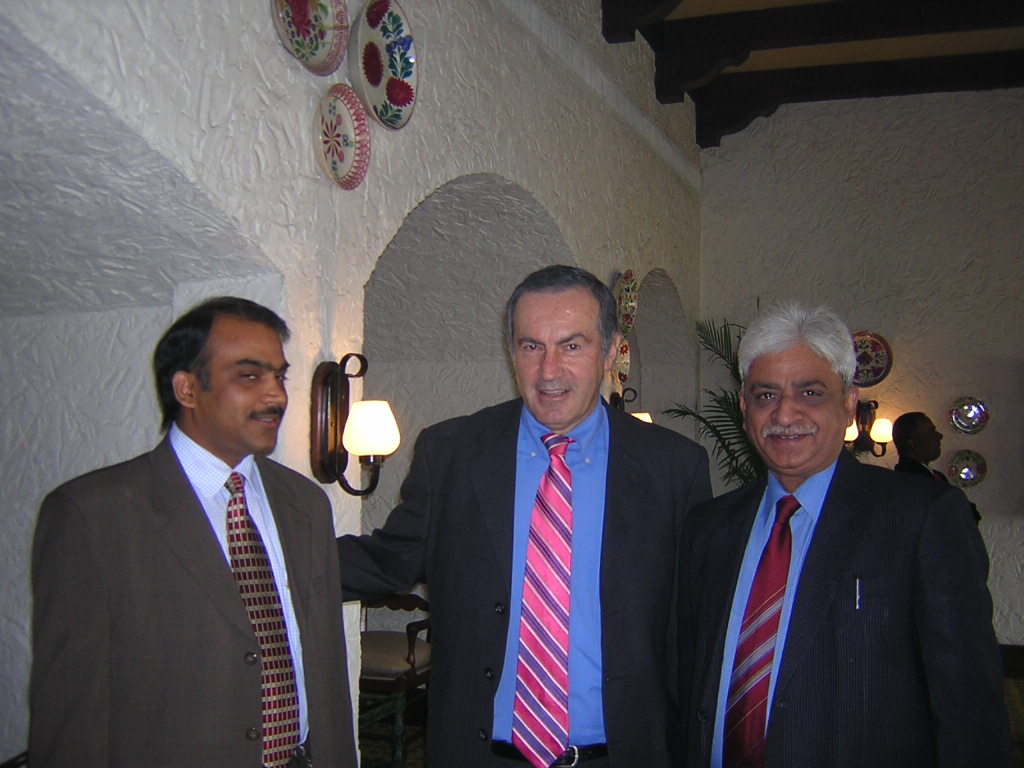

Andres Oppenheimer( in the middle of the foto on top) is the latest Latin American visitor to understand and study the India story for its relevance to Latin America. He is going to write about India's education system and scientific and technological developments and business with Latin America in his columns in Miami Herald and his syndicated columns which appear in newspapers of Latin America.
He has visited China and written a book called as " cuentos chinos"- tales of china). He now wants to compare India vis-a -vis China from the Latin American point of view.
His visit is from 5 to 13 January. He has interviewed Ministers and visited IIT Delhi and JNU. He will be in bangalore on 11-12 january to see for himself the IT development there.
I hosted a lunch for him at Taj Mansingh Hotel on 5 january and introduced him to media persons, academics, businessmen and Latin American ambassadors.
Andres is an Argentinian settled in USA for the last thirty years. He has lots of jokes on Argentinians and other Latinos ! He is the key person in the organisation of the annual Latin America conference by Miami Herald in September. He has a vantage position from Miami, the other capital of Latin America, to watch and interact with the Latin American business, political and thought leaders.
Monday, January 01, 2007
The campaign - novel by Carlos Fuentes
This is the story of Baltazar Bustos, an Argentinian from the pampas, the land of gauchos who goes to live in Buenos Aires and is inspired by the ideals of Rousseau and Voltaire. He gets sucked into the independence fever of Latin America, after the Spanish kingdom is overtaken by Napoleon, in the period 1810-20. He is given a miltary rank and sent to fight in Peru and later to Chile. He is caught in the conflicts between the local Creole leaders and the impracticality of his ideals of equality and justice. His political story takes on romantic wings when he falls in love with Ofelia Salamanca, a Chilean femme fatale, married to the governor of Buenos Aires. She changes husbands, lovers and countries and goes from Argentina to Peru, Chile, Venezuela and Mexico. And he is on her trail through all the countries and finally encounters her in Mexico.
Carlos Fuentes has given a fictionalised version of Latin American history of independence in this novel. He has brought in Latin American heroes such as San Martin of Argentina and Simon Bolivar of Venezuela. He has highlighted how the Latin Americans were unprepared for the sudden and unexpected independence and the confusion and conflicts between the local Creole leaders, the situation of native Indians and the African slaves. He has brought out the point that the instability of the continent was inbuilt in the foundation of the new republics who were not ready or equipped for nation building.
Carlos Fuentes, who had raised my expectations after his other novel" the eagle's throne" has captured me as a fan after this novel. He has helped me in understanding Latin America as he did with the other book about mexican politics. His Mexican character Father Quintana calls the Argentinians as the children of Latin America, contrasting with the old civilisation inherited by Mexico. Fuentes has brought out vividly the Latin American characters such as the merchants of the port city of Buenos Aires, the free-spirited gauchos of the pampas, the high society salons of Lima, the brothels of Maracaibo and the revolutionary priests of Mexico.
The love story in this novel is as enigmatic and profund as in the Eagle's Throne novel. In both, the heroines are free spirited Latinas, who make use of the men for fun and politics.
The novel reminded me of the film " The motor cyclist's diaries " which tells the story of Che Guevara, the other Argentinian who travelled to Chile, Peru and other countries of Latin America for fun to start with and later to spread leftist revolution.
I am looking forward to the three more books of Fuentes i have just bought.
Carlos Fuentes has given a fictionalised version of Latin American history of independence in this novel. He has brought in Latin American heroes such as San Martin of Argentina and Simon Bolivar of Venezuela. He has highlighted how the Latin Americans were unprepared for the sudden and unexpected independence and the confusion and conflicts between the local Creole leaders, the situation of native Indians and the African slaves. He has brought out the point that the instability of the continent was inbuilt in the foundation of the new republics who were not ready or equipped for nation building.
Carlos Fuentes, who had raised my expectations after his other novel" the eagle's throne" has captured me as a fan after this novel. He has helped me in understanding Latin America as he did with the other book about mexican politics. His Mexican character Father Quintana calls the Argentinians as the children of Latin America, contrasting with the old civilisation inherited by Mexico. Fuentes has brought out vividly the Latin American characters such as the merchants of the port city of Buenos Aires, the free-spirited gauchos of the pampas, the high society salons of Lima, the brothels of Maracaibo and the revolutionary priests of Mexico.
The love story in this novel is as enigmatic and profund as in the Eagle's Throne novel. In both, the heroines are free spirited Latinas, who make use of the men for fun and politics.
The novel reminded me of the film " The motor cyclist's diaries " which tells the story of Che Guevara, the other Argentinian who travelled to Chile, Peru and other countries of Latin America for fun to start with and later to spread leftist revolution.
I am looking forward to the three more books of Fuentes i have just bought.
Wednesday, December 13, 2006
The West on Trial - autobiography of Cheddi Jagan
I read most of this book during the long trip to Guyana last month and I have just completed it.
Cheddi Jagan was Guyana's most important freedom fighter. Born in a modest peasant family, Jagan went to study medicine in USA. During the stay there, he had done all kinds of odd jobs to sustain himself. After his return, he plunged into politics in Guyana. He started defending workers' rights and joined the trade union movement and then joined full time politics working for the independence from Britain.He won the elections in the pre-independance period. But the British conspired to keep him out of power. Firstly, they used their standard divide and rule policy by encouraging divisions and rivalries between the Afro-Guyanese and the Indo-Guyanese. Secondly they branded him as a communist threat to Guyana and the region. This way they got the support of the Americans to prevent communism taking hold in the region particularly after the experience of Cuba. The British and Americans imposed a proportional representation system on Guyana to prevent Jagan and his party from getting majority. Jagan asked them why did they not have the same system if it was good for Guyana.
Eventually Jagan managed to overcome all the internal and external challenges and become the President of Guyana in 1992 for five years till his death in 1997.
Jagan's struggle is similiar in many ways to the Indian struggle for independence from the same British. The only difference was that Guyana being a smaller and weaker country, suffered more.
It is true, Jagan was a fellow traveller. But anyone in his position had to be one, given the Guyanese situation. Most of the Guyanese were poor and exploited under the colonial rule. The population of Guyana consists of AfroGuyanese who were former slaves and the indians who were former bonded labourers. With this kind of electorate, it was logical to seek social justice through leftist path.On top of it, Guyana's natural and mineral resources and the sugar and mining industry were controlled by British, American and foreign companies for whom their profit was more important than Guyanese development.It was the job of the political leaders to demand a fair share of their earnings. Even today, Guyana remains as one of the poorest countries in the region, despite vast land, water, natural and mineral resources.
Janet Jagan, the American wife of Cheddi Jagan had also worked shoulder to shoulder at all levels of Guyanese politics. She shared the same ideology and commitment of her husband to the upliftment of the Guyanese.
Jagan has published other books covering regional and global issues.
But the title of this autobiography " The west on trial" does not seem to be appropriate. It was the west which put him on trial. But at the bottom of the cover page it is written " My fight for Guyana's freedom" . This should have been the title.
While Jagan has been understandably extra critical of his political opponents, his book gives a vivid account of the struggle of Guyana and the manipulation of the external forces.
Cheddi Jagan was Guyana's most important freedom fighter. Born in a modest peasant family, Jagan went to study medicine in USA. During the stay there, he had done all kinds of odd jobs to sustain himself. After his return, he plunged into politics in Guyana. He started defending workers' rights and joined the trade union movement and then joined full time politics working for the independence from Britain.He won the elections in the pre-independance period. But the British conspired to keep him out of power. Firstly, they used their standard divide and rule policy by encouraging divisions and rivalries between the Afro-Guyanese and the Indo-Guyanese. Secondly they branded him as a communist threat to Guyana and the region. This way they got the support of the Americans to prevent communism taking hold in the region particularly after the experience of Cuba. The British and Americans imposed a proportional representation system on Guyana to prevent Jagan and his party from getting majority. Jagan asked them why did they not have the same system if it was good for Guyana.
Eventually Jagan managed to overcome all the internal and external challenges and become the President of Guyana in 1992 for five years till his death in 1997.
Jagan's struggle is similiar in many ways to the Indian struggle for independence from the same British. The only difference was that Guyana being a smaller and weaker country, suffered more.
It is true, Jagan was a fellow traveller. But anyone in his position had to be one, given the Guyanese situation. Most of the Guyanese were poor and exploited under the colonial rule. The population of Guyana consists of AfroGuyanese who were former slaves and the indians who were former bonded labourers. With this kind of electorate, it was logical to seek social justice through leftist path.On top of it, Guyana's natural and mineral resources and the sugar and mining industry were controlled by British, American and foreign companies for whom their profit was more important than Guyanese development.It was the job of the political leaders to demand a fair share of their earnings. Even today, Guyana remains as one of the poorest countries in the region, despite vast land, water, natural and mineral resources.
Janet Jagan, the American wife of Cheddi Jagan had also worked shoulder to shoulder at all levels of Guyanese politics. She shared the same ideology and commitment of her husband to the upliftment of the Guyanese.
Jagan has published other books covering regional and global issues.
But the title of this autobiography " The west on trial" does not seem to be appropriate. It was the west which put him on trial. But at the bottom of the cover page it is written " My fight for Guyana's freedom" . This should have been the title.
While Jagan has been understandably extra critical of his political opponents, his book gives a vivid account of the struggle of Guyana and the manipulation of the external forces.
Sunday, December 10, 2006
Voces Inocentes - Film on El Salvador
Voces Inocentes means Innocent Voices.
This Mexican film in Spanish ( released in 2004 ) is about the cruel and bloody civil war in El Salvador and is based on a real life story.
Chava, the eleven year old boy is caught in the crossfires of bullets, killings and destruction. After his father escapes to USA, little Chava is designated by his mother as the Man of the House. He has to dodge bullets everyday in the streets, school and has to be back home before the curfew. His friends, when they reach the age of 12 are snatched away by the soldiers for conscription. No one is safe. The soldiers kidnap young girls from the streets and kick and kill parish priest. The little sweetheart of Chava, whom he describes as the only girlfriend is also killed by the soldiers. After having seen so much of death and inhumanity Chava, alongwith his friends join the guerillas. They get caught and all his friends are shot and killed, while he escapes miraculously. His mother and the rest of the family who are on the run from the soldiers and guerillas finds him back in the old house which has been set on fire and destroyed. Chava is sent to USA to escape the violence of El Salvador.
Carlos Padillo who has acted as Chava and Leonor Varela, the Chilean actress who acts as the mother of Chava have given their heart and soul to their characters.
Luis Mandoki, the Mexican director of the film has made the film as poignant and profundly moving. He has handled the brutal violence and loss of innocence of children delcately. It is a serious film, without any distraction. No comedy or sex scenes. The film is focussed solely on the theme and brings alive the sufferings of the people of El Salvador.
One of the best Latino films i have seen so far.
This Mexican film in Spanish ( released in 2004 ) is about the cruel and bloody civil war in El Salvador and is based on a real life story.
Chava, the eleven year old boy is caught in the crossfires of bullets, killings and destruction. After his father escapes to USA, little Chava is designated by his mother as the Man of the House. He has to dodge bullets everyday in the streets, school and has to be back home before the curfew. His friends, when they reach the age of 12 are snatched away by the soldiers for conscription. No one is safe. The soldiers kidnap young girls from the streets and kick and kill parish priest. The little sweetheart of Chava, whom he describes as the only girlfriend is also killed by the soldiers. After having seen so much of death and inhumanity Chava, alongwith his friends join the guerillas. They get caught and all his friends are shot and killed, while he escapes miraculously. His mother and the rest of the family who are on the run from the soldiers and guerillas finds him back in the old house which has been set on fire and destroyed. Chava is sent to USA to escape the violence of El Salvador.
Carlos Padillo who has acted as Chava and Leonor Varela, the Chilean actress who acts as the mother of Chava have given their heart and soul to their characters.
Luis Mandoki, the Mexican director of the film has made the film as poignant and profundly moving. He has handled the brutal violence and loss of innocence of children delcately. It is a serious film, without any distraction. No comedy or sex scenes. The film is focussed solely on the theme and brings alive the sufferings of the people of El Salvador.
One of the best Latino films i have seen so far.
Thursday, November 30, 2006
MBA students of Latin America coming to India
Nirmala Harrylal of Trinidad and Tobago had a dream. She wanted to get an experience of the education of IIM Ahmedabad. She has just got admission for a one month course in january 2007. Congrats Nirmala!
She is with the Arthur Lok Jack Graduate School of Business in Port of Spain. Her work includes design, development and execution of training and consultancy programmes for Public / Private Sector & Non-Governmental Organizations within Trinidad & Tobago & the Caribbean Region.
As a facilitator, Ms. Harrylal has planned and implemented training programmes in the areas of marketing, marketing research, advertising, consumer behaviour, human resource management, organizational behaviour, communication.
She has published many articles on a variety of management related topics such as logistics management, project management, performance management, change management, international marketing, international business issues. Her research articles are sought after by a leading network of business captains locally and internationally. She is particularly interested in researching geo-political and geo-economic emerging business issues.
I was impressed by her articles on India and China.
In May 2007 about 30 mexican management graduates are expected to join an IIM for a six months course.
She is with the Arthur Lok Jack Graduate School of Business in Port of Spain. Her work includes design, development and execution of training and consultancy programmes for Public / Private Sector & Non-Governmental Organizations within Trinidad & Tobago & the Caribbean Region.
As a facilitator, Ms. Harrylal has planned and implemented training programmes in the areas of marketing, marketing research, advertising, consumer behaviour, human resource management, organizational behaviour, communication.
She has published many articles on a variety of management related topics such as logistics management, project management, performance management, change management, international marketing, international business issues. Her research articles are sought after by a leading network of business captains locally and internationally. She is particularly interested in researching geo-political and geo-economic emerging business issues.
I was impressed by her articles on India and China.
In May 2007 about 30 mexican management graduates are expected to join an IIM for a six months course.
Wednesday, November 22, 2006
This can happen only in Brazil
Here is the Reuters news item....needs no explanation or commentary.
Brazilian town's free Viagra gives elderly a boost
BRASILIA, Brazil (Reuters) -- The mayor of a small Brazilian town has begun handing out free Viagra, spicing up the sex lives of dozens of elderly men and their partners.
"Since we started the free distribution of sexual stimulants, our elderly population changed. They're much happier," said Joao de Souza Luz, the mayor of Novo Santo Antonio, a small town in the central state of Mato Grosso.
Souza Luz said 68 men over the age of 60 already had signed up for the program, which was approved by the town's legislature and has been dubbed "Happy Penis," or "Pinto Alegre" in Portuguese.
But the program also has had the unforeseen consequence of encouraging some extramarital affairs, Souza Luz said.
"Some of the old men aren't seeking out their wives. They've got romances on the side," he said.
Addition: During Carnaval, the government of Brazil distributes millions of condoms free of cost at the parades !
Tuesday, November 21, 2006
Rojo Amanecer - Mexican movie
I have not got over the shocking impact of this film ( Rojo Amanaecer means red dawn) i watched on sunday night.
It is about the student uprising in Mexico in october 1968. A middle class family is caught in the tragedy of the brutal suppression of the student unrest. The family lives in Tlateloloco in Mexico city and witnesses the tragic clampdown on student protests in the Plaza de tres culturas. The two college going boys of the family are idealistic and passionate about the struggle for justice and jump into the student movement. The father, a civil servant and the housewife- mother try to calm them down, while the grandfather, a retired military officer takes care of the smaller children. The government anxious to prevent the unpleasantness of student protest on the eve of the olympics to be hosted by mexico, is determined to put an end to the student stir. The military and police get into brutal action shooting at the student crowd and killing and injuring many. They follow it up with breaking into houses and arresting and beating up students and teachers. They break into the house of this particular family and discover students hiding there. They kill the whole family and the hiding students ruthlessly.
The movie flows naturally without hype or drama, like a documentary but with a powerful impact. The movie is said to be accurate about what happened.
The film brings back vividly the memory of Tlatelolco Massacre of 2 October 1968, one of the saddest days in Mexican history. This is what actually happened. The Mexican students joined the worldwide protests and the political unrest in 1968. After nine weeks of protests, the students took out a march on 2 October, ten days before the Mexican Olympics. The security forces killed and wounded hundreds of students on that fateful day. In june 2006, Echeverria, who was president in 1968 was charged for genocide, but nothing came of it.
Of course, worse things happened in some other latin American countries under military dictatorship. Still it is a scar and a stain in recent mexican history. Octavio Paz , who was ambassador in in India at that time resigned in protest.
The director of the film Jorge Fans has shown courage besides artistic talents in making this film which was released in 1989. I also liked his other film " Midaq Alley", which also takes up a similiar bold theme.
One of the best Mexican films..
It is about the student uprising in Mexico in october 1968. A middle class family is caught in the tragedy of the brutal suppression of the student unrest. The family lives in Tlateloloco in Mexico city and witnesses the tragic clampdown on student protests in the Plaza de tres culturas. The two college going boys of the family are idealistic and passionate about the struggle for justice and jump into the student movement. The father, a civil servant and the housewife- mother try to calm them down, while the grandfather, a retired military officer takes care of the smaller children. The government anxious to prevent the unpleasantness of student protest on the eve of the olympics to be hosted by mexico, is determined to put an end to the student stir. The military and police get into brutal action shooting at the student crowd and killing and injuring many. They follow it up with breaking into houses and arresting and beating up students and teachers. They break into the house of this particular family and discover students hiding there. They kill the whole family and the hiding students ruthlessly.
The movie flows naturally without hype or drama, like a documentary but with a powerful impact. The movie is said to be accurate about what happened.
The film brings back vividly the memory of Tlatelolco Massacre of 2 October 1968, one of the saddest days in Mexican history. This is what actually happened. The Mexican students joined the worldwide protests and the political unrest in 1968. After nine weeks of protests, the students took out a march on 2 October, ten days before the Mexican Olympics. The security forces killed and wounded hundreds of students on that fateful day. In june 2006, Echeverria, who was president in 1968 was charged for genocide, but nothing came of it.
Of course, worse things happened in some other latin American countries under military dictatorship. Still it is a scar and a stain in recent mexican history. Octavio Paz , who was ambassador in in India at that time resigned in protest.
The director of the film Jorge Fans has shown courage besides artistic talents in making this film which was released in 1989. I also liked his other film " Midaq Alley", which also takes up a similiar bold theme.
One of the best Mexican films..
Saturday, November 11, 2006
Trip to Trinidad and Tobago
 temple in the sea
Port of Spain city
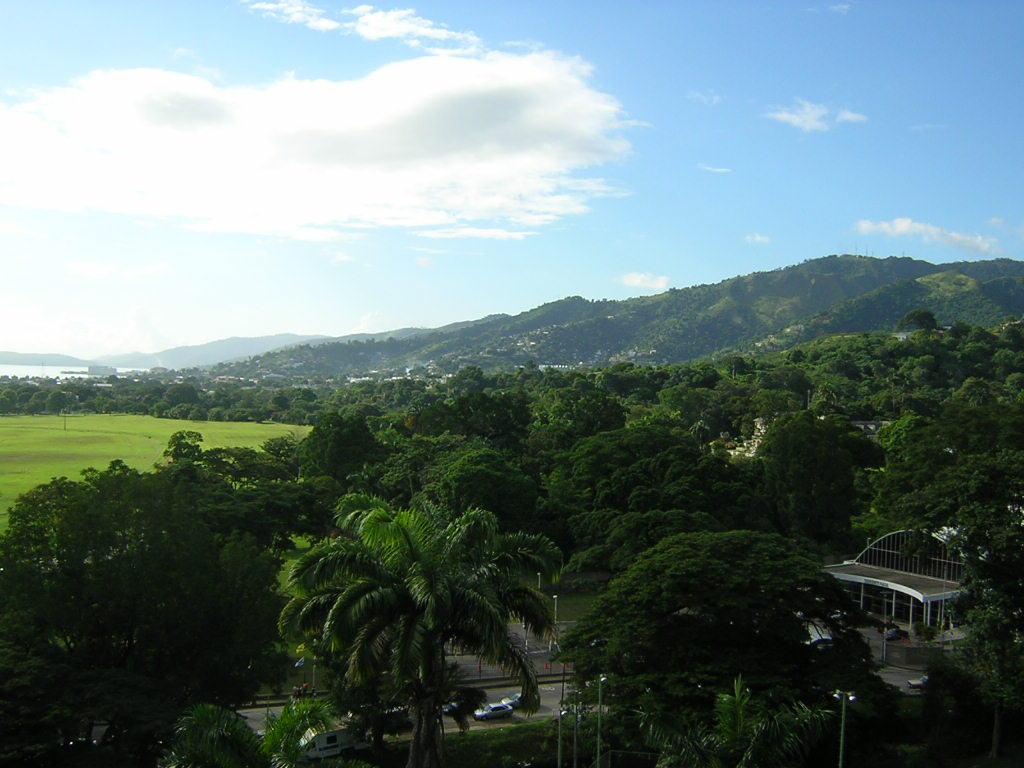
Reaching Trinidad and Tobago from Guyana, I was struck by the stark contrast. While Guyana is a poor country trying to set up a traffic light system for the first time, T and T is affluent all the way. The highways, skyscrapers, luxury hotels, elegant houses with manicured lawns, tarffic jam caused by the huge increase in number of cars, the stylish MaxiTaxis with red band and shops filled with goodies... speak for the prosperity. The 11000 US dollars of per capita income is the highest in the region. Even the villages are prosperous with modern houses, good roads and all the basic amenities.
Port of Spain, the capital has lot of greenery. The Queen's park in the heart of the city is green,very large and well maintained. The hills provide a great view of the city and the sea.
The music scene is vibrant with steel band, chutney music and calypso. The Trinians are proud of their Carnival, the much anticipated event in February-march.
The Indian community tries to preserve and follow the traditional culture and rituals. The Hindu houses fly colorful flags honouring different deities. Dalpuri is a staple diet as in the other diaspora countries.
Pictures of the trip http://picasaweb.google.com/viswanathanifs
Thursday, November 09, 2006
The Eagle's Throne- novel by Carlos Fuentes
The first book of Carlos Fuentes (from mexico) I read was " Death of Artemio Cruz" . I did not finish it. I found it like catch-22, going round and round. Even my familiarity with magical realism did not help in appreciating the book. Then i tried another book " crystal frontier" about mexican emigration to gringoland. It was so so.
With this experience i started reading The Eagle's Throne hesitantly. I was in for a surprise. I enjoyed the book thoroughly. It is a political novel about the six-year cycle of mexican politics, starting with the assumption of power by the new president who gets one single non-reelectable six year term. As soon as the President is elected the conspiracies start for getting into his shoes for the next term. King makers, cabinet ministers and officials start the game of promoting and spoiling the chances of potential candidates by resorting to any means including sex,money, defamation,flattery and blackmail. For anyone who wants to understand Mexican politics, this book is the ideal guide.
Carlos Fuentes has brought out the character of mexican politicians so vividly with biting sarcasm and striking punch lines. Fuentes has filled the novel with a complete cast of characters including congressmen and druglords, lovers and mistresses, noble minded statesmen and corrupt politicians and senators and lowly clerks. He has included historical details and characters.
Fuentes has told the whole story in the form of letters from one character to another.
It starts with the letter of Maria del Rosario Galvan, the queen of politics, who starts grooming the young Nicolas Valdivia as the next President and succeeds in achieving her goal. she uses sex, seduction and blackmail so matter of factly, dispassionately and is candid about this with her adversaries and admirers. She weaves a series of schemes including sending Valdivia to get lessons and secrets from an ex-president retired playing dominoes in vera cruz. Tacito de canal, the chief of staff of the president controls access to the President and implements his orders even before the boss issues them..anticipatory compliance.
It is an extraordinary novel with suspense and thrill added to spice up the real life mexican political story.
I am going to read more books by him now.
Fuentes has quoted a mexican bolero..which has become my favourite one
No me preguntas mas
dejame imaginar
que no existe el pasado
y que nacimos
el mismo instante
en que nos conocimos
dont ask me more
let me imagine that
there was no past
we were born
at the same same time
as we met
With this experience i started reading The Eagle's Throne hesitantly. I was in for a surprise. I enjoyed the book thoroughly. It is a political novel about the six-year cycle of mexican politics, starting with the assumption of power by the new president who gets one single non-reelectable six year term. As soon as the President is elected the conspiracies start for getting into his shoes for the next term. King makers, cabinet ministers and officials start the game of promoting and spoiling the chances of potential candidates by resorting to any means including sex,money, defamation,flattery and blackmail. For anyone who wants to understand Mexican politics, this book is the ideal guide.
Carlos Fuentes has brought out the character of mexican politicians so vividly with biting sarcasm and striking punch lines. Fuentes has filled the novel with a complete cast of characters including congressmen and druglords, lovers and mistresses, noble minded statesmen and corrupt politicians and senators and lowly clerks. He has included historical details and characters.
Fuentes has told the whole story in the form of letters from one character to another.
It starts with the letter of Maria del Rosario Galvan, the queen of politics, who starts grooming the young Nicolas Valdivia as the next President and succeeds in achieving her goal. she uses sex, seduction and blackmail so matter of factly, dispassionately and is candid about this with her adversaries and admirers. She weaves a series of schemes including sending Valdivia to get lessons and secrets from an ex-president retired playing dominoes in vera cruz. Tacito de canal, the chief of staff of the president controls access to the President and implements his orders even before the boss issues them..anticipatory compliance.
It is an extraordinary novel with suspense and thrill added to spice up the real life mexican political story.
I am going to read more books by him now.
Fuentes has quoted a mexican bolero..which has become my favourite one
No me preguntas mas
dejame imaginar
que no existe el pasado
y que nacimos
el mismo instante
en que nos conocimos
dont ask me more
let me imagine that
there was no past
we were born
at the same same time
as we met
Thursday, November 02, 2006
Speech at IIM Kolkata on 2 November
 The topic of my talk was "Business and management culture of Latin America". I traced the evolution of this to the history of the conquest and colonisation by Spanish. While in north america the business precept was " consumer is king" , in latin America it was the other way," "King was the consumer". The king asked the colonisers to get him the gold and silver and let them do what they wanted. While the common law in north america laid the foundation for sound business culture, the civil law of Latamerica gave rise to Sociedad Anonymo companies which depended on trustnot on the legal sanctity of contract. The rule of men( as against rule of law) and the Latam approach of " justice to friends and law to enemies" did not help in providing a solid base for business culture of the region. Later the uncertainties of hyperinflation, debt and currency fluctuations also gave rise to the culture of making fast bucks. But now the business culture has undergone a fundamental transformation with the paradigm shift of the region politically, economically and culturally.
I talked about the "manana" culture and magical realism of Latamerica which have also influenced the management culture. There are, of course ,variations of bz and management culture depending upon the country, region ( Rio and sao paulo- so different) altitude( hill people different from the costenos), and ethnic groups ( lebanese, japanese, germans, italians...)
In my meetings with the Director, Dean and Prof Abraham( who has come back from trip to Latamerica),they showed interest in student exchanges, faculty and research cooperation and organising India programmes in Latin America and vice versa. These exchanges would add a business management dimension to the growing relations between India and Latin america. They remembered an alumni , Rakesh vaidyanathan,who is in Brazil in the business of promoting business between India and latin America.
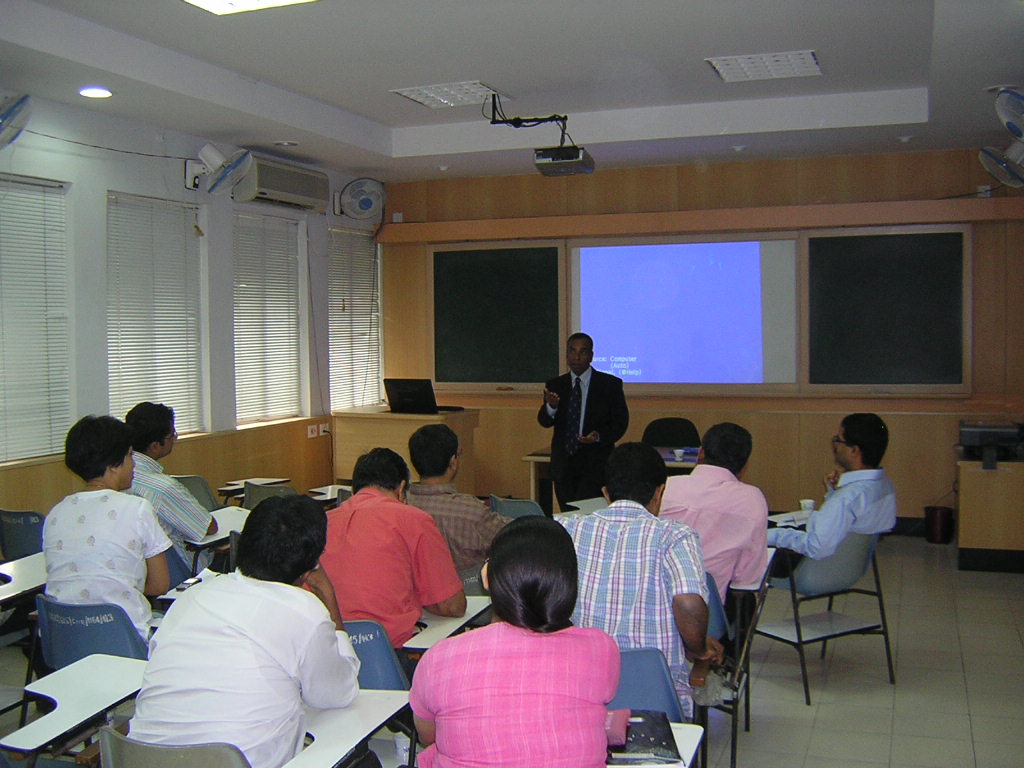
Sunday, October 29, 2006
la fiesta del chivo - movie on Dominican Republic
La fiesta del chivo- the feast of the goat is the movie based on the novel by the same name written by Mario vargas Llosa, the Peruvian writer.
It is about the dictatorship of Trujillo in Dominican Republic( DR). The story starts with Urania who returns after 30 yrs in newyork to visit her father Cabral,who was the senate leader during the dictatorship. The meeting with her father brings back the memories of the atrocities of Trujillo, who ran the country like his personal ranch and ruthlessly suppressed any opposition by indiscriminate assasinations. He humilitates Cabral, when he gives his opinion, which is not to the liking of Trujillo. The desperate senator sends his teenage daughter to Trujillo's fiesta. She discovers on arrival at Trujillo's ranch that she is the only guest invited for the party with him. Trujillo humiliates the daughter too. The movie ends with the assasination of Trujillo and the bloodbath which follows it.
The movie refers to the killing of the famous three Mirabel sisters by Trujillo. Julia Alvarez has written a novel on this,called as" In the time of butterflies".
what a coincidence ! I met the daughter of one of the three sisters( maria Teresa) in the party hosted by the Ambassador of Dom Republic yesterday. There was also the fourth sister, Dede, who was lucky to survive the killings. It was an emotional meeting with them. They have promised to convey my Saludos to Julia Alvarez... and extend my invitation to her to visit India.
The film, released in 2005, was shot in DR and partly in Spain.
The director Luis Llosa from Peru is a cousin of the writer Mario vargas Llosa.
Isabella Rosselini who has acted as Urania is an Italian and a Lancome model.
It is about the dictatorship of Trujillo in Dominican Republic( DR). The story starts with Urania who returns after 30 yrs in newyork to visit her father Cabral,who was the senate leader during the dictatorship. The meeting with her father brings back the memories of the atrocities of Trujillo, who ran the country like his personal ranch and ruthlessly suppressed any opposition by indiscriminate assasinations. He humilitates Cabral, when he gives his opinion, which is not to the liking of Trujillo. The desperate senator sends his teenage daughter to Trujillo's fiesta. She discovers on arrival at Trujillo's ranch that she is the only guest invited for the party with him. Trujillo humiliates the daughter too. The movie ends with the assasination of Trujillo and the bloodbath which follows it.
The movie refers to the killing of the famous three Mirabel sisters by Trujillo. Julia Alvarez has written a novel on this,called as" In the time of butterflies".
what a coincidence ! I met the daughter of one of the three sisters( maria Teresa) in the party hosted by the Ambassador of Dom Republic yesterday. There was also the fourth sister, Dede, who was lucky to survive the killings. It was an emotional meeting with them. They have promised to convey my Saludos to Julia Alvarez... and extend my invitation to her to visit India.
The film, released in 2005, was shot in DR and partly in Spain.
The director Luis Llosa from Peru is a cousin of the writer Mario vargas Llosa.
Isabella Rosselini who has acted as Urania is an Italian and a Lancome model.
Friday, October 27, 2006
Brazilian interest in Mahatma Gandhi
The interest is not for fashion nor induced by Munnabhai film
Palas Athena, a NGO from Sao Paulo has been disseminating Gandhiji's ideals in Brazil seriously and sincerely. They have been organising week-long celebrations of Gandhi Jayanthi for the last 25 yrs. Not just by way of garlanding the statue or formal speeches.They go to street children, teachers, schools, NGOs and police besides intellectuals with community activities. They inculcate in young minds the spirit of non-violence and peace.
here is the report I have got from Lia Diskin, the director of Palas Athena about this year's 2 oct activity.
"We are still intoxicated by the 25th Gandhi Week. The name is Week but in truth it takes up the month of October as a whole. This year we managed to include some of the 150 activities in 11 of the FEBEM ( juvenile prisons) units of São Paulo. These are places where young law-breakers are kept until they come of age. Our volunteers show a film on Gandhi and then discuss it with the inmates. These experiences have been very good and light up our hopes".
The force behind these Gandhian interest and activities is Lia Diskin, director of Associação Palas Athena. I have the greatest admiration and respect for her selfless public work. She is a true Gandhian in belief and practice both in private and public life.
Palas Athena had organised a Gandhi project with the 80000 police force of sao paulo state in 1998 to calm down the police mind and instill compassion in them.
The auditorium of Palas Athena is named after Mahatma Gandhi. Palas Athena runs a orphanage called as House of Pandavas. They have translated and published the autobiography of Gandhi in Portuguese.
Information on the Gandhian activities of Palas Athena are in www.palasathena.org
Palas Athena, a NGO from Sao Paulo has been disseminating Gandhiji's ideals in Brazil seriously and sincerely. They have been organising week-long celebrations of Gandhi Jayanthi for the last 25 yrs. Not just by way of garlanding the statue or formal speeches.They go to street children, teachers, schools, NGOs and police besides intellectuals with community activities. They inculcate in young minds the spirit of non-violence and peace.
here is the report I have got from Lia Diskin, the director of Palas Athena about this year's 2 oct activity.
"We are still intoxicated by the 25th Gandhi Week. The name is Week but in truth it takes up the month of October as a whole. This year we managed to include some of the 150 activities in 11 of the FEBEM ( juvenile prisons) units of São Paulo. These are places where young law-breakers are kept until they come of age. Our volunteers show a film on Gandhi and then discuss it with the inmates. These experiences have been very good and light up our hopes".
The force behind these Gandhian interest and activities is Lia Diskin, director of Associação Palas Athena. I have the greatest admiration and respect for her selfless public work. She is a true Gandhian in belief and practice both in private and public life.
Palas Athena had organised a Gandhi project with the 80000 police force of sao paulo state in 1998 to calm down the police mind and instill compassion in them.
The auditorium of Palas Athena is named after Mahatma Gandhi. Palas Athena runs a orphanage called as House of Pandavas. They have translated and published the autobiography of Gandhi in Portuguese.
Information on the Gandhian activities of Palas Athena are in www.palasathena.org
Sunday, October 22, 2006
Two Brazilian films on football and sex
The film on football is " casamento de Romeu e julietta" - marriage of Romeo and Juliet.
It is about the foot ball obsession of the Brazilians. Julietta's family is a fanatic supporter of Palmeiras team of Sao Paulo and her father is a director of the palmeiras club. She falls in love with Romeu, who is a fan of Corinthians. Julieta advises him to pretend as a Palmirense to get acceptance of her family. But this is rejected by the grand mother of Romeu as a disgrace. Finally Romeu gets the courage to tell his would be father-in-law that he is a Corinthian. This provokes an outrage and Romeu is chased out. But the daughter decides to leave the house and marry Romeu, creating a revolution and a comedy of the outburst of her family.
The film brings out the football fanaticism of Brazilians and the extent to which their life gets overtaken by the game.
The film , released in 2005, has been directed by Bruno Barreto, who has directed several other brazilian movies. His other foot ball film" Bossanova" is also a hilarious comedy.
Sexo, Amor e Traison"- Sex, love and Betrayal is a film about sex. Caution... sex is not an obsession of Brazilians. It is just natural. They do not twist and turn because of sex. Nor does the society has any artificial and hypocritical suppressions. Their approach is humane. They celebrate sex as an essential and enjoyable part of life.
The theme of the movie is universal. Love and sex lose their importance in the course of day to day life of marriage. The story is about two couples in Rio.The wives nag the poor husbands complaining of inadequate attention. The husbands whose primary goal is success in career are unable to cope with this internal attack. At this time of marital crisis, the previous boyfriends and girlfriends appear, adding to the complication. Both couples take to adventurous diversions. Finally they reunite with happy ending. These give an idea of what happens in real life in Brazil. There is sex beyond love and love beyond sex !
Jorge Fernando, director of this film ( release- 2004), has directed many Brazilian soap operas.
It is about the foot ball obsession of the Brazilians. Julietta's family is a fanatic supporter of Palmeiras team of Sao Paulo and her father is a director of the palmeiras club. She falls in love with Romeu, who is a fan of Corinthians. Julieta advises him to pretend as a Palmirense to get acceptance of her family. But this is rejected by the grand mother of Romeu as a disgrace. Finally Romeu gets the courage to tell his would be father-in-law that he is a Corinthian. This provokes an outrage and Romeu is chased out. But the daughter decides to leave the house and marry Romeu, creating a revolution and a comedy of the outburst of her family.
The film brings out the football fanaticism of Brazilians and the extent to which their life gets overtaken by the game.
The film , released in 2005, has been directed by Bruno Barreto, who has directed several other brazilian movies. His other foot ball film" Bossanova" is also a hilarious comedy.
Sexo, Amor e Traison"- Sex, love and Betrayal is a film about sex. Caution... sex is not an obsession of Brazilians. It is just natural. They do not twist and turn because of sex. Nor does the society has any artificial and hypocritical suppressions. Their approach is humane. They celebrate sex as an essential and enjoyable part of life.
The theme of the movie is universal. Love and sex lose their importance in the course of day to day life of marriage. The story is about two couples in Rio.The wives nag the poor husbands complaining of inadequate attention. The husbands whose primary goal is success in career are unable to cope with this internal attack. At this time of marital crisis, the previous boyfriends and girlfriends appear, adding to the complication. Both couples take to adventurous diversions. Finally they reunite with happy ending. These give an idea of what happens in real life in Brazil. There is sex beyond love and love beyond sex !
Jorge Fernando, director of this film ( release- 2004), has directed many Brazilian soap operas.
Thursday, October 19, 2006
Pantaleon y las visitadoras - Peruvian film
This is one of the best Latino films I have seen so far. A delighful and enjoyable comedy with a typical latino flavour.
The Peruvian army captain Pantaleon Pantoja, a very serious and efficient officer, is chosen by his superiors to set up a special service of 'visitors' to satisfy the sexual needs of the soldiers posted on remote jungle outposts in Amazon area. The young married captain, faithful to his wife and disciplined militarily and morally, does not like the work but agrees to carry out his duty. He puts his organisational talents to work and establishes a system of visitors in a typical military disciplined way. He tells his wife that he is doing a secret work.
But his resistance collapses in front of the seductive girl called as " la colombiana" who conquers him finally. Marriage breaks and eventually La Colombiana herself is killed in an accident. Pantoja organises a public mass to mourn the martyrdom of the special visitadora. This becomes a scandal and the army chief puts an end to the visitadora system.
This movie is based on a book by my most favourite Peruvian writer Mario Vargas Llosa.
The Colombian actress Angie Cepeda who acts as "the colombiana" is very striking and charming. She has superbly portrayed her seducing role.
The director of the movie is Francisco Lombardi from Peru. The film was released in 2000.
The Peruvian army captain Pantaleon Pantoja, a very serious and efficient officer, is chosen by his superiors to set up a special service of 'visitors' to satisfy the sexual needs of the soldiers posted on remote jungle outposts in Amazon area. The young married captain, faithful to his wife and disciplined militarily and morally, does not like the work but agrees to carry out his duty. He puts his organisational talents to work and establishes a system of visitors in a typical military disciplined way. He tells his wife that he is doing a secret work.
But his resistance collapses in front of the seductive girl called as " la colombiana" who conquers him finally. Marriage breaks and eventually La Colombiana herself is killed in an accident. Pantoja organises a public mass to mourn the martyrdom of the special visitadora. This becomes a scandal and the army chief puts an end to the visitadora system.
This movie is based on a book by my most favourite Peruvian writer Mario Vargas Llosa.
The Colombian actress Angie Cepeda who acts as "the colombiana" is very striking and charming. She has superbly portrayed her seducing role.
The director of the movie is Francisco Lombardi from Peru. The film was released in 2000.
Tuesday, October 17, 2006
Machuca - Chilean movie
This is the second Chilean film I have come to like after " Mi Mejor inimigo"
The theme is Chilean and Latin American.
It is about the turbulent years of the leftist Allende government which had polarised the society violently.
Machuca is a slum kid , given a scholarship by a "red priest" to join the exclusive private English medium school for the rich class. The naive experiment of the American priest does not work. Machuca influences Gonzalo a boy from a rich family and opens his eyes to the poor who survive on the margins of the society and support the leftist revolution of Allende. Gonazalo is torn at home by his fractured family, in the clashes between the rich kids and poor ones at the school and the confrontation between the revolutionaries and reactionaries in the streets. After the overthrow of Allende, the military takes over even the school and throws out the poor kids.
Most of the things depicted in the film actually took place in real life in Chile and in other countries of military dictatorships such as Argentina. For the Chileans it was a nightmare and an aberration in their history. For the non -Chilean audience it gives a glimpse of the turmoil in the society and how it affected even the children.
The film is entertaining too, with its rich and colorful vocabulary of abusive words used by the kids. I was more used to mexican vocabulary. The Chileans are not far behind. The innocence of the kids, their kissing scenes and the selling of flags to rival processionists have been brought out vividly with an emotional and sensitive touch. The kids are charming and endearing with their acting.
Released in 2004, the film was directed by Andres Wood of Chile.
The theme is Chilean and Latin American.
It is about the turbulent years of the leftist Allende government which had polarised the society violently.
Machuca is a slum kid , given a scholarship by a "red priest" to join the exclusive private English medium school for the rich class. The naive experiment of the American priest does not work. Machuca influences Gonzalo a boy from a rich family and opens his eyes to the poor who survive on the margins of the society and support the leftist revolution of Allende. Gonazalo is torn at home by his fractured family, in the clashes between the rich kids and poor ones at the school and the confrontation between the revolutionaries and reactionaries in the streets. After the overthrow of Allende, the military takes over even the school and throws out the poor kids.
Most of the things depicted in the film actually took place in real life in Chile and in other countries of military dictatorships such as Argentina. For the Chileans it was a nightmare and an aberration in their history. For the non -Chilean audience it gives a glimpse of the turmoil in the society and how it affected even the children.
The film is entertaining too, with its rich and colorful vocabulary of abusive words used by the kids. I was more used to mexican vocabulary. The Chileans are not far behind. The innocence of the kids, their kissing scenes and the selling of flags to rival processionists have been brought out vividly with an emotional and sensitive touch. The kids are charming and endearing with their acting.
Released in 2004, the film was directed by Andres Wood of Chile.
Sunday, October 15, 2006
Miss Magical Realism
appears from nowhere
disappears into the air
appears and disappears
surprising and disappointing
calls me on fone
takes not my calls
sends me email
smile is her response
tempts me with promises
teases me with airkisses
embraces me publicly
eludes me discretely
suave and sweet
swaying bossanova
singing Gabriela
aroma of canela
magic is her spell
mystic her appeal
is she the angel?
Is it for real?
oops..I got it now..
miss magical realism
disappears into the air
appears and disappears
surprising and disappointing
calls me on fone
takes not my calls
sends me email
smile is her response
tempts me with promises
teases me with airkisses
embraces me publicly
eludes me discretely
suave and sweet
swaying bossanova
singing Gabriela
aroma of canela
magic is her spell
mystic her appeal
is she the angel?
Is it for real?
oops..I got it now..
miss magical realism
Movie- la mujer de mi hermano
La mujer de mi hermano- The wife of my brother - is the movie I watched yesterday.
It is a Mexican film shot in Chile by a Peruvian director Ricardo de Montreuil. Barbara Mori, the lead actress was born in Montevideo and has now become a mexican. Christian meier, who acts as the husband is a Peruvian while Manolo Cardona, acting as the the younger brother is Colombian.
After almost 10 years of marriage, the sensual and attractive Zoe( Barbara Mori) discovers that her marriage lacks passion and surprise. She falls for the bohemian painter brother of the husband. It starts innocently but leads to adventurous sex and games. She confides this to her male friend who is gay. Ultimately, she discovers that her husband himself is a closet gay. But he loves her even after knowing her infidelity.
Usual soap opera stuff. But what has made it interesting is the acting by Barbara Mori, who has portrayed the typical Latina character... seeking constantly new experience...adding new dimensions always... sensual, charming, sweet ... adventurous and audacious ...
It is a Mexican film shot in Chile by a Peruvian director Ricardo de Montreuil. Barbara Mori, the lead actress was born in Montevideo and has now become a mexican. Christian meier, who acts as the husband is a Peruvian while Manolo Cardona, acting as the the younger brother is Colombian.
After almost 10 years of marriage, the sensual and attractive Zoe( Barbara Mori) discovers that her marriage lacks passion and surprise. She falls for the bohemian painter brother of the husband. It starts innocently but leads to adventurous sex and games. She confides this to her male friend who is gay. Ultimately, she discovers that her husband himself is a closet gay. But he loves her even after knowing her infidelity.
Usual soap opera stuff. But what has made it interesting is the acting by Barbara Mori, who has portrayed the typical Latina character... seeking constantly new experience...adding new dimensions always... sensual, charming, sweet ... adventurous and audacious ...
Saturday, October 14, 2006
Divali - Trinidad style
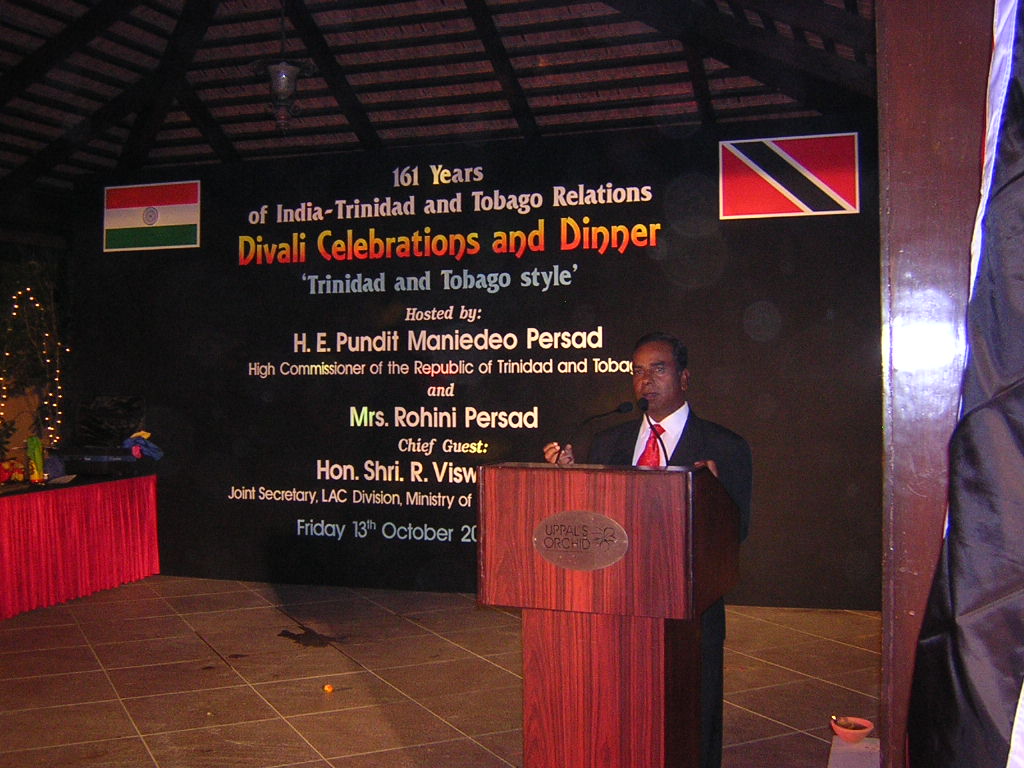
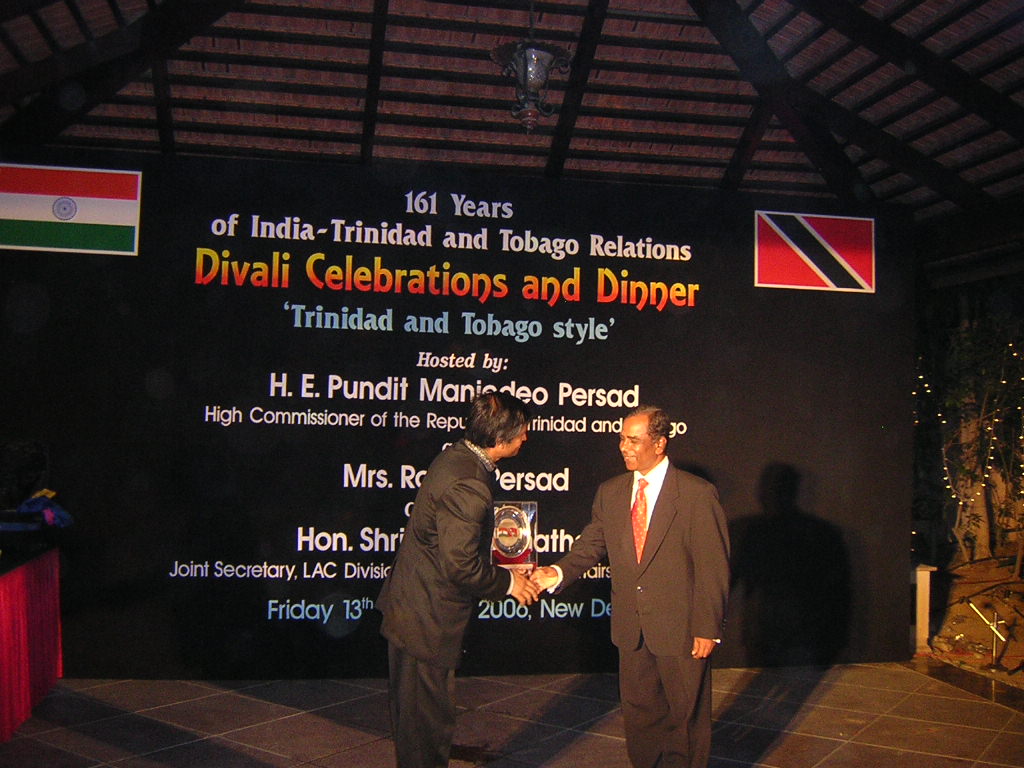
The High Commissioner of Trinidad and Tobago Mr Persad hosted Divali celebrations- Trinidad style on 13 October.
It was an impressive and colourful event held at Uppal Orchid resort Hotel, New Delhi. There was Puja, devotional music and dance, magic show and dinner. No alcohol or meat, as per the Trini custom. And many Trinians undertake fast for a week before Divali. About 10 million Diyas are lighted in T and T on diwali day.
HC Persad is one of the most active and articulate diplomats in delhi.
In my speech, I described T and T as a land of Oil and Gas, Calypso and Carnival, Chutney music and Steel band and Naipaul and Laxmi Mittal.
Why Mittal? because T and T was his launch pad. He acquired his first steel mill in T and T, made his first million and got the confidence. Then he went on to acquire 10 more steel mills around the world, becoming the largest steel producer. He reversed the "East India Company complex" by becoming the richest person in UK and making the europeans afraid of him, when he was bidding to take over Arcelor.
Naipaul's treatment of India in his trilogy of books (India a wounded civilisation, An area of darkness and A million mutinies ) has provoked some Indians mutiny against him. I am not among them. Many of the comments of Naipaul are valid and the Indians need to reflect on them. Nirad Chaudhry and Pawan Varma have also pointed out the defects in the Indian mindset and society which need to be consciously corrected. But there is hope. If Naipaul visits the Mysore campus of Infosys, he will certainly celebrate the emerging new Indian mindset.
Both Mittal and Naipaul are success stories of Indians outside India. While Mittal has elevated the self esteem of Indians, Naipaul, through his criticism has provoked the Indians to think.
T and T is the most energetic ( so much of oil and gas), prosperous( highest per capita in the region- 13000 US $ ) , powerful country in caribbean. T and T could be the gateway for Indian business to enter the caribbean region. Essar is building a steel plant with an investment of 1.2 billion dollars.
Subscribe to:
Posts (Atom)