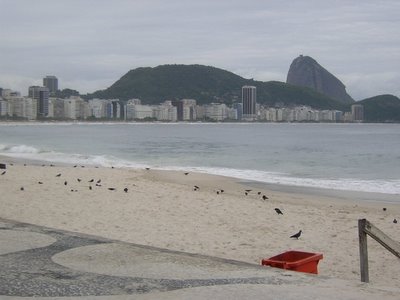
The Brazilian newspaper " O Globo " is posting a fulltime correspondent in Mumbai to cover news from India. Florencia Costa, the correspondent is reaching Mumbai on 31 may. She will be the first Brazilian ... hmmm... Latin American correspondent in India.
welcome! Bienvindo ! ... Florencia.
In March, Roberta Paduan of "Exame" the business magazine of Brazil spent two weeks in India and wrote a number of articles. One of her articles advised the Brazilian business " como ganar dinero com este nova India" ( how to make money with the new India).
In April, Carlos Graieb, the executive editor of "Veja" magazine ( which has the largest circulation) was here for three weeks with his photographer. His articles should be published shortly.
In August, Patricia Campos Melo, the reporter of Estado de Sao paulo, one of the largest daily newspapers will be here for about a month. She will write a book on the emerging new India in Portuguese.
From time to time, Globo TV of Brazil sends its crew to India for production for its " Fantastico" and other programmes.
These developments reflect the new mindset of Latin Americans who have started looking at India more seriously.
When will the Indian media start taking interest in the fascinating region of Latin America and .... give us a break from their excessive obsession with Pakistan and oversaturation of the conventional beat?
Apart from Carnival and football, samba and salsa, Copacabana and Ipanema, there is business, energy resources, minerals and metals, agribusiness, ethanol fuel and developmental experience of latin America which are of interest to India. Even Bollywood has started going to Latin America. Doom II shooting was done in Rio in March this year.
Thursday, May 25, 2006


Sunday, May 21, 2006
uruguayan film - Corazon de fuego
Corazon de fuego- heart of fire
is the Uruguayan film i saw last friday, courtesy the embassy.
This is the first-ever film from uruguay i ever saw. So i went with some curiosity.
I was pleasantly surprised by the quality of the film.
It is a delightful and light hearted comedy. refreshingly different from the hollywood-type.
It is the story of two workers and an absent minded professor plus a kid who hijack a old steam engine, which was sold to an american hollywood company. But these characters consider it as a national treasure and does not want to let it go. One cannot go very far with a steam engine... there is police chase and TV camera chase...
ends as expected....
Except for the kid all the other characters are old, fitting in with Urguay's image as a paradise for retirement.
made in 2002 -directed by Diego Arsuaga
I understand that there are some more interesting films produced in Uruguay in recent years.
is the Uruguayan film i saw last friday, courtesy the embassy.
This is the first-ever film from uruguay i ever saw. So i went with some curiosity.
I was pleasantly surprised by the quality of the film.
It is a delightful and light hearted comedy. refreshingly different from the hollywood-type.
It is the story of two workers and an absent minded professor plus a kid who hijack a old steam engine, which was sold to an american hollywood company. But these characters consider it as a national treasure and does not want to let it go. One cannot go very far with a steam engine... there is police chase and TV camera chase...
ends as expected....
Except for the kid all the other characters are old, fitting in with Urguay's image as a paradise for retirement.
made in 2002 -directed by Diego Arsuaga
I understand that there are some more interesting films produced in Uruguay in recent years.
Thursday, May 18, 2006
Evita
I have just finished reading the book " Evita- the real life of Eva Peron" written by Nicholas Fraser and Marysa Navarro. As i anticipated , the story of Evita helps one to understand the puzzle of Argentina, which fascinates me. More than what she said or did, what is significant is what did the Argentinians do in her name or against her name. They did not confine it to her life. Their pursuit would follow even after her death. They had created as much drama, myth and contoversy over her dead body as much they had done during her short public life. For tweleve years after her death there was secrecy and mystery about the wherabouts of the body. .. thriller like the Da Vince code. Let me start with the cadaver first. Here are some highlights
- Her body was kept for public homage for fifteen days after her death on 26 july 1952.
- The timing of evening news broadcast was changed from 8.30 pm to 8.25 pm, the exact time when she passed into " immortality"
-Primary school children recited prayer songs from their text books" Evita, I promise to be as good as you wish me to be "
-for three years, the body was kept, waiting for the construction of a monument which did not materialise.
-The miltary regime, which overthrew Peron in sept 1955 was afraid of the subversive influence of the body andthey sent it secretly to be buried in a cemetry in Italy. The whereabouts of the body were written and put in sealed envelope by president Aramburu who gave it to his lawyer with instructions that it should be opened only after his death. To confuse investigators, many dummy coffins were sent to Argentine embassies in other European countries to be buried.
-The military regime which replaced Peron made " possession of fotos of Evita or Peron or use of the expressions Peronism or Peronist" a punishable offence with imprisonment. Sure... many went to jail.
-Monteneros, the left wing guerillas kidnapped Aramburu in 1970, tried to get the information on Evita's body unsuccessfully and executed him. In 1974 the same group kidnapped the cadaver of Aramburu from his family's vault and demanded the return of Evita's body as ransom. Eventually, in November 1974 the body was brought back to Argentina.
-The body found its final resting place in the Recoleta cemetry in Buenos Aires. The coffin was put behind two trap doors with the only key given to Evita's sister.
Evita's short life of 31 years was eventful. It is the story of a girl born outside marriage from a poor village family ,running away to the city and making it big. Thereafter her story became the story of Argentina. The legacy of Peronism continues to be a vital political force even today.
Her critics called her as a whore, failed actress and worse. Her admirers cannonised her as a saint. She empowered the Descamisados (shirtless- meaning lumpen workers ) and helped thousands of poor people genuinely. She mobilised the women power too. Critics say that she did for a political purpose. What is significant is, like Chavez in Venezuela, she was the first one to reach out to the poor, recognise them, respect them and help them. She received lepers and diseased, showed affection and kissed them without batting an eyelid.This is the fundamental reason why Peronism has outlived its label of dictatorship and other excesses commited by Peron. The empowerment of the Descamisados has made the workers as a formidable force against the oligarchs of Argentina who gave a different impression of the country to outsiders. In those heydays they used to say " rich like an Argentinian" and the term" jet-set" started with the Argentinians visiting Europe and North America. I think i am now starting to understand Argentina. There are two of them; one the jet-set type and the other one of Descamisados. There is one Argentina which extended a loan of a billion dollars to Britain after the world war and there is another one which went bankrupt in 2001.
The other key to understand Argentina is Tango. While the rest of Latin America celebrates life joyously and euphorically with Samba and Salsa, the Argentinian tango is sad. It is about loss of the loved one, betrayal and cynicism. Here is a sample from the first and last line of this tango
"Que el mundo fue y sera una porqueria
Qualqiera es un senor! qualquiera es un ladron!"
meaning
the world was and will be a pigsty
anyone is a gentleman! anyone is a thief
The authors of this book have succeeded in projecting an objective picture of Evita, conscious of the versions of the propaganda of her admirers and detractors.
There are many similiarities between Peronism and the Bolivarian Revolution of Chavez except for Evita.....
- Her body was kept for public homage for fifteen days after her death on 26 july 1952.
- The timing of evening news broadcast was changed from 8.30 pm to 8.25 pm, the exact time when she passed into " immortality"
-Primary school children recited prayer songs from their text books" Evita, I promise to be as good as you wish me to be "
-for three years, the body was kept, waiting for the construction of a monument which did not materialise.
-The miltary regime, which overthrew Peron in sept 1955 was afraid of the subversive influence of the body andthey sent it secretly to be buried in a cemetry in Italy. The whereabouts of the body were written and put in sealed envelope by president Aramburu who gave it to his lawyer with instructions that it should be opened only after his death. To confuse investigators, many dummy coffins were sent to Argentine embassies in other European countries to be buried.
-The military regime which replaced Peron made " possession of fotos of Evita or Peron or use of the expressions Peronism or Peronist" a punishable offence with imprisonment. Sure... many went to jail.
-Monteneros, the left wing guerillas kidnapped Aramburu in 1970, tried to get the information on Evita's body unsuccessfully and executed him. In 1974 the same group kidnapped the cadaver of Aramburu from his family's vault and demanded the return of Evita's body as ransom. Eventually, in November 1974 the body was brought back to Argentina.
-The body found its final resting place in the Recoleta cemetry in Buenos Aires. The coffin was put behind two trap doors with the only key given to Evita's sister.
Evita's short life of 31 years was eventful. It is the story of a girl born outside marriage from a poor village family ,running away to the city and making it big. Thereafter her story became the story of Argentina. The legacy of Peronism continues to be a vital political force even today.
Her critics called her as a whore, failed actress and worse. Her admirers cannonised her as a saint. She empowered the Descamisados (shirtless- meaning lumpen workers ) and helped thousands of poor people genuinely. She mobilised the women power too. Critics say that she did for a political purpose. What is significant is, like Chavez in Venezuela, she was the first one to reach out to the poor, recognise them, respect them and help them. She received lepers and diseased, showed affection and kissed them without batting an eyelid.This is the fundamental reason why Peronism has outlived its label of dictatorship and other excesses commited by Peron. The empowerment of the Descamisados has made the workers as a formidable force against the oligarchs of Argentina who gave a different impression of the country to outsiders. In those heydays they used to say " rich like an Argentinian" and the term" jet-set" started with the Argentinians visiting Europe and North America. I think i am now starting to understand Argentina. There are two of them; one the jet-set type and the other one of Descamisados. There is one Argentina which extended a loan of a billion dollars to Britain after the world war and there is another one which went bankrupt in 2001.
The other key to understand Argentina is Tango. While the rest of Latin America celebrates life joyously and euphorically with Samba and Salsa, the Argentinian tango is sad. It is about loss of the loved one, betrayal and cynicism. Here is a sample from the first and last line of this tango
"Que el mundo fue y sera una porqueria
Qualqiera es un senor! qualquiera es un ladron!"
meaning
the world was and will be a pigsty
anyone is a gentleman! anyone is a thief
The authors of this book have succeeded in projecting an objective picture of Evita, conscious of the versions of the propaganda of her admirers and detractors.
There are many similiarities between Peronism and the Bolivarian Revolution of Chavez except for Evita.....
Tuesday, May 16, 2006
launching of book" Discovering Latin America"
The author is Dr Kusum Ansal, who has written a number of short stories and novels.
The book is a travelogue, in the format of a coffee-table type with lots of fotos. She, with her Builder-husband and friends travelled to Mexico, Peru, Brazil, Argentina and Chile in 2004. Her writing is essentially touristic impressions of Amazon, Machu Pichu, Foz de Iguassu Falls, Rio de Janeiro and the museums and heritage of the places she has visited. She says "she was compelled to write about since the experience had touched the very cords of her heart"
As an acclaimed writer, Kusum can be expected to touch upon the literature of the region. Poems of Pablo Neruda, Paulo Coelho and Gabriela Mistral and writings of Octavio Paz ( The Labyrinth of Solitude) " have made an imposing impact on my life"- she says.
There are references to Evita Peron, Paulo Coelho, Diego Rivera and Frida Kahlo.
The launching event was held on 5 May with the Ambassadors of Chile and Argentina and the cda of Peru on the stage. The chief guest was Pavan Varma, the Director General of Indian Council for Cultural Relations and one of my favorite authors and thinkers.
The readers of this blogsite would wonder why did i take ten days to write, after attending the launching event on 5 May. I got a copy of the book through a friend only yesterday. I did not think it was worthwhile to spend 3200 Rupees in buying this book, whose contents are like the palm of my hands for me.
The photographs could have been better and the author could have written more about the culture and people (rather than buildings, churches and and musuems -which are mere imitations of the European ones...), which make Latin America unique. Hope she would visit Bahia, Venezuela and other fascinating places next time.
The book is a welcome addition on Latin America. It will stimulate the interest of the new jet-set Indians who have started getting attracted by the exotic and exciting Latin America. Indians are getting to know the Latin American people, culture, music and dance besides business opportunities. Spanish has replaced French as the most popular foreign language in India.
The book is a travelogue, in the format of a coffee-table type with lots of fotos. She, with her Builder-husband and friends travelled to Mexico, Peru, Brazil, Argentina and Chile in 2004. Her writing is essentially touristic impressions of Amazon, Machu Pichu, Foz de Iguassu Falls, Rio de Janeiro and the museums and heritage of the places she has visited. She says "she was compelled to write about since the experience had touched the very cords of her heart"
As an acclaimed writer, Kusum can be expected to touch upon the literature of the region. Poems of Pablo Neruda, Paulo Coelho and Gabriela Mistral and writings of Octavio Paz ( The Labyrinth of Solitude) " have made an imposing impact on my life"- she says.
There are references to Evita Peron, Paulo Coelho, Diego Rivera and Frida Kahlo.
The launching event was held on 5 May with the Ambassadors of Chile and Argentina and the cda of Peru on the stage. The chief guest was Pavan Varma, the Director General of Indian Council for Cultural Relations and one of my favorite authors and thinkers.
The readers of this blogsite would wonder why did i take ten days to write, after attending the launching event on 5 May. I got a copy of the book through a friend only yesterday. I did not think it was worthwhile to spend 3200 Rupees in buying this book, whose contents are like the palm of my hands for me.
The photographs could have been better and the author could have written more about the culture and people (rather than buildings, churches and and musuems -which are mere imitations of the European ones...), which make Latin America unique. Hope she would visit Bahia, Venezuela and other fascinating places next time.
The book is a welcome addition on Latin America. It will stimulate the interest of the new jet-set Indians who have started getting attracted by the exotic and exciting Latin America. Indians are getting to know the Latin American people, culture, music and dance besides business opportunities. Spanish has replaced French as the most popular foreign language in India.
Thursday, May 11, 2006
Reemergence of Left in Latin America
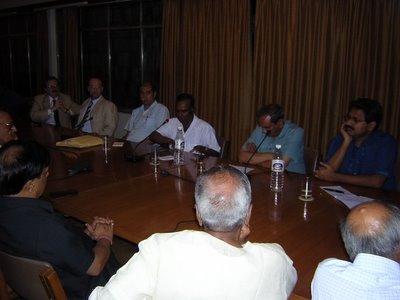
India International Centre, New Delhi held a panel discussion today with me and Siddharth Varadarajan from The Hindu as panelists. Former Foreign Secretary Shashank was the moderator.
In my speech I spoke about the genesis of left, its evolution, challenges it faced, the Big Brother angle and its implications for India. Points i made
- with 200 million poor people and the highest disparity in wealth Left turn logical and inevitable
-But the left which arose after the Second world war was caught in the cold war and faced external ( u know from whom) and internal challenges. Leftist governments in guatemala and Chile were overthrown. Central America was bloodied when Sandinistas came to power.
- Left gave the perfect excuse for military dictators to take over power in the name of protecting Patrias from internal enemies.
-In the next stage, when democracies were restored, they were trapped in washington Consensus and neoliberal prescriptions. Poor became poorer. Economies faced crises.
- Finally power moved to the streets from barracks and drawing rooms. Those who were excluded and marginalised in the past, finally got empowered. They voted those who promised to respond to their needs. Since they were in majority, they set the political and economic agenda. And this is how left reemerged.
-But it is not wholesale sweeping mandate. While Chavez and Morales got majority votes , it was split mandate for Lula. While he got elected, his party won only 3 out 0f 27 states and his party lost in Rio Grande de sul after 12 years of rule there. Lula could not carry out his agenda effectively because of the obstructive opposition majority in the Congress. Other leaders got varying degrees of mandate.
- New messiahs like Chavez and Evo were able to get elected only since recently. Earlier, the established parties did not allow space for outsiders.
- Bachelet and Lula are pragmatic and pursue policies friendly to masses and to the market in a non-confrontational mode. Chavez is the leader of the radical camp and his agenda is revolution... in its true sense ... revolution in internal society, regional policy and global fight against hegemony on top of a Bolivarian revoltion.
-Message is not enough. Label of left can take one to power but unfulfillment of mandate and delivery can bring it down. happened in Nicaragua when the Sandinistas lost the elections in 1990. happened to Luis Gutierrez. The same masses who elected him, overthrew him in two years when he went astray.
- The ability of outsiders to alter the destiny of latin american countries has come down and latinos have become less vulnerable by becoming collectively strong through regional groups.
- The internal, external and mutilateral policies of the Leftist governments are favourable for India and the Indian business who seek long term partnership with this new Latin America which is moving broadly in the right direction of stability, growth and prosperity.
Of course, these views are personal....
Siddharth touched the ideological part and had some sound advice for the government of India...
Monday, May 08, 2006
Eliana of Brazil is Shyama in India
Eliana is a senior executive in the international business division of Banco Itau, the second largest bank of Brazil. She attended the ADB meet in Hyderabad and had meetings with Indian banks and business. Her bank has established correspondent relations with Indian banks and is keen to promote business between the two countries. I encouraged her bank to consider opening an office in India.
Eliana has got an Indian name " Shyama ". Here is the story of how she got it. She took interest in philosophy from her adolescent years and got introduced to the Ramakrishna mission which had a small branch in Brazil. She needed to go beyond the catholic religion for answers to her spiritual inquiries. She has been learning from the teachings of Ramakrishna and has been interacting with the Calcutta Headquarters since 1989. She has delved deep into Bhagwat Gita and other Indian philosophical works.
She is a member of the board of the Ramakrishna Mission in Brazil, which has branches in four cities. The current chief of the mission is Swami Nirmalatmananda whose mother tongue is Tamil.
Like Eliana, there are a number of Brazilians and Latin Americans who have become followers of Saibaba, Brahmakumaris, Harekrishna and other spiritual leaders of India.
Eliana is now going to stay for a week in a mutt near Nainital for one week listening to the discourse of one her favourite teachers. This is her fifth visit to India.
She says she feels at home in India. She says perhaps she had a previous incarnation in India.
I told her that I feel at home in Brazil and Latin America and my future incarnation is going to be there !!
Eliana has got an Indian name " Shyama ". Here is the story of how she got it. She took interest in philosophy from her adolescent years and got introduced to the Ramakrishna mission which had a small branch in Brazil. She needed to go beyond the catholic religion for answers to her spiritual inquiries. She has been learning from the teachings of Ramakrishna and has been interacting with the Calcutta Headquarters since 1989. She has delved deep into Bhagwat Gita and other Indian philosophical works.
She is a member of the board of the Ramakrishna Mission in Brazil, which has branches in four cities. The current chief of the mission is Swami Nirmalatmananda whose mother tongue is Tamil.
Like Eliana, there are a number of Brazilians and Latin Americans who have become followers of Saibaba, Brahmakumaris, Harekrishna and other spiritual leaders of India.
Eliana is now going to stay for a week in a mutt near Nainital for one week listening to the discourse of one her favourite teachers. This is her fifth visit to India.
She says she feels at home in India. She says perhaps she had a previous incarnation in India.
I told her that I feel at home in Brazil and Latin America and my future incarnation is going to be there !!
Wednesday, May 03, 2006
Francesca Denegri from Peru
Francesca denegri is a Peruvian writer and academician.
She has come to stay in India for the next two years, with her British husband. She gave a talk on Peruvian literature at the Jawaharlal Nehru University last month. Her presence is going to enrich the Latino literary scene in India.
I had a long conversation with her and am looking forward to learn more about Peruvian and Latino literature. I told her about my admiration for Mario Vargas Llosa. We are planning to invite him to India.
Francesca holds a PhD on Hispanic Studies from King’s College, University of London. She has taught in the same University at the Department of Hispanic Studies and earlier at the Pontificia Universidad Católica del Perú.
In Peru, from 2000 to 2002, she produced and conducted a cultural TV program, called “En Blanco y Negro”.
She is currently working on a novel. I hope that her experience in India would be reflected in her writings. Like Octavio Paz, she could open the eyes of Latin Americans to India besides inspiring the Indians interested in Latin America.
Bienvenido ( welcome ) Francesca !!
She has come to stay in India for the next two years, with her British husband. She gave a talk on Peruvian literature at the Jawaharlal Nehru University last month. Her presence is going to enrich the Latino literary scene in India.
I had a long conversation with her and am looking forward to learn more about Peruvian and Latino literature. I told her about my admiration for Mario Vargas Llosa. We are planning to invite him to India.
Francesca holds a PhD on Hispanic Studies from King’s College, University of London. She has taught in the same University at the Department of Hispanic Studies and earlier at the Pontificia Universidad Católica del Perú.
In Peru, from 2000 to 2002, she produced and conducted a cultural TV program, called “En Blanco y Negro”.
She is currently working on a novel. I hope that her experience in India would be reflected in her writings. Like Octavio Paz, she could open the eyes of Latin Americans to India besides inspiring the Indians interested in Latin America.
Bienvenido ( welcome ) Francesca !!
Tuesday, May 02, 2006
Ph.D in the study of business with Latin America
This is the first Ph.D for a study of business with Latin America.
The title of the thesis is " Differentiated market strategies for doing business with Latin America. The recepient is Mr Ravichandran from Chennai. He got the Ph.D award on 2 may 2006.
He was the first Indian businessman i met when i set up the consulate in Sao Paulo temporarily in Maksood Plaza Hotel. Since then we have been in contact. Having seen my passion for Latin America and my publications he said he was thinking of doing a Ph.D. I was thrilled that he took Latin America even more seriously than me. He has done it.
Congratulations Ravi !!!
Ravi is the convenor of Indo- Latin American chamber of commerce and Industry in Chennai
His contact indolac@vsnl.net fone 55640818.
Ravi exports garments to latin america and other parts of the world. He gives lectures on financial management and logistics.
I admire Ravi for his versatile interests. He is a rare businessman who devotes so much time to academic work.
The next Ph.D is going to come from Miss Dozinha on the subject of Indo- Brazil trade.
The title of the thesis is " Differentiated market strategies for doing business with Latin America. The recepient is Mr Ravichandran from Chennai. He got the Ph.D award on 2 may 2006.
He was the first Indian businessman i met when i set up the consulate in Sao Paulo temporarily in Maksood Plaza Hotel. Since then we have been in contact. Having seen my passion for Latin America and my publications he said he was thinking of doing a Ph.D. I was thrilled that he took Latin America even more seriously than me. He has done it.
Congratulations Ravi !!!
Ravi is the convenor of Indo- Latin American chamber of commerce and Industry in Chennai
His contact indolac@vsnl.net fone 55640818.
Ravi exports garments to latin america and other parts of the world. He gives lectures on financial management and logistics.
I admire Ravi for his versatile interests. He is a rare businessman who devotes so much time to academic work.
The next Ph.D is going to come from Miss Dozinha on the subject of Indo- Brazil trade.
Wednesday, April 26, 2006
visit of Latin American tour operators to India
39 of them from 19 countries of Latin America and caribbean are in India from 21 to 27 April at the invitation of the Ministry of Tourism who paid for their travel and local hospitality. This was an the initiative of the Ministry of External Affairs and the Ministry of Tourism had readily agreed.
It was heartening to see a dozen of them from central american countries such as nicaragua, guatemala etc. Many of them have come for the first time.
There was a workshop for them on 26 April at Ashoka hotel. I was invited to give a talk. I highlighted the quantum jump in trade and business, the paradigm shift on both sides giving rise to a new India and a new latin america, the change in the mindset and approach to each other and the prospects of the promising future for travel business. I mentioned the new and growing trend of Indians who have started going to experience the exotic and exciting latin america of samba and salsa.
This is the first ever such visit of tourist operators from latin america. The visit has opened their eyes to the new profile of India and understand the logistics of tourism in India. Tourism Ministry has promised to print brochures in spanish to disseminate tourism information. They have also proposed to organise road shows in the region.
It was heartening to see a dozen of them from central american countries such as nicaragua, guatemala etc. Many of them have come for the first time.
There was a workshop for them on 26 April at Ashoka hotel. I was invited to give a talk. I highlighted the quantum jump in trade and business, the paradigm shift on both sides giving rise to a new India and a new latin america, the change in the mindset and approach to each other and the prospects of the promising future for travel business. I mentioned the new and growing trend of Indians who have started going to experience the exotic and exciting latin america of samba and salsa.
This is the first ever such visit of tourist operators from latin america. The visit has opened their eyes to the new profile of India and understand the logistics of tourism in India. Tourism Ministry has promised to print brochures in spanish to disseminate tourism information. They have also proposed to organise road shows in the region.
Tuesday, April 25, 2006
la vendedora de Rosas
This is the title of a colombian film i have just seen.
It means "rose seller"
It brings out in gruesome details the life and struggle of the street kids in colombia. They are sucked into crime, drugs, trafficking and prostituition by the unfortunate situation in some parts of Colombia. It is extremely difficult for the children from broken homes of the poor to avoid the fate portrayed in the movie.This real problem in the ghettos of the poor is a more serious long term concern than the ongoing drug trafficking and guerilla wars.
The actors in this movie directed by Victor Gaviria are not professional ones but street kids themselves. It is sad to note that some of the kids who acted in the movie have had tragic deaths in a replay of the movie. The main actor Leidy Tabares was arrested in a murder case.
It is similiar to the Brasilian movie Cidade de deus ( city of god), which is even more poignant.
It means "rose seller"
It brings out in gruesome details the life and struggle of the street kids in colombia. They are sucked into crime, drugs, trafficking and prostituition by the unfortunate situation in some parts of Colombia. It is extremely difficult for the children from broken homes of the poor to avoid the fate portrayed in the movie.This real problem in the ghettos of the poor is a more serious long term concern than the ongoing drug trafficking and guerilla wars.
The actors in this movie directed by Victor Gaviria are not professional ones but street kids themselves. It is sad to note that some of the kids who acted in the movie have had tragic deaths in a replay of the movie. The main actor Leidy Tabares was arrested in a murder case.
It is similiar to the Brasilian movie Cidade de deus ( city of god), which is even more poignant.
Saturday, April 22, 2006
Venezuelan Film
Thanks to the Venezuelan embassy in delhi, we had the rare opportunity to see yesterday the film
The Archangel's Feather ( La pluma del Archangel)
directed by Luis manzo
It is about a telegraph operator in a remote village who changes the fortunes of people and causes happiness for some and and misery for others with his manipulation of messages. He signs fake telegrams with a feather from an archangel's wing.
The film reminded me of the other film
Dona Barbara
based on the the most famous classic novel of Romulo Gallegos, theVenezuelan writer who rose to become the president of the country.
Venezuela produces very few films (but lots of soap operas)
The last one which i saw was
La libertadora del libertador
means the lady liberator of the Liberator
It is about Manuelita Saenz, the lady love of Simon Bolivar in the last eight years of his life.
She is as colourful as Bolivar himself
She was the only one who had the guts to slap Bolivar once
of course, she saved his life when there was an attempt on him.
She was born in Ecuador and lived with Bolivar off and on in peru and Colombia
After Bolivar's death she was exiled, as it happened to many heroes of latin America ( it continues even now for some presidents)
She travelled around and finally breathed her last at the isolated port town Paita.
The Archangel's Feather ( La pluma del Archangel)
directed by Luis manzo
It is about a telegraph operator in a remote village who changes the fortunes of people and causes happiness for some and and misery for others with his manipulation of messages. He signs fake telegrams with a feather from an archangel's wing.
The film reminded me of the other film
Dona Barbara
based on the the most famous classic novel of Romulo Gallegos, theVenezuelan writer who rose to become the president of the country.
Venezuela produces very few films (but lots of soap operas)
The last one which i saw was
La libertadora del libertador
means the lady liberator of the Liberator
It is about Manuelita Saenz, the lady love of Simon Bolivar in the last eight years of his life.
She is as colourful as Bolivar himself
She was the only one who had the guts to slap Bolivar once
of course, she saved his life when there was an attempt on him.
She was born in Ecuador and lived with Bolivar off and on in peru and Colombia
After Bolivar's death she was exiled, as it happened to many heroes of latin America ( it continues even now for some presidents)
She travelled around and finally breathed her last at the isolated port town Paita.
Wednesday, April 19, 2006
Laura Restrepo and visitors from Brazil

Brazilian economists
A group of 20 economists were in delhi last week to understand the new economy of India which is causing a global buzz. They were briefed by CII, FICCI , academics and government officials. I gave a talk to them on the paradigm shift in India and the change in the mindset of Indians. we had a lively interaction after the talk. They were impressed that in India the business and the government work together with common vision and objectives in many areas of economic and industrial development. They lamented that this is not the case in Brasil. I advised them to organise a seminar focussing on a comparison of the two countries in economy, business and society. I told them the new Indians who are becoming confident, ambitious, rich and successful should learn from brazilians how to have fun and enjoy life to the fullest.
Laura Restrepo
I have just finished reading the book The Angel of Galilea by Laura Restrepo This favourite colombian author of mine has lived upto my expectations in this novel also. This is the story of an abandoned boy who becomes an angel. Laura has used magical realism in weaving this story. She has , as always, made the readers have a feel of the violence, poverty, drugs and guerillas of colombia. She has used humour subtley to describe the fears and complexes of women. I wish she writes longer novels....
Roberta Paduan
This journalist from Exame, a popular business magazine of brazil was in India for a week last month and interviewed Ministers and bzmen. her articles hv appeared in the latest issue of the magazine. her title is interesting" How can Brasilian companies make money doing bz with the new economic star" India".
Saturday, April 15, 2006
salsa festival in delhi
I went to the salsa festival in Vasant continental hotel on thursday night.
caramba... i could not believe what i saw
Indian boys and girls were dancing like the latinos and latinas
Some of them have mastered it professionally
They can take on the original latinos any time
The spirit and vibration in the dance hall was purissima latina
The Indians were transformed into the joyful and fun-filled latinos
There was unlimited abundance of joy, excitement and exuberance
although many of them may not know know spanish, they were one with the music
Their bodies swung and rhymed so beautifully and artistically
The organiser of the Fiesta is Kaytee Namgyal
He runs dance studios and is like a salsa king
his website
www.salsa-india.com
caramba... i could not believe what i saw
Indian boys and girls were dancing like the latinos and latinas
Some of them have mastered it professionally
They can take on the original latinos any time
The spirit and vibration in the dance hall was purissima latina
The Indians were transformed into the joyful and fun-filled latinos
There was unlimited abundance of joy, excitement and exuberance
although many of them may not know know spanish, they were one with the music
Their bodies swung and rhymed so beautifully and artistically
The organiser of the Fiesta is Kaytee Namgyal
He runs dance studios and is like a salsa king
his website
www.salsa-india.com
Wednesday, April 12, 2006
Bruna Surfistinha
Bruna Surfistinha is a garota da programa ( call girl ). Her book " the sweet poison of scorpion " in portuguese is a bestseller in Brazil these days. She has become a celebrity and appears in talk shows. The book has been translated in spanish and soon the English edition is expected.
Out of curiosity, i bought a copy and finished reading it in two sittings. It is mostly about sex and is rather explicit. It is also an autobiography of Bruna. She describes her experience with her clients and gets into titilating details.
She has a website and blog
www.brunasurfistinha.com
In this , she writes her diary describing her dreams, activities, problems and life in general. She gives advice to the blog readers sometimes. No great cerebral stuff as one would have guessed. She talks about her parents and her new found namorado ( boy friend) with whom she plans to settle down. She expresses the struggle ( weak one ) between her dual personality of Raquel, her original name and her new personlity as a professional Bruna.
Outsiders and even some Brazilians are prone to making moral judgements. But this is part of Brazil.
Out of curiosity, i bought a copy and finished reading it in two sittings. It is mostly about sex and is rather explicit. It is also an autobiography of Bruna. She describes her experience with her clients and gets into titilating details.
She has a website and blog
www.brunasurfistinha.com
In this , she writes her diary describing her dreams, activities, problems and life in general. She gives advice to the blog readers sometimes. No great cerebral stuff as one would have guessed. She talks about her parents and her new found namorado ( boy friend) with whom she plans to settle down. She expresses the struggle ( weak one ) between her dual personality of Raquel, her original name and her new personlity as a professional Bruna.
Outsiders and even some Brazilians are prone to making moral judgements. But this is part of Brazil.
Monday, April 03, 2006
Copacabana beach
I spent three unforgettable days and nights in Rio 28-30 March while attending the IBSA ( India Brasil South Africa- alliance) meeting. I stayed in my favourite Meridian Hotel on the legendary beach of Copacabana. It is not just the sea or the sand. It is the brasilian spirit which makes this place vibrant and unique. Two rituals i follow at the beach; early morning walk from Meridien hotel to the copacabana fort ; and drinking chopp( draft beer) at the pavement kiosk on the beach after midnight listening to the sentimental songs of Brazilian FM radio and the music of the waves of Eemanja the sea goddess.
The copabana beach is in full bloom on new year eve with a million brasilians in white tee shirts( white for good luck in the new yr), drinking beer and dancing to live music in 4-5 different stages set on the beach itself.
The third ritual outside Copacabana is the visit to the bar called as Garota da Ipanema ( girl from ipanema ) made famous by the poet vinicius de moraes. yet another indulgence is the churasscaria rodizio ( barbecue restaurant typical of brasil) and unlimited eating of all kinds of meat. Someone commented" how can a Hindu eat meat of the cow which is sacred?"I responded
" yes.. the Indian cow is sacred.. not the Brasilian one "
Copacabana makes me feel at home and drives me crazy .
The copabana beach is in full bloom on new year eve with a million brasilians in white tee shirts( white for good luck in the new yr), drinking beer and dancing to live music in 4-5 different stages set on the beach itself.
The third ritual outside Copacabana is the visit to the bar called as Garota da Ipanema ( girl from ipanema ) made famous by the poet vinicius de moraes. yet another indulgence is the churasscaria rodizio ( barbecue restaurant typical of brasil) and unlimited eating of all kinds of meat. Someone commented" how can a Hindu eat meat of the cow which is sacred?"I responded
" yes.. the Indian cow is sacred.. not the Brasilian one "
Copacabana makes me feel at home and drives me crazy .
books of Laura Restrepo and Mario Vargas Llosa
As usual books of Latin American writers accompanied my journey to Chile and Brasil from 24 march to 3 april. I was experiencing the real Latin America while my mind was haunted by the stories, characters and magic of these two favourite authors.
"Leopard in the sun" by Laura Restrepo
This is the story of two families which fight with each other to the fatal end and is typical of the violence and crime which has come to characterise Colombia. The Barragans and Monsalves of the story continue to traumatise the contemporary Colombia. The honour code of the fighters, their passions and weaknesses and the role of women in the family are same like the mafia stories.
This powerful and gripping story and magical realism is what i expected of Laura Restrepo. Her characters in the book are unforgettable: Arcangel the boy treasure of the Barragan family, La Muda the aunt said to be wearing chastity belt, El Lyrico the poet in the midst of Crime, Mendez the lawyer who walks the tight rope advising both the warring familes and Mani Monsalves whose criminal mind is overcome by his love for Alina.
"The way to Paradise" by Mario Vargas Llosa
As in the case of " war of the end of the world" and " Feast of the Goat" this story happens outside Peru. It originates in France and ends in Tahiti. Flora Tristan the illegitimate daughter of a peruvian father carries on a courageous and relentless fight for the rights of workers and women in the post- revolutionary France which was not ready for the new ideas. She was ahead of the times and had to face the wrath of the the church and skepticism of the male dominated society. Flora is like the Joan of Arc with her fierce,fanatic and blind pursuit of her mission undaunted by challenges and obstacles. Flora's brief stay in Peru gives a glimpse of the oligarchy of Lima which was one of the most advanced in latin America at that time.
The other part of the story is about her grandson Paul. He starts of life as a stockbroker, takes up painting as hobby and becomes an artist in the true sense of the term; bohemian, anarchist, poor and reckless. He goes to Tahiti in search of the natural way of life seeking liberation from civilisation and culture. He abandons himself to all kinds of experience without any inhibition or control. Predictably he pays for it with diseases and pain at the end. Like Beethoven composed music even when he became deaf, Paul also had to paint after losing his eye sight.
"Leopard in the sun" by Laura Restrepo
This is the story of two families which fight with each other to the fatal end and is typical of the violence and crime which has come to characterise Colombia. The Barragans and Monsalves of the story continue to traumatise the contemporary Colombia. The honour code of the fighters, their passions and weaknesses and the role of women in the family are same like the mafia stories.
This powerful and gripping story and magical realism is what i expected of Laura Restrepo. Her characters in the book are unforgettable: Arcangel the boy treasure of the Barragan family, La Muda the aunt said to be wearing chastity belt, El Lyrico the poet in the midst of Crime, Mendez the lawyer who walks the tight rope advising both the warring familes and Mani Monsalves whose criminal mind is overcome by his love for Alina.
"The way to Paradise" by Mario Vargas Llosa
As in the case of " war of the end of the world" and " Feast of the Goat" this story happens outside Peru. It originates in France and ends in Tahiti. Flora Tristan the illegitimate daughter of a peruvian father carries on a courageous and relentless fight for the rights of workers and women in the post- revolutionary France which was not ready for the new ideas. She was ahead of the times and had to face the wrath of the the church and skepticism of the male dominated society. Flora is like the Joan of Arc with her fierce,fanatic and blind pursuit of her mission undaunted by challenges and obstacles. Flora's brief stay in Peru gives a glimpse of the oligarchy of Lima which was one of the most advanced in latin America at that time.
The other part of the story is about her grandson Paul. He starts of life as a stockbroker, takes up painting as hobby and becomes an artist in the true sense of the term; bohemian, anarchist, poor and reckless. He goes to Tahiti in search of the natural way of life seeking liberation from civilisation and culture. He abandons himself to all kinds of experience without any inhibition or control. Predictably he pays for it with diseases and pain at the end. Like Beethoven composed music even when he became deaf, Paul also had to paint after losing his eye sight.
Biography of Che Guevara
" Companero" ( the companion )- a biography of Che Guevara by Jorge Castanada
It was the film " Diary of a Motorcyclist " which i saw last year which had stimulated my interest in knowing more about Che. His story is extraordinary, inspiring and moving. Once I started reading i got absorbed completely and could not stop until i finished.
What is striking is that Che who became a hero of Latin America and a global icon and symbol for social uprisings for idealists and leftists was an Argentinian. Unbelievable... utterly different from the popular perception of Argentinian character.
Che was a restless soul relentlessly seeking new experience and adventures. His motorcycle tour of south america opened his mind to a panamerican and later global vision. After this, he was destined to go out and seek out adventures wherever he could. This destiny took him to Guatemala, cuba , Congo and Bolivia. His beliefs and vision evolved and matured as he encountered new situations . He made his mark as a guerilla fighter and eminently succeeded in Cuba. He tried to repeat his ventures in Congo but failed. He tried in Bolivia and planned to carry the revolution back to Argentina. This was a mistake for which he paid for it with his life.
One cannot help the impression that Che had the deathwish. He plunged into risky ventures carried away by his noble principles, blind pursuit and his restless urge for action. On the other hand, his companion and mentor Fidel Castro always had larger and balanced political and global perspectives and has obviously survived for so long.
Che had become a minister in Fidel's cabinet and applied himself with equal idealism and altruism to bring about a brave new socialistic world. It was of course inevitable that a guerilla fighter of his nature could not be confined to a cosy position of power. He was more at home in the battlefield.
Che had visited India leading a Cuban goodwill and study delegation, as part of his tour of many other countries. I was keen to know his impressions of India and how he viewed India. Unfortunately the author has not elaborated this visit in this book.( I will appreciate if someone could give me some lead).
Castanada has given a balanced profile of Che navigating between the propaganda of the left and the critical approach of the right. Besides quoting many sources, he has himself done a lot of research and interviewed people associated with Che.
The conditions of Latin America which inspired Che to fight for justice in those days continue to be present in most parts of Latin America. No wonder Che's glory is being revived by leftists such as Chavez and Evo Morales, who are the elected creations of the same situation.
It was the film " Diary of a Motorcyclist " which i saw last year which had stimulated my interest in knowing more about Che. His story is extraordinary, inspiring and moving. Once I started reading i got absorbed completely and could not stop until i finished.
What is striking is that Che who became a hero of Latin America and a global icon and symbol for social uprisings for idealists and leftists was an Argentinian. Unbelievable... utterly different from the popular perception of Argentinian character.
Che was a restless soul relentlessly seeking new experience and adventures. His motorcycle tour of south america opened his mind to a panamerican and later global vision. After this, he was destined to go out and seek out adventures wherever he could. This destiny took him to Guatemala, cuba , Congo and Bolivia. His beliefs and vision evolved and matured as he encountered new situations . He made his mark as a guerilla fighter and eminently succeeded in Cuba. He tried to repeat his ventures in Congo but failed. He tried in Bolivia and planned to carry the revolution back to Argentina. This was a mistake for which he paid for it with his life.
One cannot help the impression that Che had the deathwish. He plunged into risky ventures carried away by his noble principles, blind pursuit and his restless urge for action. On the other hand, his companion and mentor Fidel Castro always had larger and balanced political and global perspectives and has obviously survived for so long.
Che had become a minister in Fidel's cabinet and applied himself with equal idealism and altruism to bring about a brave new socialistic world. It was of course inevitable that a guerilla fighter of his nature could not be confined to a cosy position of power. He was more at home in the battlefield.
Che had visited India leading a Cuban goodwill and study delegation, as part of his tour of many other countries. I was keen to know his impressions of India and how he viewed India. Unfortunately the author has not elaborated this visit in this book.( I will appreciate if someone could give me some lead).
Castanada has given a balanced profile of Che navigating between the propaganda of the left and the critical approach of the right. Besides quoting many sources, he has himself done a lot of research and interviewed people associated with Che.
The conditions of Latin America which inspired Che to fight for justice in those days continue to be present in most parts of Latin America. No wonder Che's glory is being revived by leftists such as Chavez and Evo Morales, who are the elected creations of the same situation.
Wednesday, March 01, 2006
From Poondi to Punta Arenas and Malgudi to Maconde

Punta Arenas in Chile is the southern-most city in the world close to Antarctica. I was there in April 2005 with a delegation. When I was cruising in the Magellan straits, reflecting on its maritime history, a thought struck me about my own. How did I reach Punta Arenas and from where ? How did a poor country kid reach the farthest part of the world!. The answer was Poondi Pushpam College. It proved to be my magic carpet. Not having travelled beyond Trichy and Thanjavur until the age of twenty, I had dreamt of non-stop journey to the farthest corners of the world. That dream for distant destinations materialised because the Pushpam college was so near. If there was no college in Poondi, I would not have become a globe-trotting diplomat, visiting exotic places like Punta Arenas.
Another trip which made me to look back at my root was the trip upstream in the river Orinoco to Colombia in the Amazon region in 2003. It was like a journey from ‘Malgudi’ to ‘Maconde’. R.K Narayan’s imaginary Indian town of Malgudi embodies the value system of simple folk pursuing traditional life. My place of birth, Alangudi Mahajanam, is close to Lalgudi, which is almost like Malgudi.
On the other hand, Maconde is the mythical town in the novel “One Hundred Years of Solitude” by the Colombian Nobel-laureate Gabriel Garcia Marquez. The spirit of Maconde is ‘Magical realism’, the literary genre, popular in Latin America. Malgudi and Maconde are contrasting in cultures. Salsa and Samba, Carnival and Football, Beaches and Bikinis, fun and enjoyment are Latin American cultural manifestations. In contrast, Malgudi culture is simple living and self-denial of comfort, enjoyment and wealth. While the old Indian renounces life and looks at Kasi or the Himalayas as his next and final destination, the Latin American does not give up. He sings
“We don’t stop having fun when we grow old
We grow old only when we stop having fun.”
Latin America has become my passion. I feel at home in the beaches of Copacabana and bars of Ipanema. I am fascinated by the Latin American literature and culture. I follow avidly the political and economic developments of the region. I express my emotions and feelings spontaneously in Spanish and Portuguese. Brazil beckons me, (in Portuguese)
Amor da minha vida, luz de meu querer
Vem..vem fica comigo
Sou quem sou ... so por voce
Means
Love of my life, light of love
Come.. come to be with me
I am what I am … just for you
The loud Latin America murmurs softly in the ears of this quiet and introspective Indian,
Quisera oir tu silencio
Quisera callar mis palabras
This poem (Spanish) means
I want to listen to your silence
I wish to silence my words
Every time I visit Raramuthiraikottai, the village three kiolmeters west of Poondi, I heave a sigh of relief. In this village, where I spent my life from the age of four to twenty, most of my schoolmates are still mired in poverty struggling with subsistent agriculture. I was lucky to escape and join the diplomatic glitterati and move seamlessly between the worlds of “Cheers!” and “Your Excellency”
My uncle who brought me up did not believe that education would lead to a viable livelihood. He would, therefore, ask me to stop the studies at the beginning of every summer holidays of school. I managed to finish the schooling in the Government Higher Secondary School in Mariammankovil. After this, my uncle put his foot down and said with a finality in his voice, “ Enough of your studies. We cannot afford to send you to college. Get ready to look after the land and cattle” That is when, Poondi College came to my rescue. I told him that the college was just three kms from the village. I promised to him that I would do the farm work in the morning and during weekend. I convinced him that the amount of scholarship I would get with my high marks would be more than the college fees. Reluctantly, he agreed. And my escape thereafter, was unstoppable.
If there was no college in Poondi, I would have still been cutting grass for the cattle on the side of the railroad, waving to to the passengers of Thanjavur and Nagore train.I was reminded of my grass cutting work in a rather jealous way, when I found in Brazil that each cow has eight hectares of land to graze in this large and lucky country. Reference to cows leads me to another incident. A Brazilian friend pulled my leg in a Steak restaurant saying that I was not to touch beef as a Hindu. I told him he was perfectly right since the Indian cows are sacred, but the Brasilian cows are not.
I am delighted to see that the college has grown bigger and added more courses and has started giving opportunities even for girls. My greatest thrill now is to see my niece Anita from the same village going to the same college. If not for this college, her mother would not have allowed her to go to distant places. The only difference between me and my niece is that I had to walk to the college while she has the luxury of going by cycle. But walking proved to be a blessing for me. I could review my lessons twice a day during the walk to the college and back.
The second advantage of the college was that since many students were from similar rural background and from Tamil medium schools, I was in the comfort zone. Later when I went to Chennai for higher studies and Delhi for joining the Foreign Service I was intimidated by the high-flying rich kids with Don Bosco and Doon School accents. It took a while for me to overcome this challenge, regain confidence and eventually beat many of them in show as well as substance. I was more hungry to catch up and prove myself.
I take this opportunity to express my profound gratitude to the founders of the college and the visionary Thiru Tulasi Ayya Vandayar, with whom I had the opportunity to interact and get inspired a few times. I am also grateful to the faculty of the college and especially Chemistry professor Srinivasan and Tamil professor Kannaiyan, who inspired me to aspire.
My best wishes for the success of the college and its noble role as the hope and promise for the rural youth around Poondi.
-------------------------------------------------------------------------------------
This article was written for the magazine of the College on the occasion of Golden jubilee celebrations in 2006.
___________________________________________________________________________
Tuesday, February 28, 2006
Latin Americanist
I heard this word yesterday
author of this is Mr Om Gupta
He described himself as a Latin Americanist
I asked him how he became one
Here is his story
As a professional journalist, he was working in Times of India.
He had told Mr KM Meena, the then JS(LAC) that he was looking for something outside his routine. Meena introduced him to the Colombian Ambassador to delhi in 1992 Mr David Sanchez Juliao. The Ambassador who was also an accomplished writer, introduced him to Latin America.
Mr OmGupta found latin america fascinating. he started writing articles on latin america in newspapers. Then he started publishing a magazine called as " Indo- Latin American File". He joined JNU for a M.Phil programme and later started a Ph.D thesis on Rigoberta menchu tum, the Guatemalan indigenous leader and nobel prize winner. He translated One hundred years of solitude of gabriel Garcia Marquez and published in 200 installments in a Hindi newspaper Dainik bhaskar
he has published a book containing his articles
- travelled to chile , Argentina and Trinidad and Tobago.
- interviewed the presidents of Argentina, peru and Guyana
He had organised 12 seminars on latin america at the India International centre in 1993-2000.
Now he is the Director of mass Communication at the jagannath Inst of communication and design at delhi
he is keen to revive his romance with latin america
you can imagine the electricity that was generated when he and i met !
author of this is Mr Om Gupta
He described himself as a Latin Americanist
I asked him how he became one
Here is his story
As a professional journalist, he was working in Times of India.
He had told Mr KM Meena, the then JS(LAC) that he was looking for something outside his routine. Meena introduced him to the Colombian Ambassador to delhi in 1992 Mr David Sanchez Juliao. The Ambassador who was also an accomplished writer, introduced him to Latin America.
Mr OmGupta found latin america fascinating. he started writing articles on latin america in newspapers. Then he started publishing a magazine called as " Indo- Latin American File". He joined JNU for a M.Phil programme and later started a Ph.D thesis on Rigoberta menchu tum, the Guatemalan indigenous leader and nobel prize winner. He translated One hundred years of solitude of gabriel Garcia Marquez and published in 200 installments in a Hindi newspaper Dainik bhaskar
he has published a book containing his articles
- travelled to chile , Argentina and Trinidad and Tobago.
- interviewed the presidents of Argentina, peru and Guyana
He had organised 12 seminars on latin america at the India International centre in 1993-2000.
Now he is the Director of mass Communication at the jagannath Inst of communication and design at delhi
he is keen to revive his romance with latin america
you can imagine the electricity that was generated when he and i met !
Sunday, February 26, 2006
Visit of Latin American writers to India
Last week, Sahitya Academy organised a workshop on
" Myth, magic, History : contemporary fiction in India and Latin America "
Five Latin American writers attended this workshop.
Jorge Volpi and Montmeyer of Mexico, Jaime Collier of Chile
Gregory Zembrano of Venezuela and Rodrigo Montoya Rojas of Peru.
Jorge Volpi was the guest of honour in the Academy event. he belongs to the new generation of writers ( crack generation !), moving consciously away from the magical realism for which latino writers became famous. Volpi's discourse was lively.
What impressed me was the knowledge and interest of Mr Satchidanandan of the Sahitya Academy in Latin American literature. Prof Ganguli of JNU spoke eloquently displaying his profound expertise on latin American literature. He is the most authentic and knowledgeable expert on Latino literature in India, to my knowledge.
The Academy proposes to translate some of the works of Latino writers directly into Indian languages. In 2005,they published an anthology of latin american and caribbean poems in Hindi in collaboration with the embassies in delhi.
Pity ... i could not attend more sessions or interact with the writers.
In the same week, we had the visit of a Chilean Senator Jaime Gazmouri at the invitation of the Indian parliament.
During this visit I discovered that Mr Shahid Siddiqui Rajya Sabha MP from Samajwadi party has read many Latin American authors and is knowledgeable and interested in this exotic region.
" Myth, magic, History : contemporary fiction in India and Latin America "
Five Latin American writers attended this workshop.
Jorge Volpi and Montmeyer of Mexico, Jaime Collier of Chile
Gregory Zembrano of Venezuela and Rodrigo Montoya Rojas of Peru.
Jorge Volpi was the guest of honour in the Academy event. he belongs to the new generation of writers ( crack generation !), moving consciously away from the magical realism for which latino writers became famous. Volpi's discourse was lively.
What impressed me was the knowledge and interest of Mr Satchidanandan of the Sahitya Academy in Latin American literature. Prof Ganguli of JNU spoke eloquently displaying his profound expertise on latin American literature. He is the most authentic and knowledgeable expert on Latino literature in India, to my knowledge.
The Academy proposes to translate some of the works of Latino writers directly into Indian languages. In 2005,they published an anthology of latin american and caribbean poems in Hindi in collaboration with the embassies in delhi.
Pity ... i could not attend more sessions or interact with the writers.
In the same week, we had the visit of a Chilean Senator Jaime Gazmouri at the invitation of the Indian parliament.
During this visit I discovered that Mr Shahid Siddiqui Rajya Sabha MP from Samajwadi party has read many Latin American authors and is knowledgeable and interested in this exotic region.
Subscribe to:
Posts (Atom)